 Close
Close


Find out more about the range of events organised by the Centre for Law, Economics and Society
Upcoming events
 Call for paper: Competition Law and Policy Workshop: A Foresight Approach
A Cambridge-UCL Competition Law and Policy Hub event
23 April 2024–4 May 2024, 8:50am-11:50pm
Past events
- 2023

Image by Thomas Ulrich from Pixabay
21 June 2023
Prof. Eleanor Fox on the Big Platform Debate
The Big Platform Debate: Do we need new rules to rein in Big Tech, and do we need new modes to rein in divergent rules?

23 May 2023
International Mergers Conference
UCL and Concurrences 4th London Conference
- 2022
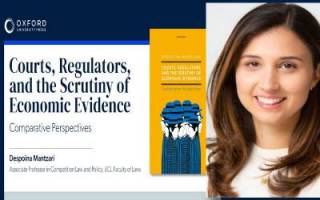
2 November 2022
Courts, Regulators, and the Scrutiny of Economic Evidence. Comparative Perspectives
A Book Launch

13 September 2022
Courts, Regulators, and the Scrutiny of Economic Evidence in Latin America
Exploratory Online Workshop co-organised by UCL Laws and FGV Brazil. The workshop is funded by a UCL Global Engagement Fund

18 May 2022
Competition Law and Financialisation Workshop
Organised by the UCL Centre for Law, Economics and Society, with funding from the Bentham House Research Recovery Fund
- 2021

17 May to 20 May 2021
2nd International Mergers Conference
Organised by Concurrences in partnership with University College London

22 April 2021
The Moving Boundaries of Competition Law
3rd UCL-White & Case Competition Law Conference

30 June 2021
Regulating Competition in the Digital Economy
- 2020

10 January 2020
EU Law in the era of the Fourth Industrial Revolution
YEL Annual EU Law and Policy Conference – 2020
19 February 2020
International Mergers Conference
Organised by Concurrences with the UCL Centre for Law, Economics and Society
27 February 2020 (How) should we regulate platforms and ecosystems? (by invitation only workshops)
Organisers: UCL Centre for Law, Economics and Society in collaboration with London Business School and with the participation of the World Economic Forum - Project on Digital Platforms & Ecosystems
- 2019

23 January 2019
The Energy Price Cap: Towards a ‘Fairer Market’ for the UK Consumers?

4 February 2019
The priorities of competition law in Europe: An Open Discussion

4 March 2019
Industrial Policy and Competition Law: Friends or Foes?

17 to 18 April 2019
Competition, Governance and Regulation of the Internet Economy

19 June 2019
The Digital Economy: Economics, Antitrust and Regulation

25 June 2019
Competition Law and Policy at times of Financialisation in the Food Sector

25 July 2019
Competition Law and Policy in Digital Economy

24 October 2019
Conference - Sustainability and Competition Policy: Bridging two Worlds to Enable a Fairer Economy

30 October 2019
Competition Law & Digital Markets: Towards a Re-nationalisation of Competition Law Enforcement in EU

21 November 2019
2nd UCL | White & Case Brussels: Autumn Competition Law Conference
The moving boundaries of competition law: emphasis on digital markets

5 December 2019
Climate Change, Sustainability and Competition Law
- 2018

21 February 2018
Digital Platforms and the Widening EU/US Competition Law and Regulation Gap

26 April 2018
Blockchain and the Law

9 May 2018
To Automate or To Heteromate? That Is the Question
by Professor Hamid Ekbia, Professor of Informatics, Cognitive Science, and International Studies at Indiana University, Bloomington

22 May 2018
Corporate (and other) sponsorship of academic research in competition law
Defining the problem, searching for solutions

7 June 2018
Competition Law in China: An Introduction
A one-day CPD course introducing Chinese Competition Law
8 June 2018
10th IMEDIPA Competition Law and Policy Conference

30 July 2018
Artificial cosmoi and the law (2nd edition)

6 November 2018
1st UCL South Asian Competition Law Conference
‘Adoption, Implementation and Impact of the Indian and Pakistani Competition Laws’

7 November 2018
Introducing Indian Competition Law and Practice
1st UCL South Asian Competition Law Course
7 November 2018
UCL | White & Case Brussels: Autumn Competition Law Conference
Where academia meets practice, imagination meets experience!

12 November 2018
The EU Google cases (Shopping and Android)
4 December 2018
The Tyranny of Form: AI, Automation, and Algorithms

14 December 2018
Taming the "Fourth Power"
Competition law and policy in the era of digital platforms and intermediaries - A one-day conference
- 2017
Saturday 11 November 2017, Sao Paulo, Brazil
General Purpose Technologies and Competition Law
The workshop is co-organized by the Centre for Law, Economics and Society at UCL Laws, the FGV Law School in Sao Paolo and the HSE/Skolkovo Institute for Law and Development. It will take the form of an interactive discussion, after a couple of introductions to each specific topic.
The development of General Purpose Technologies, such as the steam engine, railways, electricity, computing, the Internet, Artificial intelligence, biotechnology, usually leads to disruptive innovation and ultimately to important increases in productivity that provokes important spill-over effects to various industries and markets (Jovanovic & Rousseau, 2005). The term has been employed extensively recently in order to analyse the role of technology in economic growth. Bresnahan and Trajtenberg (1996) argue that GPTs should have the following characteristics:
- “Pervasiveness”, as the idea is that the GPT should spread to most sectors of the economy;
- “Improvement”, as the GPT becomes better over time, the costs of using it being reduced;
- “Innovation spawning”, as the GPT should make it easier to invent and produce new products or processes.
The process of diffusion of a GPT may take a considerable period of time and may lead to entrenched positions for “lead firms” that have early invested on the exploitation of that technology. These firms control GPT clusters, the technology being applied in various economic sectors that will eventually form part of their value nets or value chains. The interactions between the “dominant” or “lead” firms and their application sectors are quite complex. Early technical choices made at the time of the adoption of GPT may create path dependencies and constrain choices at a later process when the GPT has spread and is implemented in various sectors of economic activity. This may lead to “growth bottlenecks” that are exploited by “dominant” or “lead” firms. However, the application sectors may also be a source of competitive constraint to these “dominant” or “lead” firms. Their position is not challenged by new technologies in direct competition with the lead firm’s one but by firms attempting to meet unserved demand outside the original GPT cluster (Bresnahan & Yin, 2016).
This “vertical” competition (Lianos, 2017) may take different forms and does not only correspond to competition within a relevant product market or, even more broadly, an industry, with the aim to lower costs per unit of output so as to gain more market share and in principle raise the rate of return of the capital invested. One may distinguish between competition within an industry, which compels individual producers to lower costs so that they can compete effectively, thus leading to a turbulent equalization of selling prices while profit margin and profit rates are dis-equalized, some firms being more efficient than others, and competition between industries (hardware v. sofware for instance), capital moving from one industry to another in search of higher profits.
Notwithstanding the fact that economic growth constitutes an important aim of competition law enforcement, in view of the increasing emphasis put on the necessary linkage between competition law and innovation, GPTs have not yet been systematically studied from the perspective of competition law. The development of GPTs may lead to important economic and social disruptions and significant periods of dominance of specific “lead” firms. These firms may use their power strategically so as to exclude potential horizontal and/or vertical competition and ensure that their central position remains uncontested. These GPTs also often emerge in developed countries and their diffusion to developing countries may be considerably slowed down or even stopped by “growth bottlenecks”. This has of course a considerable impact on social welfare and global social justice.
The aim of this conference will be to reflect on the way competition law applied to a number of GPTs in the past and understand how this past experience may be useful in assessing the challenges raised by current and future GPTs. The first panel of the conference will engage with the broader issue of GPTs, their impact on economic growth and will then focus, in view of the recent history of antitrust, in particular on the computer industry and Internet (including Internet of Things), but also some old history from which we can draw lessons from (e.g. internal combustion engine, electricity, railroad, automobiles). Part 2 will engage with artificial intelligence/machine learning, Big Data and blockchain and Part 3 will focus on lessons from the biotech industry and DNA design/editing technologies.
Speakers include:
- Eduardo Caminati - President of Ibrac
- Leonor Cordovil, Grinberg, Cordovil Advogados
- Dennis Davis, Competition Appeal Court, South Africa
- Professor Marcio de Oliveira Júnior, Brazilian Senate
- Elizabeth Farina, President and CEO of the Brazilian Sugarcane Industry Association (UNICA).
- Eleanor Fox, NYU Law School
- Paulo Furquium, ISNPER
- Professor Alexey Ivanov, HSE Skolkovo Institute for Law and Development
- Professor Ioannis Lianos, UCL
- Professor Caio Mario da Silva Pereira Neto, FGV Law School
Friday 20 October 2017, London
Transformations of Competition Law
This one-day conference is co-organized by the Centre for Law, Economics and Society at UCL and the Global Competition Law Centre at the College of Europe, Bruges
The conference is convened by:
- Professor Ioannis Lianos, UCL
- Dr. Damien Gerard, European Commission & Université Catholique de Louvain.
The conference will explore the "liminal conditions of modern competition law" (Lianos, 2017), in particular the various transformations that are taking place globally and may affect the direction of the competition law enterprise. Four transformations emerge as being particularly challenging for mainstream competition law doctrine. The conference will therefore be divided into four panels dealing with each of these areas:
- The political dimension of competition law: protectionism and populism, free trader and globalism
- The financialisation challenge: common and joint ownership
- Technological transformations and the emergence of a new competition law
- "Social" and "Green" capitalism: towards a social and green antitrust?
Confirmed speakers include:
- Dennis Davis (Competition Appeal Court of South Africa)
- Carles Esteva-Mosso (European Commission)
- Amelia Fletcher (University of East Anglia)
- Michal Gal (University of Haifa)
- Damien Geradin (Universite catholique de Louvain)
- Damien Gerard (European Commission & Université Catholique de Louvain)
- Herbert Hovenkamp (University of Pennsylvania)
- Dimitry Katalevsky (Skolkovo Institute of Science and Technology)
- Suzanne Kingston (University College Dublin)
- Ioannis Kokkoris (Queen Mary University of London)
- Assimakis Komninos (White & Case)
- Ioannis Lianos (UCL)
- Bjorn Lundqvist (Stockholm University)
- Barry Lynn (New America)
- Julian Nowag (Lund University)
- Oke Odudu (University of Cambridge)
- Sir Peter Roth (Competition Appeal Tribunal)
- Maarten Pieter Schinkel (University of Amsterdam)
- Maurice Stucke (UT College of Law)
- Mike Walker (Competition and Markets Authority)
- Tim Wu (Columbia Law School)
Visit the event page for the full programme and further information.
Thursday 19 October 2017, London
UCL CLP: Polycentric Competition Law
Current Legal Problems Lecture Series 2017-18
Speaker: Professor Ioannis Lianos (UCL Laws)
Chair: The Honourable Judge Dennis Davis (Judge of the High Court of South Africa and Judge President of the Competition Appeal Court of South Africa)About this lecture:
In a world marked by financial instability, limited growth, rising inequality, deteriorating ecology, growing corporate consolidation, and political turmoil, a number of calls are made to shift the dominant competition law paradigm towards new directions. These may bring competition law beyond its usual comfort zone of assessing business, or government, practices from the point of view of their effect on prices, output and, more broadly, consumer welfare. Competition law is seen as a tool to be used in various circumstances in order to “correct” market, but also non-market (e.g. government) failures, that result from restrictions of competition, to the extent that these affect social welfare.
These failures may relate to the protection of personal data and privacy, the protection of the environment, the promotion of social mobility, the harnessing of disruptive innovation, or the mitigation of technology risks. Some go even further and argue that competition law may well be employed in order to preserve a number of other “values” of social justice, thought to be intrinsic in democratic capitalism and the liberal order, and to which competition law should be sensitive. These calls for an extension of the competition law field have been met with fierce resistance, some contending that the methods, the tools, the procedures and the main sources of wisdom of competition law are ill-suited for such an expansive role, and that other kinds of social rules and institutional arrangements may be better suited for taking into account these concerns. The lecture will assess these competing claims and their underlying presuppositions with the aim to unveil and portray the rites of passage in this transition, and to explore the liminal condition of modern competition law.
About the speaker:
Ioannis Lianos holds the chair of global competition law and policy at UCL Laws. He is also Director of the Centre for Law, Economics and Society and Executive Director of the Jevons Institute for Competition Law and Economics
He joined UCL in September 2005. He was awarded a Gutenberg Research chair at the Ecole Nationale d’Administration (ENA), the elite public administration school of the French republic in November 2011.
He is also a visiting professor at the Centre for International Industrial Property Studies (CEIPI) of the University of Strasbourg, since 2004, the Faculty of Law of the University of Chile in Santiago, since December 2011, a fellow at the Centre for Law and Economics at the Australian National University (ANU), since 2011, a visiting professor at the University of Hong Kong School of Law in March 2014. He was an Emile Noel Fellow at the Jean Monnet Centre at New York University School of Law in 2008-2009.
Thursday 27 July 2017, Athens
Artificial Cosmoi and the Law: Legal Theory and practice in the Era of Artificial Intelligence (AI), machine learning, and robots
A conference organised by the Centre for Law, Economics & Society (CLES), IMEDIPA and the European Public Law Organisation (EPLO)Convened by
Professor Ioannis Lianos,
Director, Centre for Law, Economics and Society, UCLwith
Dr. George Dimitropoulos
HBKU LawWith the kind sponsorship of
Ballas Pelecanos & Associates L.P.C.
This conference fostered lively debate between scholars from various disciplines and practitioners on the interaction between Artificial Intelligence, machine learning, robots, virtual reality and algorithmic decision-making – the ‘artificial cosmoi’, and the legal system.
The recently published ‘One Hundred Year Study on Artificial Intelligence’ identifies a number of areas of human activity that are and will likely be affected by AI in the near future.[1] But the law is conspicuously slow in adapting to the needs of society and in particular to the development of new technologies. Law usually reacts to societal changes, but it, moreover, usually has a restricting function: it prohibits rather than enables certain types of activities. Both features of law make it a rather poor instrument to deal with the cataclysmic changes that the rapid developments in the technologies of Artificial Intelligence will be bringing about in the not too distant future. These will touch upon all aspects of social life, from issues of employment and intellectual creation, or more generally the creation of resources, to new modes of data and AI-driven governance, and will affect multiple environments reaching from the streets and hospitals to the battlefield. If it is for the law to remain relevant, it will have to rapidly adapt to these challenges so as not to move from the epicenter to the periphery of social activity. A possible, mostly reactive, approach will be to design legal rules mitigating the risks arising from the recourse to Artificial Intelligence and the development of artificial cosmoi, but also to take advantage of algorithms and AI in achieving the objectives of the law. The Legal Affairs Committee of the European Parliament recently proposed the establishment of a European Agency for robotics and artificial intelligence in order to supply public authorities with technical, ethical and regulatory expertise, and the setting of common European Union rules to be adopted on a voluntary basis to regulate issues of liability for the social, environmental and human health impacts of robotics in order to ensure that they operate in accordance with legal, safety and ethical standards – eventually by also considering the creation of a specific legal status for robots as ‘electronic persons’;[2] this illustrates the increasing interest of legislators and regulators in the various societal, legal and ethical risks raised by AI and associated technologies. However, beyond this reactive approach, how should legal epistemology be re-conceived so as to fully engage with the ‘structuration’ of the emerging ‘artificial cosmoi’?
[1] Peter Stone et al.. ‘Artificial Intelligence and Life in 2030’. One Hundred Year Study on Artificial Intelligence: Report of the 2015-2016 Study Panel, Stanford University, Stanford, CA, September 2016, available at: http://ai100.stanford.edu/2016-report.
[2] Study available at: European Parliament websiteVisit the event page for the full programme and further information.
Organised by the UCL Centre for Law, Economics and Society with the support of the Modern Law Review and UCL Public Engagement
Monday 19 June 2017
Blockchain and the Constitution of a New Financial Order: Legal and Political ChallengesThe workshop dealt with emergent economic, political and legal phenomena in the field of FinTech. It pursued two distinct goals. First, it intended to generate awareness and facilitate a better understanding of the actors, phenomena and dynamics of the new financial order. Second, it explored the political and legal implications of financial and technological innovation based on blockchain technology. These debates will constitute the basis of an edited volume that introduces practitioners and researchers to the regulatory and political challenges of blockchain technologies and its diverse uses.
The Speakers included:
- Tomaso Aste (UCL)
- Iris Chiu (UCL)
- Georgios Dimitropoulos (Hamad Bin Khalifa University Law School)
- Stefan Eich (Princeton Society of Fellows)
- Hermann Elendner (Humboldt University of Berlin)
- Jonathan Greenacre (Oxford University)
- Rohan Grey (Modern Money Network)
- Philipp Hacker (EUI)
- Michael Jacobides (London Business School and NY Fed)
- Rosa María Lastra (Queen Mary University of London)
- Ioannis Lianos (UCL)
- Pietro Ortolani (Max Planck Institute Luxembourg)
- Giovanni Sartor (European University Institute)
- Alexandros Seretakis (University of Luxembourg)
- Paolo Tasca (UCL)
- Angela Walch (St. Mary’s University School of Law)
- Aaron J. Wright (Cardozo School of Law)
- Karen Yeung (King’s College London)
- Claus D. Zimmermann (Sidley Austin LLP)
Learning Outcomes:
This event introduced legal practitioners and researchers to the regulatory and political challenges of blockchain technologies and its diverse uses.Organised by the UCL Centre for Law, Economics and Society
Tuesday 6 June 2017
Competition Law in China: An Introduction
A one-day CPD course introducing Chinese Competition Law
taught by
Dr Thomas Cheng (The University of Hong Kong)
Dr David Stallibrass (Fingleton Associates)About the course:
This six-hour short course gave an introduction to the Chinese Competition Law and covered all the basic aspects of substantive competition law in China, including:- restrictive agreements,
- abuse of dominance,
- merger review,
- IP-competition interface, and
- an area of competition law unique to China known as abuse of administrative monopoly.
The course introduced the leading cases with reference to both private litigation in the courts and administrative enforcement by state agencies.
It highlighted the similarities and difference between the Chinese Anti-Monopoly Law and competition law in other jurisdictions, such as the EU and the US. In addition, it will set the Chinese law within the broader context of Chinese political and economic development.
The course included a discussion of the unique context in which competition law is enforced in China and a critical evaluation of the cause and effect of divergence between Chinese and international competition law norms.
Course schedule:
09:30 Registration
10:00 Session 1: General Introduction + Restrictive Agreements
11:30 Break
11:45 Session 2: Abuse of Dominance
13:15 Lunch (lunch is provided)
14:15 Session 3: Merger Review
15:45 Break
16:00 Session 4: IP-Competition Interface/Abuse of Administrative Monopoly
17:30 Course endsLearning outcomes:
- You will become familiar with the political economy and institutional environment that contextualises competition law enforcement in China.
- You will understand the basic aspects of all areas of substantive competition law, including restrictive agreements, abuse of dominance, merger review, IP-competition interface, and an area of competition law unique to China known as abuse of administrative monopoly.
- You will be introduced to leading cases with reference to both private litigation in the courts and administrative enforcement by state agencies.
- You will acquire a greater appreciation of the development of competition law in China in the context of the global debate about and movement toward convergence.
Course Prerequisites:
There are no prerequisites for this course, though a good understanding of UK, EU, or US competition law is highly desirable.Readings:
A pack with english translations of core legislation, guidance, and decisions will be provided.About the teachers
Thomas Cheng is an associate professor at the Faculty of Law of the University of Hong Kong. He received a Bachelor of Arts degree from Yale College, and a Juris Doctor degree from Harvard Law School, and a Bachelor of Civil Law degree in European and Comparative Law from the University of Oxford. His research focuses on competition law and policy issues, especially comparative competition law and competition law in developing countries. He is a member of the Hong Kong Competition Commission, Administrative Appeals Board, the Energy Advisory Committee, and the Committee on Slots Complaints. He has assisted the Hong Kong government in drafting the city’s first comprehensive competition law. He is also a member of the executive board of the Academic Society for Competition Law (“ASCOLA”) and is a member of the advisory board of the American Antitrust Institute.David Stallibrass is a director at Fingleton Associates, a strategic regulatory advice boutique. He was the first economist to testify before both a regional high-court and the Supreme Peoples Court of China in an antitrust dispute in the high profile dispute between Tencent and Qihoo 360. Previously he worked in a number of roles at the UK Office of Fair Trading such as Director responsible for consumer protection and competition enforcement in the health and professional services industries; Assistant Director responsible for the OFT’s investigation into bank charges; Senior Economic Advisor on a wide range of investigations and mergers; and Head of Strategy. David has degrees from Oxford Univeristy and the London School of Economics, is a senior research fellow at Koguan Law School in Shanghai, and has published a number of articles on antitrust and regulation. Currently David is a director at Fingleton Associates, a strategic regulatory advice boutique.
3rd BRICS Competition Law Forum co-organised by
UCL Centre for Law, Economics and Society and the HSE-Skolkovo Institute for Law and Development
as part of the VII St. Petersburg International Legal Forum
Thursday 18 May 2017 - Friday 19 May 2017, St Petersburg
Global Antitrust BRICS' styleThis third edition of the BRICS Competition Law and Policy forum brought together a number of BRICS and non-BRICS competition officials, academics and NGO representatives to discuss important issues relating to the global governance of competition law with the aim to build a concrete BRICS agenda for competition law and policy reform. The workshop formed part of the public engagement of the Director of the CLES@UCL, Professor Ioannis Lianos, following the establishment of a BRICS Joint Research Platform in May 2016, in the context of the second edition of the BRICS competition law forum, which, in addition to its task to improving the quality of decision-making within BRICS’ competition authorities, also aims to serve as an alternative forum in the constitution of a global deliberative space in the area of competition law. For this new vision on the role of BRICS in the global governance of competition law and in the development of a more progressive competition law agenda globally, read Professor Lianos’ recent publication
Visit the event page for further information.Friday 12 May 2017, Amsterdam
Economic Evidence in Competition Law and the Future of the “More Economic” Approach
A one-day conference organised by UCL Centre for Law, Economics & Society and University of Groningen Faculty of Law
Supported by
About the event:
This conference focused on a systematic analysis of the role of economic evidence in competition law proceedings. We explored the way in which economic evidence has been used and has been assessed by courts and competition authorities, and how the increased role of economic evidence influences the functioning of institutions (both NCAs as well as national and European courts).
The increasing impact of economics on competition law is well documented. The main tenets and principles of competition law have witnessed a profound transformation following the systematic recourse to economics as an external source of authority. More than in any other field of law, competition law is intrinsically linked with the discipline of economics, as this is shown by the frequent references to economic concepts and the methodology of competition and regulatory authorities, the case law of the courts and the expanding soft law relating to the interpretation of the competition law and regulatory statutes. The increasing importance of private enforcement for competition law violations in national courts raises also important questions of proof and evaluation of damages.
While legal practitioners increasingly cooperate with economists in the preparation and assessment of competition law cases, judges and competition authorities are required to assess and weigh economic and econometric evidence drafted by (forensic) economists. Moreover, competition authorities have developed soft law guidelines discussing “best practices” for the submission and assessment of economic evidence in administrative and judicial proceedings. Hence, all actors in competition law practice are profoundly affected by the increasing and often pivotal role of economics in competition law.
At this conference, the transformative impact of economic analysis both on the law as such – in particular the rules of evidence, standard of proof, and causation – and legal institutions were analysed by speakers who are global leaders in competition law and economics, and come from the Court of Justice and the General Court of the European Union, national courts, national competition authorities, the European Commission, practice, and academia.
Conference themes at a glance:
- Economic evidence and the legal standard of proof
- The transformation of institutions and procedures for a “more economics” oriented competition law enforcement: successes and failures?
- Admissibility and assessment of economic evidence by courts and competition authorities: theory and practice
- Causation, evaluation of damages and the passing on of overcharges
- The future of the ‘more economic’ approach in competition law enforcement in Europe
Organised by the UCL Centre for Law, Economics and Society and the UCL Jevons Institute for Competition Law and Economics
Tuesday 25 April 2017
Multi-Sided Platforms: Business, Economics & Competition Policy
Speaker: Professor David Evans (UCL / University of Chicago)
About the course:
All of the “sharing-economy” firms, such as Uber, Airbnb, and BlaBlaCar, many of the biggest companies in the world, including Apple, Google, Facebook, and Microsoft, and many of the firms that lead the online economy are matchmakers. These businesses all operate physical or virtual platforms where they connect members of one group of customers, like people looking for a ride, with another group of companies, like drivers. Economists call them “multi-sided platforms” and have developed a new body of economics that explains how they work and why they are different from traditional firms.
Multi-sided platform businesses are often at the heart of debates concerning competition policy and sectoral regulation including, in the EU, the current on-line sectoral inquiry and the interchange fee controversies. Platforms have been the subject of several significant court judgments around the world including by the European Court of Justice in Cartes Bancaires v. European Commission, the Chinese Supreme Peoples’ Court in Qihoo360 v. Tencent, and the Second Circuit Court of Appeals in U.S. Department of Justice v. American Express et al.
This course covered the unique business models followed by multi-sided businesses; the economics of multi-sided platforms and the industries they anchor; the application of competition policy to multi-sided platforms; a survey of key competition policy and regulatory matters involving these platforms; and tools and techniques for competition policy analysis.
The course included presentations from several executives of multi-sided platforms including incumbents and startups.
The course consisted of three segments:
- The Business and Economics of Multi-sided Platforms.
- Market Definition, Market Power, and Merger Analysis for Multi-sided Platforms
- Abuse of Dominance and Coordinated Practices for Multi-sided Platforms
The course drew extensively on examples of multi-sided platform cases involving digital platforms and payment schemes drawn from the EU, US, China, and other jurisdictions.
Who should attend:
The course was mainly designed for specialists in competition policy and sectoral regulation (lawyers, economists, and officials) but should also be informative for anyone who works for, invests in, must interact with multi-sided platform businesses.There were no pre-requisites for attending this course. Students were encouraged to purchase David S. Evans and Richard Schmalensee, Matchmakers: The New Economics of Multisided Platforms (Harvard Business Review Press, 2016). A suggested reading list was distributed two weeks before the course.
Organised by the UCL Centre for Law, Economics and Society
Monday 24 April 2017
FinTech and the Law
Teachers/Presenters included:
- Simon Deane-Johns, Consultant Solicitor, Keystone Legal
- Bob Ferguson, Head of Project Innovate, FCA
- Nick Hungerford, Founder and Director of Nutmeg
- Robert Kilian, General Counsel, N26 Bank
- Prof. Ioannis Lianos, UCL
- Dr Despoina Mantzari, University of Reading
- Michael McKee, Partner, DLA Piper
- John Salmon, Partner, Hogan Lovells LLP
- Paul Smith, Head of Regulatory Strategy and Policy, Payment Systems Regulator
- Victor Trokoudes, Co-founder & CEO of Plum
About the course:
Less than a decade after the Financial Crisis, innovations in finance have radically reshaped the modern economy. The rapid application of technology, big data and algorithms on banking, lending and investing has led to the emergence of a new industry, the so-called FinTech industry. FinTech companies compete in the marketplace of traditional financial institutions and intermediaries in the delivery of financial services. Furthermore, the rise of peer-to-peer lending platforms and solutions over social networks and email as well as robo-advice challenge the traditional banking model and more generally the financial services industry.Against the evolving intersection of technology and finance, the course sought to introduce lawyers and the general public to the way the FinTech industry is organised, its various business models and the way leading FinTech companies think of their interaction with the legal system. This course also involved regulators and lawyers who brought their own perspective on these questions. We conceived this course as a meeting point between the industry, regulators and legal practice to reflect on the regulatory future of this highly evolving industry.
We also aimed to take a practical perspective and provide detailed guidance on the various legal issues that fintech start-ups will need to tackle when considering launching their operations. This involves compliance with financial regulation rules, the company performing a detailed analysis of its business model with regard to applicable financial regulation so as to seek appropriate licences or approvals, or designing its business model so as not to become a regulated entity, the protection of its technology and innovations, the management of its customers’ data in compliance with data protection rules, entering into various commercial collaborations and investment opportunities. All these aspects were examined by industry experts and regulators.
The seminar consisted of three segments:
- Part I, led by FinTech leaders from London and Berlin provided a mapping of the FinTech industry and the role start-up companies and financial institutions play in this new ecosystem.
- Part II, led by leading lawyers in the sector explored the legal issues that have emerged or may emerge in the context of FinTech.
- Part III brought together regulators and industry leaders to examine the evolving role of regulators in the regulation of FinTech and in safeguarding and promoting innovation.
Schedule:
15:00 registration
15:20 Panel 1
16:10: break
16.30 Panel 2
17:40 Panel 3
19:00 receptionWho should attend:
The course was mainly designed for specialists and generalists in financial regulation, financial services and banking but should also be informative for anyone who works for, invests in, must interact with the emerging FinTech industry.There were no pre-requisites for attending this course. Materials were distributed before the course.
Learning Hours
This course comprised of 3 learning hours for Solicitors Regulation Authority and Bar Standards Board training records.UCL Centre for Law, Economics & Society
Wednesday 22 February 2017
Perspectives on Competition Law & Policy, Competitiveness and Economic Development
Speaker: R. Shyam Khemani (Former Advisor, Competition Policy & Business Environment The World Bank Group, Washington DC, USA)About the event:
In 1992, there were approximately 35 countries/jurisdictions with specific competition (antitrust) laws. By 2008, there were about 110, and currently about 140 that have competition legislation in place. What were the driving forces behind the growth in competition laws? Was there an increasing recognition of the merits of promoting and protecting competition? If so why did it take so long given that Canada and the US enacted competition law in 1889 and 1890 respectively? Was competition law part of the World Bank/IMF policy or loan conditionality? What has been the general experience in the implementation of these laws? Has it led to greater competition, competitiveness, investment, and growth? What are the impediments? And what lessons can be drawn?
The presentation is based on the policy research and experience spanning nearly two decades as the principal advisor on competition policy in the World Bank Group.
About the speaker: Dr. R. SHYAM KHEMANI,PhD (LSE) Special Advisor, Competition Policy, SKP Group
Dr. Khemani has extensive experience in both the private and public sectors. In addition to holding several senior positions at the World Bank Group, Washington DC, between 1992-2008, he was Advisor, Competition Policy and Business Environment, in the Financial & Private Sector Development Vice-Presidency working on competion, competitiveness and investment issues. During 2008-2014, he was Principal Economist at Microeconomics Consulting and Research Associates (MiCRA), Washington DC, dealing with complex economic litigation matters. Between 2000-2002 he resided in Paris, France, where he served as Director, Law & Economics Consulting Group (LECG) European operations and was involved in policy and case specific issues in different jurisdictions, including the European Union. Previously he worked with the Canadian Competition Bureau where he was the first Chief Economist and Director of Economics & International Affairs, and earlier, Adviser on merger policy. In these capacities he team-led the analysis of complex merger cases and other competition issues across a wide spectrum of industries and markets, and contributed to the barriers to entry and economic efficiency sections of the merger guidelines. He also contributed to the work of two Royal Commissions in Canada dealing with issues of industrial concentration, competition policy, competitiveness and economic growth, and has appeared as an expert before parliamentary committees and regulatory institutions.
He also served as an Advisor to the Chairman, Raghavan committee in regards to designing India’s new competition law and policy. In these various capacities he has advised governments and business in over two dozen industrial and developing countries on various competition, regulation, micro-industrial economics, and international trade issues.
Until 2016, Dr. Khemani was a member of the Advisory Board of the Bloomberg-Bureau of National Affair’s Antitrust and Trade Regulation Report. He continues to serve as advisor at the American Antitrust Institute (AAI) and CUTS-an NGO based in India, among others. He was co-Director in establishing the International Bar Association’s Global Forum on Competition, and has served on various working groups of the American Bar Association, the International Chambers of Commerce, and the International Competition Network. He has also served on the Faculty of Business Administration and Commerce at the University of British Columbia, and several other Canadian universities where he taught courses on competitive strategy, industrial organization-competition policy, and microeconomics. He has published monographs, articles in various journals (e.g., Journal of Industrial Economics, International Journal of Industrial Organization, Antitrust Bulletin, Applied Economics, Policy Options, etc.), and co-edited books on competition policy. He holds a PhD from the London School of Economics (LSE), U.K., an M.A. from McGill University, Montreal, Canada and BA (Honours) in Economics & Political Science from Fergusson College, Pune, India.
UCL Centre for Law, Economics & Society
Thursday 2 February 2017
Competition Law in South Africa: The Past and the FutureLecture by
Mr Tembinkosi Bonakele
Commissioner, Competition Commission of South Africa
Commentators- Dennis Davies, President of the Competition Appeal Court, South Africa (tbc)
- Simon Roberts, Professor at the University of Johannesburg
Please click here to download the slides from this lecture:
 bonakelel-lecture-slides.pdf
UCL Centre for Law, Economics & Society
Wednesday 1 February 2017
Global Value Chains in Competition LawAbout the conference:
“The paradigm of the world political economy has shifted dramatically over the past twenty years. Legal scholarship, however, lags significantly behind. Existing legal scholarship is calibrated to an outdated model that suggests that multinational corporations – either individually or through one-to-one supplier relationships — create, manufacture, and sell a given product. But in today’s world, in what have been termed ‘global value chains’ the research, design, production, and retail of most products take place through coordinated chain components that stretch systemically across multiple – from a few to a few thousand – firms […] (t)he most important paradigm for understanding the global economy, and the political and social relationships that both guide it and stem from it, is no longer the template of the market but rather the role of global value chains” (K.B. SOBEL-READ, (2014), Global value Chains: A Framework for Analysis, Transnational Legal Theory, 5(3), pp. 364-407, 364 & 367)
Global Value Chains are prevalent in the global economy. A recent joint OECD, WTO and World bank report indicates that between 30% and 60% of G20 countries’ exports consist of intermediate inputs traded within GVCs. Economic production is increasingly structured around GVCs, which permit the simultaneous and coordinated transnational production and distribution of a very large array of products that each stage of the supply chain has to manage effectively, without this involving vertical integration by ownership. These supply chains start from the factors of production and other inputs needed for the production of a good and end up with distribution of the end product to the final consumer. Firms find it crucial to enter into long-term agreements with partners in other segments of a value chain, in order to create the necessary relation of trust that is required by the importance of relation specific investments that need to be undertaken in setting the supply chain management. This may lead to disintermediation and vertical integration but also to de-concentration through the constitution of networks or supply alliances that are managed by supply chain councils.
With some exceptions GVCs have not been explored systematically by competition law. The concept offers an important analytical potential. The most obvious one relates to the transnational dimension it brings forward, calling for a “transnational coordination” between “destination states” and “producer states”, this coordination being pursued at global, regional or bilateral levels, and raising interesting questions as to the scope of the extraterritorial enforcement of competition law, in particular with regard to “transformed products”. A deeper impact could be the re-conceptualization of the way competition law deals with vertical integration or quasi-integration and the more holistic perspective the concept of global value chain may ask from competition law enforcement, also with regard to its interaction with other competition policies.
Scope of the Conference
The conference explored these different dimensions of the global value chain concept in competition law. The first part focused on the delimitation of this concept and discussed its usefulness as an operational concept in competition law, looking in particular to its trans-national dimension and the international aspects of competition law enforcement. The second and third parts of the conference took an industry-specific perspective and explored how the concept of global value chain may alter the way we conceptualize the role and tasks of competition law with regard to global digital value chains and global food value chains. Issues, such as the implications of big data, the development of digital platforms, the gatekeeping role of search engines, the quest for network neutrality, the increasing consolidation of the factors of production sector in food, the global strategies of retailers were explored from the angle of Global Value Chains theory with the aim to understand how this may challenge “the familiar landmarks of our thought” in competition law and economics and how we may need to reconsider the current model of competition law enforcement in these areas.
Visit the event website for more information, including a list of speakers and the conference programme.UCL Centre for Law, Economics & Society
and the UCL Jevons Institute for Competition Law and Economics25 January 2017
Multi-Sided Platforms: Business, Economics & Competition Policy
Speaker: Professor David Evans (UCL / University of Chicago)
There were no pre-requisites for attending this course. Students were encouraged to purchase David S. Evans and Richard Schmalensee, Matchmakers: The New Economics of Multisided Platforms(Harvard Business Review Press, 2016).
About the course:
All of the “sharing-economy” firms, such as Uber, Airbnb, and BlaBlaCar, many of the biggest companies in the world, including Apple, Google, Facebook, and Microsoft, and many of the firms that lead the online economy are matchmakers. These businesses all operate physical or virtual platforms where they connect members of one group of customers, like people looking for a ride, with another group of companies, like drivers. Economists call them “multi-sided platforms” and have developed a new body of economics that explains how they work and why they are different from traditional firms.
Multi-sided platform businesses are often at the heart of debates concerning competition policy and sectoral regulation including, in the EU, the current on-line sectoral inquiry and the interchange fee controversies. Platforms have been the subject of several significant court judgments around the world including by the European Court of Justice in Cartes Bancaires v. European Commission, the Chinese Supreme Peoples’ Court in Qihoo360 v. Tencent, and the Second Circuit Court of Appeals in U.S. Department of Justice v. American Express et al.
This course covered the unique business models followed by multi-sided businesses; the economics of multi-sided platforms and the industries they anchor; the application of competition policy to multi-sided platforms; a survey of key competition policy and regulatory matters involving these platforms; and tools and techniques for competition policy analysis.
The course included presentations from several executives of multi-sided platforms including incumbents and startups.
The course consisted of three segments:
- The Business and Economics of Multi-sided Platforms.
- Market Definition, Market Power, and Merger Analysis for Multi-sided Platforms
- Abuse of Dominance and Coordinated Practices for Multi-sided Platforms
The course drew extensively on examples of multi-sided platform cases involving digital platforms and payment schemes drawn from the EU, US, China, and other jurisdictions.
Visit the event website for more information.- 2016
UCL Centre for Law, Economics & Society
King’s College London, and the
Autorità Garante della Concorrenza e del Mercato21 October 2016
Hot Topics at the Crossroads between Antitrust and IP in the Pharma Sector
About the conference:
The event was held at the Competition Appeal Tribunal (CAT) and attracted more than a hundred practitioners and academics. It was introduced by the President of the CAT, Sir Peter Roth.
Visit the event website for more information, including the conference programme and materials.UCL Centre for Law, Economics & Society
27 July 2016, Athens
Digital Currencies, Digital Finance and the Constitution of a New Financial Order: Challenges for the Legal System
This is the first event of the recently launched research initiative of the CLES@UCL on Digital Currencies, Digital Finance and the Constitution of a New Financial Order.About this conference:
The conference dealt with emergent economic, political and legal phenomena in the field of finance. Therefore, it aimed to raise questions and explore innovative connections rather than to give definite answers. It pursued four distinct goals. First, it intended to generate awareness and facilitate a better understanding of the actors, phenomena and dynamics of the new financial order. Second, it explored the economic, political and legal implications that follow from a data-driven financial world. The concept of the performativity of markets offers a great vantage point that can bring together a range of discussions spanning from the legal and political implications of technological change in financial intermediation to even larger questions of monetary governance. Third, it was hoped that these debates would ideally constitute the basis of an edited volume that brings the proceedings of the conference to the attention of a greater public. Fourth, the conference aimed to bring together internationally-renowned experts from different fields and disciplines so as to facilitate a discourse that breaks up traditional patterns of intellectual exchange. This is primarily reflected in the composition of the panels.
Visit the event website for more information.UCL Centre for Law, Economics & Society
In collaboration with:- Center for Competition Law and Policy, Shanghai Jiao Tong University
- HSE-Skolkovo Institute for Law and Development
9 July 2016, Shanghai, China
Competition Law and IP: A Chinese and Comparative PerspectiveAbout this international conference:
Download the conference programme: Visit the event website for more information.The Android Cases – Part of the UCL Centre for Law, Economics & Society Brown Bag Lunch Series
22 June 2016
The Android case(s): A Discussion
Panelists:- Prof. Herbert Hovenkamp (University of Iowa Law School)
- Ass. Prof. Alexey Ivanov (HSE Skolkovo Institute for Law and Development)
- Dr. Pierre Regibeau (CRA & Imperial College London)
- Prof. Ioannis Lianos (UCL Faculty of Laws & Director, CLES)
About this event:
Alphabet’s Google’s contractual (and other) practices with regard to Android, an off-the-shelf Operating system (OS) that Original Equipment Manufacturers can freely install on a cell phone or other computing devices, have been at the centre of the enforcement attention of various competition authorities around the world. In 2012, the Ministry of Commerce of the People’s Republic of China (Mofcom) announced its conditional approval of the Google/Motorola merger, some of the conditions raised concerning the licensing of the Android Operating System to hardware manufacturers. In 2013, the South Korean Fair Trade Commission dropped a two-year anti-competition probe into Google’s Android smartphone operations. In 2015, the Russian Federal Antimonopoly Service adopted a decision finding Google “guilty of abusing its dominant position” and requesting Google to make changes in the requirements it puts on its hardware partners. This decision has been recently confirmed on appeal. In April 2016, the European Commission announced that it sent a statement of objections to Google, in which it takes the preliminary view that the company has, in breach of EU antitrust rules, “abused its dominant position” by imposing restrictions on Android device manufacturers and mobile network operators. It was reported that the United States Federal Trade Commission is currently investigating into whether Google unfairly used Android’s strength in the mobile computing market to prioritize its own services over those of competitors. Google responded to these allegations by publishing a statement emphasizing its “model of open innovation”.
The objective of the discussion was not to address the factual elements of the Android case(s), for which there is little published information, but to reflect on the possible theories that could be advanced by each of the parties and explore the various theories and approaches followed by various competition authorities around the world with regard to a similar set of facts, the link between expertise and politics that underscores the various interventions, and, finally, the broader picture of the global governance of competition law that emerges out of the multiple competition law investigations in these jurisdictions.
Visit the event website for more information.UCL Centre for Law, Economics & Society
21 June 2016
Competition Law and Inequality Roundtable
Chair
Prof. Ioannis Lianos, UCL Faculty of Laws; Director, CLES
Speakers:- Commissioner Tembinkosi Bonakele (South African Competition Commission)
- Prof. Damien Geradin (Tilburg University, George Mason University and UCL Faculty of Laws)
- Prof. Herbert Hovenkamp (University of Iowa Law School & UCL Faculty of Laws)
- Prof. Morten Hviid (University of East Anglia)
- Prof. Bill Kovacic (King’s College London, Dickson Poon School of Law & George Washington University)
- Prof. Bruce Lyons (University of East Anglia)
- Sean Ennis and Pedro Gonzaga (OECD)
- Ms. Azza Raslan (World Bank & UCL Faculty of Laws)
- Prof. Tommaso Valletti (Imperial College London)
About this event:
In his recent book on Inequality: What can be done? Professor Tony Atkinson makes the following proposal:
“Proposal 2: Public policy should aim at a proper balance of power among stakeholders, and to this end should a) introduce an explicitly distributional dimension into competition policy; […]”
This proposal raises a number of questions with regard to the way competition law may square with inequality concerns.
First, is the distributional dimension already taken into account in competition law? And if yes, is a “proper” balance of power among stakeholders achieved? Who should define this “proper” balance of power?
Second, are the concepts and instruments of competition law ready for a more pronounced distributional dimension? What would be the concepts and instruments ones needs to develop and the reforms one needs to bring to modern competition law enforcement so as to make it more distributive justice compatible?
Third, how a more proactive distributive justice agenda in competition law may square with the global governance of antitrust and the fact that consumers are mostly found in developed countries (rather than developing ones) and that many of the actions taken by competition authorities may be thought of as focusing only on certain parts of the population with higher than average revenue?
Fourth, is the lack of competition one of the causes of the inequality currently observed in developed countries, such as the Unites States and the European Union?
Fifth, it seems that the growing financialisation of the economy has played some role in exacerbating inequalities. As a CEPR blog report recently noted “(t)he financial sector has seen a moderate increase in its share of the workforce and a dramatic increase in pay per worker (between 1978 and 2000, wages rose 73.7 percent in the financial sector but rose just 12.0 percent in the private sector more generally). These two factors have allowed finance to capture a growing share of wages and made it so most Americans are unable to share in the economy’s gains” ( http://cepr.net/blogs/cepr-blog/the-growth-of-finance-in-graphs ). If this is true, has the lack of an active competition law enforcement with regard to the financial sector for decades played a role? Are the existing competition law tools sufficient, or not, to take into account the growing importance of overlapping financial investor ownership? What can be done to remedy this problem, in case of course this is something one considers to be a priority?
Visit the event website for more information.UCL Centre for Law, Economics & Society
21 to 22 June 2016
Innovation, Competition Law and IP Rights
Tutor:
Professor Herbert Hovenkamp,
University of Iowa School of Law and Fellow of the American Academy of Arts and Sciences
Visiting Professor, UCLAbout the course:
The course explored the interaction between competition law and intellectual property rights. In the modern knowledge economy undertakings develop a number of strategies to expand their IP rights portfolio and achieve competitive advantages by employing their IP rights in order to exclude competitors or raise their costs, and charge higher prices to consumers. Competition law and IP law disputes are interconnected, as recent litigation in the pharmaceutical sector and the recent patent wars in the IT sector illustrate.
The course analyzed the value of competition law in addressing a variety of practices in innovation-intensive markets, including interconnection in networks, duties to deal, the licensing and distribution of IP rights (standard setting organizations, patent pools), tying, patent assertions by non-practising entities, pay-for-delay (“reverse”) settlements, and the nature of FRAND obligations for standards essential patents (SEPs), as well as injunctive remedies and computation of FRAND royalties, drawing from examples mostly from US law.
The course also considered the uses and limitations of competition law and policy as a vehicle for promoting innovation and will examine realistic reforms that can be undertaken in IP law and competition law in order to achieve this objective.The course aimed to examine the interaction between competition law and IP law in various sectors of the economy and the practical implications of that interaction for a number of commercial practices.
The course primarily examined the US systems for competition law and intellectual property rights.
Visit the event website for more information.UCL Centre for Law, Economics & Society
9 June 2016
a one-day CPD courseGetting Merger Control Clearances for Corporate Deals
Course Convenor and Presenters:- Kyriakos Fountoukakos (Herbert Smith Freehills LLP)
- Peter Rowland (Herbert Smith Freehills LLP)
- Nick Root (Herbert Smith Freehills LLP)
About the course:
Merger control is an essential part of a competition practitioner’s every day work and is also of importance to other advisors (corporate lawyers, bankers) involved in transactions. It needs to be considered in every corporate deal including private acquisitions of whole companies, shares or assets, public takeover bids, minority investments in companies and joint venture agreements. This is because merger control will impact key aspects of a transaction: the transaction time table (“when can I close the deal?”) and even the “deliverability” of a transaction (“can I do the deal?” “Will remedies be imposed?”). More than 100 countries around the world now have merger control laws. Most of them, like the EU regime, are “mandatory” and “suspensory” regimes: a filing must be made and the deal cannot close before clearance has been received from the relevant regulators. Despite the central importance of merger control for competition lawyers, corporate lawyers, investment bankers and businesses, merger control is a topic that is often not taught in detail and from a hands-on perspective in undergraduate or even post-graduate courses.
Global Competition Law Centre and UCL Centre for Law, Economics & Society
8 June 2016, Brussels
Competition Policy at the Intersection of Equity and Efficiency
A special conference honouring the scholarship of Eleanor M. Fox (NYU)About the conference:
This symposium on Competition Law at the Intersection of Equity and Efficiency, co-organized by the Centre for Global Competition Law at the College of Europe and the Centre for Law, Economics and Society aimed to discuss Eleanor Fox’s contribution to the field of competition policy. Leading competition law scholars from around the world commented on Eleanor Fox’s scholarship, reflecting on her legacy, while engaging with the broader debate of the relation between “efficiency” and “equity” in competition law.
The symposium aimed to provide critical insights into the work of one of the world’s most prominent competition law scholar of the past four decades by providing leading global competition law experts, Eleanor’s colleagues and friends, the opportunity to engage with the psyche of competition law and the balance, for some, or Faustian Pact for others, it has reached between “efficiency” and “equity”.View the programme:
20160608-fox-programme.pdfJevons Institute for Competition Law and Economics & UCL Centre for Competition, Law & Society
7 June 2016
The Digital Economy: Economics, Antitrust and Regulation
A three-hour CPD course on the Digital Economy
Speaker:
Professor David Evans (UCL / University of Chicago)
Accreditation
3 CPD hoursAbout the course:
The digital economy has grown vast and now reaches almost every aspect of our lives. Whether consumer, business, or regulator we interact with Internet-based businesses constantly. It is also undergoing a massive transformation, with accompanying disruption, as the PC-web-browser centric ecosystem shifts to a mobile-app-centric ecosystem. That transformation has resulted in the “sharing economy,” the “gig-economy”, and the “app-economy” to use some of phrases that dominate today’s conversations.
This course covered the unique business models followed by Internet-based companies; explored the changes in market structure that have taken place in the last few years as a result of the move to mobile; and considered some of the key competition policy and regulatory issues being debated today.
The course consisted of three one-hour segments:
The basic economics and technology of Internet-based businesses. This segment explored the role of multisided platforms and their use of “free” models; advertising-supported models including the role of attention markets; and technological underpinnings of the modern web-based economy.
The move to mobile and its economic and policy implications. This segment focused on the economics and technology behind the rise of mobile including the economics of the app-based ecosystem and how it differs from the web-based ecosystem.
Competition policy for the digital economy. This segment examined key competition policy issues, including ways in which the nature of the mobile-based ecosystem could affect competitive constraints and exclusionary practices, and regulatory issues, particularly related to privacy and asymmetric regulation.
The course drew extensively on examples of competition policy cases involving the digital economy from the US, EU, and China and these were included in each segment.
Visit the event website for more information.UCL Centre for Law, Economics & Society
26 May 2016Competition Law in China
A one-day CPD course introducing Chinese Competiton LawTaught by
- Thomas Cheng, Associate Professor (The University of Hong Kong)
- David Stallibrass (Fingleton Associates)
Accreditation
6 CPD hoursAbout the course:
This six-hour short course gave students an introduction to the Chinese Anti-monopoly Law.
The course covered all the basic aspects of substantive competition law, including restrictive agreements, abuse of dominance, merger review, IP-competition interface, and an area of competition law unique to China known as abuse of administrative monopoly.
Students were introduced to the leading cases with reference to both private litigation in the courts and administrative enforcement by state agencies.
The course sought to highlight the similarities and difference between the Chinese Anti-Monopoly Law and competition law in other jurisdictions, such as the EU and the US. In addition, it set the Chinese law within the broader context of Chinese political and economic development.
The course included a discussion of the unique context in which competition law is enforced in China and a critical evaluation of the cause and effect of divergence between Chinese and international competition law norms.Co-organizers: HSE-Skolkovo Institute for Law and Development & UCL Centre for Law, Economics and Society
18 to 20 May 2016, St PetersburgGlobal Food Supply Chains and Competition Law
Second BRICS Competition Law Forum on Global Food Supply Chains and Competition Law
About the conference:
The idea of the conference was to engage closely with competition authorities from the BRICS countries but also beyond and to involve international academics from law and economics/sociology of markets in order to test our ideas and proceed to the publication of an edited volume on “Global Food Value Chains and Competition Law” to be submitted to an International Publishing House.
The conference formed part of a new BRICS initiative, the BRICS Joint Research Platform on Competition Law and Policy, which was officially launched during the conference in St Petersburg by the heads of the BRICS Competition Authorities.
It also built on the CLES@UCL research initiative on Global Food Value Chains and Competition Law: Towards “holistic” competition law?
The object of our study: Global Food Supply Chains
The food supply chain is generally depicted as composed by three main levels: agricultural production, industrial processing and wholesale or retail distribution. At a closer look, however, the food supply chain becomes more complex, involving a number of other stages and links that add value to the chain either in the form of goods or services inputs. The food industry is heavily dependent on the scarce resources like arable land, water and genetic resources (a limited biodiversity). At each level of the supply chain, firms as well as other organizational forms perform specific activities supplying goods or services. Moreover, at the same level there may be one or more firms performing the same or complementary activities, adding specific value at their stage of activity. The food supply chain, as a whole, originates therefore even before the agricultural sector, with the factor market (for example the seed provider) and ends with the final consumer. The power relations in the global food value chain are characterized by international actors and local producers operating within the geographic area determined by the logistics of the product. Issues of distribution of the total surplus value of the global food chain are thus paramount and should inevitably influence competition law enforcement.
Our research focuses on global value chains, because of our emphasis on issues of distribution of the total surplus value of the chain and inequality of bargaining power in the context of these transnational supply chains, which, according to us, competition law should tackle. Hence, the use of the terminology of global value chains carries, for us, normative implications. Yet, we wanted this workshop to offer us the possibility to also engage with more mainstream competition law work focusing on global supply chains as a fact with which competition law should grapple with.UCL Centre for Law, Economics & Society
6 May 2016The Fall and Rise of the Antitrust Class Action
Speaker: Professor Spencer Weber Waller (Loyola University of Chicago)Chair: Professor Ioannis Lianos (UCL Laws)
About the talk:
Antitrust class actions have narrowed significantly in the United States in recent years but still remain robust compared to aggregate litigation in the rest of the world. While the Supreme Court continues to narrow the doorway to class actions, the rest of the world is increasingly interested in creating new mechanisms for aggregate litigation to better support effective private damage litigation in competition cases, and in particular the large number of small claims cases that led to the class action boom in the United States in the first place. The challenge for the rest of the world will be to fashion new remedies consistent with the history, culture, substantive law, and procedural rules of their legal traditions rather than either adopt or reject the system that has evolved in the United States.
The lecture provided an overview of the increasingly stringent requirements for antitrust class actions in the United States and a representative survey of the nascent movement toward collective actions abroad where competition cases have been at the forefront of the debate. The lecture covered the standards for class certification under Rule 23 and recent Supreme Court cases tightening those standards. It then analysed a separate line of Supreme Court cases which effectively eliminates class actions altogether when parties have entered into a contract requiring arbitration rather than litigation and further requires individual rather than collective arbitration proceedings.
We continued with a survey of recent developments in the opposite direction outside the United States. This section examined ongoing changes in the EU, UK, other EU Member States, Mexico, and Canada to empower consumers and business with small claims in competition cases by creating collection action mechanisms of different types. We also briefly discussed the decision of the EU to simply prohibit the type of forced arbitration clauses that the U.S. Supreme actively encourages. We analysed the critical aspect of whether foreign class actions will thrive or whither on the vine – the need for an opt-out mechanism rather than the opt-in mechanism favoured in most jurisdictions outside the U.S. It is ironic that the rest of the world is struggling to figure out how best to empower plaintiffs to bring appropriate class action type proceedings while the U.S. Supreme Court remains principally concerned with how to restrain or eliminate the very same type of action.
Visit the event website for more information.- 2015
UCL Centre for Law, Economics
& Society
14 November 2015
BRICS Competition Law and
Policy Academic Workshop
Competition Law and Policy
in the Food Value Chain: Is
there a Call for a BRICS
Competition Law Paradigm?
University of Cape Town,
South Africa
Visit the event website for more information.
UCL Centre for Law, Economics
& Society
28 October 2015
A five-hour CPD course
Multi-Sided Platforms: Business, Economics & Competition Policy
Speaker:
Professor David Evans
(UCL / University of Chicago)About the course:
All of the “sharing-economy” firms, such as Uber, Airbnb, and BlaBlaCar, many of the biggest companies in the world, including Apple, Google, Facebook, and Microsoft, and many of the firms that lead the online economy are matchmakers. These businesses all operate physical or virtual platforms where they connect members of one group of customers, like people looking for a ride, with another group of companies, like drivers. Economists call them “multi-sided platforms” and have developed a new body of economics that explains how they work and why they are different from traditional firms.
Multi-sided platform businesses are often at the heart of debates concerning competition policy and sectoral regulation including, in the EU, the current on-line sectoral inquiry and the interchange fee controversies. Platforms have been the subject of several significant court judgments around the world including by the European Court of Justice in Cartes Bancaires v. European Commission and the Chinese Supreme Peoples’ Court in Qihoo360 v. Tencent.
This course covered the unique business models followed by multi-sided businesses; the economics of multi-sided platforms and the industries they anchor; the application of competition policy to multi-sided platforms; a survey of key competition policy and regulatory matters involving these platforms; and tools and techniques for competition policy analysis.
The course included presentations from several executives of multi-sided platforms including incumbents and startups.
The course consisted of three segments:- The Business and Economics of Multi-sided Platforms.
- Market Definition, Market Power, and Merger Analysis for Multi-sided Platforms
- Abuse of Dominance and Coordinated Practices for Multi-sided Platforms
The course drew extensively on examples of multi-sided platform cases involving online businesses and payment systems.
Visit the event website for more information.
Download the course brochure:ucl_multi-sided_platforms_cpd_2015.pdfUCL Centre for Law, Economics
& Society
22 June - 23 June 2015
a two-day conference
BRICS Competition Law and
Policy Forum and Workshop
St-Petersburg, RussiaVisit the event website for more information. UCL Centre for Law, Economics
& Society
18 June 2015
a one-day CPD course
Getting Merger Control
Clearances for Corporate
Deals: EU and Multi-
Jurisdictional Merger Control
in Practice
Speakers:- Kyriakos Fountoukos (Herbert Smith Freehills LLP)
- Peter Rowlands (Herbert Smith Freehills LLP)
- Nick Root (Herbert Smith Freehills LLP)
About the course:
Merger control is an essential part of a competition practitioner's every day work and is also of importance to other advisors (corporate lawyers, bankers) involved in transactions. It needs to be considered in every corporate deal including private acquisitions of whole companies, shares or assets, public takeover bids, minority investments in companies and joint venture agreements. This is because merger control will impact key aspects of a transaction: the transaction time table ("when can I close the deal?") and even the "deliverability" of a transaction ("can I do the deal?" "Will remedies be imposed?").
More than 100 countries around the world now have merger control laws. Most of them, like the EU regime, are "mandatory" and "suspensory" regimes: a filing must be made and the deal cannot close before clearance has been receive. from the relevant regulators.
Despite the central importance of merger control for competition lawyers, corporate lawyers, investment bankers and businesses, merger control is a topic that is often not taught in detail and from a hands-on perspective in undergraduate or even post-graduate courses.
With the aid of a practical case study, this course will cover the key basic aspects of what an advisor needs to know from a practical perspective to:
analyse corporate transactions to decide whether a transaction triggers a merger filing requirement with the EU and/or in other jurisdictions around the world;
deal with timelines of each relevant jurisdiction as well as consequences for failure to file (fines, unwinding the transaction etc.) to assess exact possible impact on the transaction;
negotiate corporate documentation such as conditions precedent, cooperation between purchaser and seller in making filings, and conduct pre-completion. The course will also cover other aspects of the corporate documentation relevant to competition law such as exchange of information in the due diligence process (e.g. Non-Disclosure Agreements and clean team processes), non-compete clauses, warranties and indemnities;
prepare an EU merger control filing on Form CO (information needed and process, practical tips); and
guide clients through the procedures for clearance (emphasis on the EU procedure).
The key focus of the course will be on jurisdictional and procedural issues with only a brief discussion of substantive issues (how regulators review a merger from a substantive perspective). The course will aim to give participants the practical experience needed to understand and/or work on merger control aspects of a corporate deal, by simulating as closely as possible the work that a practitioner would undertake in a live transaction.
Who should attend:
The course is mainly designed associates, trainees or prospective trainees wishing to gain practical experience which they can apply in a post with an international law firm doing merger control work. It is also suitable for post-graduate students on competition law or mergers and acquisitions courses.
Attenders need not have day-to-day experience of corporate deals or merger control, however some understanding (academic or practical) of transaction agreements would be useful.
The course is split into two distinct sessions which can be attended independently.
a) The Morning Sessions: covering where to file and the consequences, and negotiating the corporate documents; and
b) The Afternoon Session: covering drafting filings and procedural aspects of the process.
Visit the event website for more information.UCL Centre for Law, Economics
& Society
12 June 2015
a one-day CPD course introducing Chinese anti-Monopoly Law
Competition Law in China
Course leaders:- Thomas Cheng
- Davis Stallibrass
Course Prerequisites:
None, though a good understanding
of UK, EU, or US competition law
is highly desirable.
Readings:
A pack with english translations
of core legislation, guidance, and decisions will be provided. Students
will be expected to have made themselves familiar with it.About this course:
This six-hour short course will give students an introduction to the Chinese Anti-monopoly Law.
The course will cover all the basic aspects of substantive competition law, including restrictive agreements, abuse of dominance, merger review, IP-competition interface, and an area of competition law unique to China known as abuse of administrative monopoly.
Students will be introduced to the leading cases with reference to both private litigation in the courts and administrative enforcement by state agencies.
The course will seek to highlight the similarities and difference between the Chinese Anti-Monopoly Law and competition law in other jurisdictions, such as the EU and the US. In addition, it will set the Chinese law within the broader context of Chinese political and economic development.
The course will include a discussion of the unique context in which competition law is enforced in China and a critical evaluation of the cause and effect of divergence between Chinese and international competition law norms.
What you will learn:
Students will become familiar with the political economy and institutional environment that contextualises competition law enforcement in China.
Students will understand the basic aspects of all areas of substantive competition law, including restrictive agreements, abuse of dominance, merger review, IP-competition interface, and an area of competition law unique to China known as abuse of administrative monopoly.
Students will be introduced to leading cases with reference to both private litigation in the courts and administrative enforcement by state agencies.
Students will acquire a greater appreciation of the development of competition law in China in the context of the global debate about and movement toward convergence.
Visit the event website for more information.UCL Centre for Law, Economics
& Society
10 June - 11 June 2015
a 2-day CPD course
Innovation, Competition Law
and IP Rights
Tutor:
Professor Herbert Hovenkamp
(University of Iowa School of Law
and Fellow of the American Academy
of Arts and Sciences, Visiting
Professor, UCL)
Accreditation:
The course was accredited with
12 CPD hours by the Solicitors
Regulation Authority and the Bar Standards Board. It also constitutes relevant CPD for IPReg.About the course:
The course explored the interaction between competition law and intellectual property rights. In the modern knowledge economy undertakings develop a number of strategies to expand their IP rights portfolio and achieve competitive advantages by employing their IP rights in order to exclude competitors or raise their costs, and charge higher prices to consumers. Competition law and IP law disputes are interconnected, as recent litigation in the pharmaceutical sector and the recent patent wars in the IT sector illustrate.
The course analyzed the value of competition law in addressing a variety of practices in innovation-intensive markets, including interconnection in networks, duties to deal, the licensing and distribution of IP rights (standard setting organizations, patent pools), tying, patent assertions by non-practising entities, pay-for-delay (“reverse”) settlements, and the nature of FRAND obligations for standards essential patents (SEPs), as well as injunctive remedies and computation of FRAND royalties, drawing from examples mostly from US law.
The course considered the uses and limitations of competition law and policy as a vehicle for promoting innovation and will examine realistic reforms that can be undertaken in IP law and competition law in order to achieve this objective. The course aimed to examine the interaction between competition law and IP law in various sectors of the economy and the practical implications of that interaction for a number of commercial practices.
The course primarily examined the US systems for competition law and intellectual property rights.
Course outline:
Wednesday 10 June
(AM): Competition Policy, The Patent System, and Unreasonable IP Exclusions
(including anticompetitive abuses of the patent system, refusal to license, restraints on innovation, nonuse, patent aggregators and other non-practicing entities; exclusion by innovation)
(PM): Reverse Payment Settlements, Tying, and “Misuse”
(including pay-for delay settlements, patent ties, interoperability, price discrimination)
Thursday 11 June
(AM): Innovation Policy and the Innovation Commons
(including patent pools and cross licensing, open source practices, price fixing and horizontal market restraints, joint ventures)
(PM): Standard Setting, Standards Essential Patents, and FRAND Licensing
(including standard setting and other forms of technology sharing, FRAND licensing obligations and remedies, including royalty determinations).
Visit the event website for more information.UCL Centre for Law, Economics
& Society
9 June 2015
Meet the Author: The Opening
of American Law – Neoclassical Legal Thought, 1870-1970
Speaker:
Professor Herbert Hovenkamp
(University of Iowa/Visiting
Professor at UCL Laws)
Chair:
Professor Ioannis Lianos
(UCL Laws)About the book:
Two Victorian Era intellectual movements changed the course of American legal thought: Darwinian natural selection and marginalist economics. The two movements rested on fundamentally inconsistent premises.
Darwinism emphasized instinct, random selection, and determinism. Marginalism emphasised rational choice. Legal theory managed to accommodate both, although to different degrees in different disciplines.
The two movements also developed mutually exclusive scientific methodologies. Darwinism emphasizing external indicators of welfare such as productivity, education or health, while marginalists emphasized market choice. Historians have generally exaggerated the role of Darwinism in American legal thought, while understating the role of marginalist economics.
This book explores these issues in several legal disciplines. One is Progressive Era movements for redistributive policies about taxation and public goods. Darwinian science also dominated the law of race relations, while criminal law reflected an inconsistent mixture of Darwinian and marginalist incentive-based theories.
The common law, including family law, contract, property, and tort, moved from emphasis on correction of past harms to management of ongoing risk and relationship.
A chapter on Legal Realism emphasizes the Realists’ indebtedness to institutional economics, a movement that powerfully influenced American legal theory long after it fell out of favour with economists. Five chapters on the corporation, innovation and competition policy show how marginalist economics transformed business policy. The ironic exception was patent law, which developed in relative insulation from economic concerns about innovation policy.
The book concludes with three chapters on public law, emphasizing the role of institutionalist economics in policy making during and after the New Deal. A lengthy epilogue then explores the variety of postwar attempts to reconstruct a defensible and more market-oriented rule of law after the decline of Legal Realism and the New Deal.
The book explores a broad spectrum of American legal history over a century during which the law explicitly turned to social science and economics for its sources. Hovenkamp addresses topical issues including wealth distribution, tax policy, the role of corporations, and the legacy of the New Deal.
The Opening of American Law – Neoclassical Legal Thought, 1870-1970 is published by Oxford University Press.
Visit the event website for more information.UCL Centre for Law, Economics
& Society
20 May 2015
A one-day CPD course
Recent Developments in Latin American Antitrust
Chair:
Prof. Ioannis Lianos (UCL)
Speakers:- Julián Peña (Allende & Brea Abogados)
- Sebastián Castro Quiroz (Oxford)
- Juan David Gutierrez (Oxford)
- Andrés Palacios Lleras (UCL)
Murilo Lubambo de Melo
(UCL)
About the course:
Antitrust regimes in Latin American have undergone considerable changes in the last two and a half decades. The more recent reforms that have taken place in the last years aim to improve the effectiveness of the enforcement agencies as they investigate and prosecute anticompetitive conducts. They introduce or amend the leniency regimes, increase monetary fines and extend criminal liability to some anticompetitive conducts like hard-core cartels. Even so, it is not clear that these new reforms, or their predecessors, bridge the differences that distinguish the regimes themselves. Some important differences have been furthered, including those related with the administrative or judicial nature of the enforcement authorities or the evidentiary standards required for proving certain conducts. Hence, it may well be that these recent reforms accentuate the differences between these regimes rather than making them more congenial.
In this event we wanted to address these reforms and discuss how take place and why. On one hand, these reforms can be taken as mere examples of the diffusion of antitrust institutions and theories developed elsewhere and that find their ways into Latin American legal regimes. If this is so, we would like to address how this diffusion process takes place and, if possible, discus about the roles that lawyers, economists and consultants play in these developments. On the other, they can be taken as a new chapter that evidences the commitment of local politics with protecting competition. Contrary to previous reforms, these are being discussed with the civil society and are submitted for their enactment and approval to politically accountable bodies. If so, we would like to address the pillars of the political support given to competition in general and to the particular content of these reforms in particular. Perhaps the efforts to acclimatize antitrust have rendered positive fruits, both at the level of everyday politics as well as at the structure of the different professions that interact in this field of law.
Visit the course website for more information.UCL Centre for Law, Economics
& Society
13 May 2015
The Role of Cost-Benefit
Analysis in the U.S. Regulatory SystemSpeaker:
Howard Shelanski
(Office of Information and
Regulatory Affairs, The White House)
Commentators:- Michael Gibbons OBE (Chairman, Regulatory Policy Committee, UK)
- Adam Jasser (President, Office of Competition and Consumer Protection, Poland; previously Secretary of State in the Chancellery of Prime Minister Donald Tusk of Poland responsible for better regulation)
- Professor Claudio Radaelli (Anniversary Chair in Politics, Director of the Centre for European Governance, Jean Monnet Chair in Political Economy, University of Exeter)
Chair:
Professor Ioannis Lianos
(Chair in Global Competition Law
and Public Policy; Director, UCL
Centre for Law, Economics & Society)
About the event:
This presentation examined how regulatory impact analyses (RIAs), and cost-benefit analysis in particular, factors into the development and review of federal regulations in the United States. It discussed the circumstances under which agencies must prepare RIAs and how the White House’s Office of Information and Regulatory Affairs (OIRA) uses RIAs in its assessment of significant federal rules. The presentation then discussed the quantification of costs and benefits, and both the limits and appropriate uses of such quantification in regulatory policy. The presentation concluded by discussing several challenges confronting the assessment of regulatory impacts and suggest avenues for future policy development.
The commentator discussion that followed Professor Shelanski’s talk provided a comparison with the relevant practice in the UK, the European Union and other Member States.The recent focus on regulatory cooperation and convergence in the context of the negotiations for the Transatlantic Trade and Investment Partnership (TTIP), in particular the Section on regulatory cooperation include provisions on impact assessments for planned regulatory acts, suggesting impacts to examine (for instance, impact on international trade or investment) and proposing procedural or transparency obligations. Hence, understanding the role of cost benefit analysis in the US policy-making, as well as of course the role of the tool of impact assessments in policy decision-making in the EU and EU Member States is essential in order for the transatlantic regulatory cooperation to work.
Visit the event website for more information.UCL Centre for Law, Economics
& Society
30 April 2015
TTIP/CETA Brainstorming
Workshop
Attendance was by invitation onlyAbout the workshop:
The workshop aimed to bring together a number of colleagues working on different areas covered by the TTIP and CETA, in particular the following four: (a) Trade law, (b) Regulation, (c) Labour law, healthcare and other forms of social regulation, (d) Investment Treaties/International Dispute Resolution. These different "tribes" are all to a certain extent interested in the TTIP and CETA, although each of them has so far, it seems to us, explored these arrangements from their own perspective. We also thought that there was an urgent need for some detached (from specific interests) academic perspective on the TTIP and CETA, as most of the commentary published is initiated by those involved in the negotiations and/or representing the views of specific interests.
UCL Centre for Law, Economics
& Society11 March 2015
More Than Money: The Economics
of Payments and Its RegulationSpeaker: Professor David Evans, (University College London)
Accreditation: This CPD course was accredited with 4.5 CPD hours the
SRA / BSBAbout the course:
The payments industry is going through a period of significant disruption. Innovation is creating new opportunities, but also risk, for payments companies. At the same time new and proposed regulations are forcing traditional firms to change how they do business and putting up roadblocks to startups. Meanwhile the lines between the payments industry and others is blurring as high technology companies from Apple to Uber are inserting themselves into the mix. What does this mix of innovation and regulation mean for payments companies and the lawyers who represent them?
This course examined the organisation of the modern payments industry with particular focus on the economics of this industry including the role of multi-sided platforms and the behavioural economics of payments and borrowing; examined key innovations including mobile money, virtual currencies, and the integration of virtual and physical payments; and examined the economic foundations of competition policy and consumer protection for payments.
The course included presentations from several executives of payments companies including startups.
Read more about the course.
Download the course brochure:UCL Centre for Law, Economics
& Society4 February 2015
The Microsoft Antitrust Cases: Retrospective and prospective
Chair:
- Professor Ioannis Lianos (UCL)
Speakers:
- Andrew I. Gavil (Professor, Howard University School of Law and former Director Office of Policy Planning at Federal Trade Commission)
- Harry First (Charles L. Denison Professor of Law, Co-Director Competition, Innovation, and Information Law Program at the New York University School of Law)
Commentators:
- Christian Ahlborn (Partner, Linklaters)
- Ian S. Forrester (Partner, White & Case)
- Judge Nicholas Forwood (General Court of the EU (TBC))
- Thomas Vinje (Partner, Clifford Chance)
Accreditation: This event was
accredited with 2.5 CPD hours
with the SRA / BSBAbout the event:
The Microsoft antitrust saga has been a defining moment in the evolution of US and European competition law in the era of post-1990s information and Internet revolution. Its influence on the design of modern competition law standards for monopolization/abuse of dominance has been remarkable. In addition to its economic significance, the case has also provided one of the first examples of the challenges that globalization and the diffusion of competition law set to competition law enforcement, including the need to manage the interaction between various institutions of enforcement at a global scale. In their remarkable study of the Microsoft antitrust cases, Professors Andrew I. Gavil and Harry First provide extremely valuable insights into the significance of this case for competition law and policy in the 21st century. The conference provided an opportunity to engage with the argument of the authors and hear from some key players in the development of the Microsoft cases their retrospective on the case and their prospective analysis on its implications for competition law enforcement.
Read more about the event.
Overview Gavil & First, The Microsoft Antitrust Case
First and Gavil, Slides from the event:first_gavil_slides.pdf
Articles:First and Gavil, Lessons from the Microsoft Antitrust Cases:
Economides and Lianos, A Critical Appraisal of Remedies in the EU Microsoft Cases: Economides and Lianos, The Elusive Antitrust Standard on Bundling in Europe and in the United States in the Aftermath of the Microsoft Cases: Excepts from the Microsoft on Trial book:twfr_jan-feb_2015_lessons_microsoft_antitrust_cases.pdf
a) chapter 1: The Basic Technology Issues by Colin Jackson: b) chapter 3: Victa Placet Mihi Causa: The Compulsory Licensing Part of the Microsoft Case by Ian S. Forrester QC:UCL Centre for Law, Economics
& Society
3 February 2015
The Challenging Nature of
Cartel Criminalisation: A Case
Study of the UK
Speaker: Dr Peter Whelan
(University of Leeds)Accreditation: This event was
accredited with 1 CPD hour with
the SRA (BSB pending)About this lecture:
There is a growing tendency within the EU to criminalise ‘hard core’ cartel activity. One of the EU Member States that currently imposes criminal sanctions (imprisonment) for cartel activity is the UK. Although the Cartel Offence has been on the UK legislative books for more than ten years, efforts to enforce it to date have been subjected to considerable criticism. The UK Government recently conceded that enforcement of the Cartel Offence had been ineffective and that legislative change was required in order to reform the Cartel Offence so that it would become fit for purpose. Following a lengthy consultation process, legislative reform of the Cartel Offence was undertaken. On 1 April 2014, Section 47 of the Enterprise and Regulatory Reform Act 2013 entered into force, ensuring significant changes to the criminal UK Cartel Offence. Dr Whelan’s presentation examined in detail the specific reforms of the Cartel Offence and argued that, although considerable improvement has been made, the UK authorities currently have at their disposal a criminal offence that is fundamentally flawed and unworkable in practice. He therefore argued that further reform is advised.
Whelan - The Challenging Nature of Cartel Criminalisation slides: Read more about the event.- 2014
9 December 2014
Special guest lecture
Recent Developments in US Antitrust Law
Speaker: Renata Hesse (Deputy Assistant Attorney General, U.S. Department of Justice’s Antitrust Division)
About the speaker:
Renata B. Hesse is Deputy Assistant Attorney General for Criminal and Civil Operations at the U.S. Department of Justice’s Antitrust Division. From November 16, 2012, until the confirmation of Assistant Attorney General Bill Baer, Ms. Hesse served as Acting Assistant Attorney General for the Antitrust Division. She rejoined the Antitrust Division in March of 2012, having previously served in several different capacities at the Division between 1997 and 2006. Immediately prior to returning to the Division, Ms. Hesse served as Senior Counsel to the Chairman for Transactions at the Federal Communications Commission, where she oversaw the Commission’s investigation of AT&T’s proposed acquisition of T-Mobile. Before that, Ms. Hesse was a partner in the Washington, DC office of Wilson Sonsini Goodrich & Rosati. Ms. Hesse has been recognized in Chambers USA: America’s Leading Business Lawyers (2007- 2011), The International Who’s Who of Competition Lawyers & Economists (2009-2011), and received the Attorney General’s Distinguished Service Award in 2005.
Visit the event page29 October 2014
Multi-Sided Platforms: Business, Economics & Competition Policy
Accreditation: The event was accredited with 4.5 CPD hours by the Solicitors Regulation Authority and the Bar Standards Board.
A 5 hour CPD courseAbout this CPD course:
Multi-sided platforms (also known as “two-sided markets”) are businesses that act as intermediaries between several interdependent groups of customers. They are central to many important industries including the online, payments, financial exchanges, and media. They are often at the center of debates concerning competition policy and sectoral regulation. This course covered the unique business models followed by multi-sided businesses; the economics of multi-sided platforms and the industries they anchor; the application of competition policy to multi-sided platforms; a survey of key competition policy and regulatory matters involving these platforms; and tools and techniques for competition policy analysis of these platforms.
Download the course brochure:
16 June 2014
Consensual Antitrust in High Tech Markets
Accreditation: The event was accredited with 2.5 CPD hours by the SRA & BSBAbout this event:
This event will examine the propensity of EU competition law and US antitrust law to a certain degree to avoid adjudication of competition law disputes in the high tech sector and proceed with either consent decrees, settlements or commitment decisions. The recent Google case will be discussed and we will try to analyse the implications of such choice for competition law and the underlying role of economic analysis and economic consultants in this context.
11 & 12 June 2014
Innovation, Competition and IP Rights
Speaker: Professor Herbert Hovenkamp, University of Iowa School of Law
Accreditation: This course was accredited with 12 CPD hours by the SRA and BSB
A 12 hour CPD courseAbout this CPD course:
The course explored the interaction between competition law and intellectual property rights. In the modern knowledge economy undertakings develop a number of strategies to expand their IP rights portfolio and achieve competitive advantages by employing their IP rights in order to exclude competitors or raise their costs, and charge higher prices to consumers. The course aimed to examine the interaction between competition law and IP law in various sectors of the economy and the practical implications of that interaction for a number of commercial practices.
7 June 2014
Themes in Competition Law EnforcementAbout this workshop:
The workshop was attended by eminent competition law judges, academics, practitioners, lawyers and economists. Organized by the Centre for Law, Economics and Society at UCL and IMEDIPA, the workshop explored the challenges raised by the recent adoption of the EU Directive on actions for damages for competition law infringements and the important topic of consumer participation in EU competition law policy.
6 June 2014
New Challenges in Competition Law EnforcementAbout this conference:
This conference brought together world-leading antitrust specialists from the fields of law and economics to explore, in 5 panels, the most important topics in recent competition law practice.
The panels covered:
•The object / effect distinction in competition law
•Due process in competition law
•Economics analysis and oligopoly in competition law
•Competition law in times of crisis and recent developments (Authorities roundtable)
•Anticompetitive practices involving IP rightsA 10 hour CPD course taught over 3 weeks:
24, 25 & 31 March and 1 & 7 April 2014
The Evolving Jurisprudence of Vertical Restraints
Speakers: Professor William Comanor (University of California, Santa Barbara and Los Angeles)
Accreditation: This event was accredited with 10 CPD hours by the SRA and BSB.About the CPD course:
This course explored the evolving jurisprudence of vertical restraints and their relation to developments in economic analysis and doctrine. As economic judgments have changed, so have legal outcomes. However, this process has been uneven, and differences between legal and economic constructs continue to exist.
By the end of the course students had an understanding of the law and economics of vertical restraints and were enabled to critically engage with the latest economic commentary on this topic. Students also had an overview of the most recent case law and statutory materials from the topic area.
3 March 2014
Competition Law in Chile: Challenges and Prospects
Speaker: Mr Felipe Irarrázabal (Professor of Economic Law, School of Law of Universidad de Chile)
Accreditation: This event was accredited with 1 CPD hour by the SRA and BSB.About this event:
The talk focused on the challenges that a competition agency in a small country with a transitional economy must face, to produce changes on the long-term, with a description of the evolution of institutions and stakeholders involved in the decision-making process. Emphasis was placed on concrete experiences of Chile and in the context of Latin America.
- 2013
UCL Britain & Europe Series
The Single Market and liberalisation, harmonisation and mutual recognition: Time to rethink the balance of competences between the EU and the member states?
Speakers: Professor Kenneth Armstrong, University of Cambridge; Professor Kalypso Nicolaidis, University of Oxford; and Professor Stephen Weatherill, University of Oxford
Chair: Dr Ioannis Lianos, Reader in Economics and Competition Law, UCL
27 November 2013
About this event:
The establishment of a (single) internal market has been a major ambition and one of the most important achievements of the project of European integration. The interplay of the principles of market liberalisation, harmonization and mutual recognition, has been an essential feature of the European Internal Market law and policy. The recent financial and economic crisis may have tested some of the achievements of the European integration project although this has not yet led to a resurgence of the protectionist policies of the past. The economic and social crisis that followed raises questions over the costs and benefits for each jurisdiction of the Single Market, in particular because of the important trade imbalances between Member States of the EU, some of which enjoy a significant trade surplus, while others record trade deficits. The panel will delve into these governance aspects of the Single Market project and their underlying politics. It will also discuss the findings and proposals of the recent Single Market Report – Review of the Balance of Competences, released in July 2013 by the British Government, which examines the balance of competences between the European Union and the United Kingdom in the area of the Single Market and explores the impact of the Single Market on the UK national interest.
Visit the event website.
UCL Centre for Law, Economics & Society
New Challenges in EU Competition Law and Enforcement
About this event:
EU competition law is in constant evolution. The most remarkable recent developments have occurred in the context of the interpretation by the courts of Article 102 TFEU, as well as the recent proposal for a Damages directive and the way private enforcement of EU competition law will interact with public enforcement. Recent cases of the Court of Justice of the EU have challenged the options promoted by the proposed Damages Directive, while the important fines and far reaching remedies imposed or negotiated by the European Commission have yet again raised the issue of any existing boundaries to its discretion in this area. A panel of distinguished speakers from academia and practice will comment on the most recent developments in EU competition law and will provide their critical perspectives on the way ahead.
13 November 2013
Visit the event website.Session I: Abuse of Dominant Position
Chair: Damien Geradin (Tilburg, George Mason; Covington & Burling LLP)
Speakers: Alison Jones (King's College London), Renato Nazzini (King's College London), Lisa Lovdhal Gormsen (University of Manchester), Andrea Coscelli (Ofcom)
Download Jones slides: Download Gormsen slides: Download Coscelli slides: Session II: The Interaction Between Public Enforcement and Actions for Damages in Europe
Chair: Judge Nicholas Forwood (General Court of the EU)
Speakers: Mark Powell (White & Case), John Temple Lang (Cleary Gottlieb Steen & Hamilton), John Kallaugher (Latham & Watkins), Andreas Stephan (University of East Anglia)
Download Kallaugher slides: Download Stephan slides: Session III: Sanctions and Remedies : Between Proportionality and Optimal Enforcement Theory
Chair: Ioannis Lianos (UCL)
Speakers: Damien Geradin (Tilburg, George Mason; Covington), Nicholas Khan (European Commission, Legal Service), Ioannis Lianos (UCL), Frank Maier-Rigaud (IESEG)
Download Geradin slides: Download Lianos slides: Download Maier-Rigaud slides:UCL Centre for Law, Economics & Society
CPD course on Innovation, Competition Law and IP Rights
Speaker: Professor Herbert Hovenkamp, University of Iowa School of Law and Fellow of the American Academy of Arts and Sciences
A 16 hour CPD course taught over 4 weeks:
12 & 13 June and 18 & 19 June
About the CPD course:
In the modern knowledge economy companies are striving to achieve competitive advantage by expanding their IP rights portfolio. For this companies are employing IP as a way to harm their competitors or as a monetary exchange in IP related transactions. However as recent litigation in the pharmaceutical sector demonstrates competition law and IP law disputes are interconnected. This course will analyse the value of competition law in addressing a variety of practices used in innovation-intensive markets. These include the interconnection of networks, ‘duties to deal’, the licensing and distribution of IP rights (standard setting organisations and patent pools) and reverse settlements as adopted by firms active in the manufacturing and delivery of services or non-practising entities, drawing from examples in both EU and US law. The course will also consider the uses and limitations of competition law and policy as a vehicle for promoting innovation. It will also examine realistic reforms that can be undertaken in IP law and competition law across various sectors of the economy as well as the practical implications of that interaction for a number of commercial practices.
Visit the event website.
Download the course brochure:UCL Centre for Law, Economics & Society
The Limits of Competition Law in Latin America: A Conversation with Julián Peña
19 June 2013About this event:
As Latin America continues to thrive amidst the global economic downturn, the quality of competition law regimes and industrial policies has been the subject of recent discussions and political activities. The increasing internationalisation of Latin American firms and shifting political scenarios are testing the adequacy of the competition law regimes in this region. The time is ripe for a thoughtful discussion about what Latin America has achieved so far and the changes to be implemented regarding the protection and promotion of competition.
Julian Peña, one of the leading experts in this topic, will join us for a conversation about the current state of competition law in Latin America. He will present his latest work "The Limits of Competition Law in Latin America", recently published in "The Global Limits of Competition Law" (Ioannis Lianos & Daniel Sokol, Eds.).UCL Centre for Law, Economics & Society
Theory and Practice of Regulatory Impact Assessments in Europe: A Comparative and Interdisciplinary Perspective
10 June 2013
Venue: Ecole Nationale d'Administration (ENA) in Paris, FranceAbout the conference:
The main goal of this conference is to portray and analyze the development of the use of Impact Assessments throughout the European Union and its member States as a standard of good governance and, in some cases, as a legal standard which imposes constraints on the administrative action, regulatory or legislative actions. Admittedly, this tool has long been used and known especially in the field of environmental law or public health and the idea is not foreign to the use of economic record in a number of areas of public economic law. Impact assessment forms inherent part of the rise of the “Better Regulation” movement in Europe and the adoption of a number of tools with the aim to measure (Standard Cost Model) and reduce administrative burdens or to evaluate the impact of public policies.
The conference aims to examine in a comparative and interdisciplinary perspective the implementation of impact assessment in the European Union (EU) and Member States of the EU.
The conference will also be an opportunity to present the first empirical results of the joint project of Ecole Nationale d’Administration (ENA) Gutenberg chair and the Centre for Law, Economics and Society (CLES) at University College London (UCL) on Regulatory Impact Assessments in Europe.
The conference will provide a practical and theoretical perspective on this fascinating and emergent topic with the participation of leading experts from Europe and the United States.
Visit the event website.UCL Centre for Law, Economics & Society
Claims for Damages in Competition and IP Law. Legal Framework and Economic Principles for the Evaluation of Damages
Speakers: Vincent Smith (Sheppard and Smith) and Peter Davis (CompassLexecon)
A 10 hour CPD course taught over 4 weeks:
on 15 & 22 May and 3 & 10 June 2013
About the CPD course:
The course will examine the legal framework for claims for damages in EU and UK competition law as well as in intellectual property law and the economic principles for the evaluation of damages in these contexts. The topic is of particular importance in view of the increasing numbers of competition law claims for damages in the UK, the harmonization initiatives at the EU level, the recent reforms envisaged in UK competition law promoting private enforcement and the importance of damages claims for infringement of IP rights, in view of the issues raised by other forms of protection of IP rights, such as injunctions.
Visit the event website.
Download the course brochure:UCL Centre for Law, Economics & Society
Annual Competition Law in Context Conference on:
Evidence in Competition Law Proceedings. A Comparative Perspective
5 June 2013
About the conference:
This conference examined the topic of Competition Law Evidence, including the way competition law evidence is collected and assessed by competition authorities in Europe and in the US and the increasing role of the judiciar. It discussed practical issues relating to the standard of proof, the differences between adversarial and inquisitorial processes, the limits to evidence gathering set by the Legal Professional Privilege, the Privilege Against Self-Incrimination and rights of defense in general. The conference also shed light on an unexplored but fascinating area of law enforcement. The speakers, global leaders in this field of law, came from the judiciary, competition authorities, academia and practice.Panel 1: Economic evidence and public enforcement of competition law
Chair: Ioannis Lianos (UCL)
Speakers:
Robert Stillman (CRA)
Katy Collyer (OFT)
Kai-Uwe Kuhn (European Commission)
Howard Shelanski (US Federal Trade Commission)
Panel 2: How much is enough? Standard of proof and cogency of evidence in competition law
Chair: Judge Douglas Ginsburg (DC Circuit, Court of Appeals)
Speakers:
David Bailey (Brick Court Chambers)
DOWNLOAD SLIDES:Sir Christopher Bellamy (Linklaters)
Christian Ewald (Bundeskartellamt)
Ioannis Lianos (UCL)
DOWNLOAD SLIDES: Nigel Parr (Ashurst)
DOWNLOAD SLIDES: Panel 3: Limitations to evidence gathering (e.g. Legal privileges)
Chair: Ioannis Lianos (UCL)
Speakers:
Antonio Bavasso (Allen & Overy, UCL)
Cerry Darbon (Liberty Global Media)
Marc Hansen (Latham & Watkins)
DOWNLOAD SLIDES: Paul Lasok (Monckton Chambers)
Florian Wagner von Papp (UCL)
DOWNLOAD SLIDES: Panel 4: Economic evidence and the judiciary
Chair: Judge Frederic Jenny (OECD, OFT, ESSEC, UCL)
Speakers:
Judge Douglas Ginsburg (DC Circuit, Court of Appeals)
Herbert Hovenkamp (University of Iowa, School of Law)
Judge Frederic Jenny (OECD, OFT, ESSEC, UCL)
Mr Justice Roth (Competition Appeal Tribunal)
James Flynn QC (Brick Court Chambers)
Visit the event website.Centre for Law, Economics & Society
Enforcement Aspects of American Antitrust Law
4 Week CPD course: Wednesday 6 February, 20 February, 6 March and 20 March 2013
Speakers: Professor Joseph P. Bauer (Notre Dame Law School)About this course:
This mini-course ran over four 2-hour sessions during February and March 2013. It considered the variety of issues raised by the availability of civil damages for successful plaintiffs, including the various methodologies for the calculation of base amounts; potential limitations on the amount of damages; and contribution for damages among co-defendants.This mini-course examined this structural landscape. Particular attention was given to the civil side, in which plaintiffs seek monetary relief. Case law under the antitrust laws has imposed numerous procedural barriers to bringing a successful action. The plaintiff must have standing to bring the lawsuit, and it must show that it suffered an "antitrust injury." One particularly important facet of these requirements in the so-called Illinois Brick rule, which provides that only a "direct purchaser" from the defendant may maintain an action for damages.
Download the course brochure:The Social Media Research Initiative at the Centre for Law, Economics and Society at UCL Laws (SMRI@CLES)
Regulating Social Networks: More Harm than Good?
31 January 2013
A debate on how social networks challenge the traditional views about regulation and its aims.
Panellists included:- Mark Williamson (Director of Artist Services at Spotify)
- Ian Hogarth (Co-Founder and CEO, Songkick)
- Prof. Andrew Murray (London School of Economics)
- Tom Frederikse (Clintons LLP)
- Mark Adams (UK Director, The Audience)
- Martin Adams (SMRI@CLES)
- Steven Braines (Artist Manager)
- Ioannis Lianos (Director, UCL CLES)
About this event:
The effect of the spread of social media has been dramatic; altering the power dynamic between consumers and providers of goods and services, disrupting traditional business models, undermining intellectual property rights, enabling cultural participation, and facilitating a more democratic flow of information.
On January 31, 2013 UCL Laws played host to a fascinating exchange between leading thinkers involved in the industry and policy surrounding social media.
The discussion asked important questions about social media, and specifically social networks, and the impact of attempts to protect individual privacy, intellectual property, and other public interests. What is the value of social media to our cultural, social and professional lives? What interests are states seeking to protect when they discuss legal regulation of these technologies? Should we decide that regulation is appropriate, on what basis and rationale can this based upon? Do strict legal standards threaten to stifle the continued development of these innovative technologies? Does it make sense to consider self regulation here? This event will be of interest to industry leaders in this important area, and a range of students and faculty from diverse departments including law, public policy, and computer science.
Visit the event website.
Centre for Law, Economics & Society
Competition Law and Intellectual Property Rights: Whose Balance of Innovation and Incentives?
14 January 2013
Speakers: The Hon. Mr Justice Barling (President, Competition Appeal Tribunal), Prof. Sir Robin Jacob (UCL), Giovanni Pitruzzella (Chairman, Italian Competition Authority), Howard Shelanski (Director, US Federal Trade Commission Bureau of Economics), Amelia Fletcher (OFT) and many othersAbout this event:
This event explored the tension between competition law and intellectual property law and will look at the different focuses on static versus dynamic efficiencies. It explored the differences from the view points of the courts, IP authorities and competition authorities.
Visit the event website.- 2012
Thursday 6 December 2012
UCL Centre for Law, Economics & Society
The Present and Future of Behavioural Antitrust
Speakers:
The Hon Mr Justice Barling (President, Competition Appeal Tribunal), Dr Amelia Fletcher (OFT), Dr Andrea Coscelli (OFCOM), Dr Cristina Caffarra (CRA), Dr Peter Davies (Compass Lexecon), Paolo Siciliani (Chief Economist, BBC Trust), Prof. Christopher Leslie (University of California at Irvine School of Law), Prof. Maurice Stucke (University of Tennessee), John Kirkpatrick (UK Competition Commission), Prof. Avishalom Tor (Notre Dame Law School) and Dr Ioannis Lianos (UCL)
About the event:
Behavioural antitrust—the application to antitrust analysis of empirical evidence of common deviations of human behavior from strict rationality—is increasingly popular and hotly debated by competition law scholars and the enforcement agencies in the U.K, the EU more generally, and the U.S. alike. This timely conference will bring together leading experts in the field to examine the state-of-the-art of the behavioral approach to competition law and policy and to consider its future potential and limitations as an antitrust methodology.
Visit the event website.
Tuesday 13 November 2012
UCL Centre for Law, Economics & Society
Antitrust Policy Towards Resale Price Maintenance following Leegin and ebooks: A US, UK and EU Comparative Competition Law Perspective
Keynote: Prof. William S Comanor (University of California)
Commentators: Dr Nelson Jung (UK Office of Fair Trading), Dr Abel Mateus (EBRD / UCL), Professor Alison Jones (KCL) and Dr Antonio Bavasso (UCL / Allen & Overy LLP)
Chair: Dr Ioannis Lianos (UCL)About this event:
On June 28, 2007, the US Supreme Court announced its decision in Leegin to revoke a 96-year precedent on the appropriate antitrust treatment of Resale Price Maintenance (RPM). Vertical price restraints such as RPM would be evaluated not as a per se offence but under the Rule of Reason. Applying the new standard, both the pro-competitive and anti-competitive dimensions of any particular restraint would be evaluated and balanced against each other, and that only those where the anti-competitive effects predominate would violate the antitrust laws. This event explores both the law and economies of the new directives, and also review the first lower court decision dealing with these matters. Discussions will also focus on the application of competition law to RPM in Europe (EU and the UK) in various contexts, including selective distribution and commercial agency agreements.Monday 12 November 2012
UCL Centre for Law, Economics & Society
Mergers and Innovation in the Pharmaceutical Industry
Speaker: Prof. William S Comanor (University of California)
Chair: Dr Ioannis Lianos (UCL)
About this lecture:
The pharmaceutical industry has encountered a period of dramatic structural change. While industry leaders explain their mergers as a response to these shocks and a partial solution to the declining productivity problem, this lecture advances the reverse hypothesis: that instead of enhancing R&D productivity, the merger wave has jeopardized it. The central thesis emphasizes the uncertainties inevitably encountered in new drug discovery and development and the role of "parallel paths" -- i.e., the pursuit of multiple approaches to solving any given medical problem -- in coping with those uncertainties.
Visit the event website.Friday 19 October 2012, one day conference
UCL Centre for Law, Economics & Society and Institute for Consumer Antitrust Studies, Loyola University Chicago School of Law
Brands, Competition and the Law - Part II
Speakers: Deven Desai (Thomas Jefferson Law School), Kirsten Edwards-Warren (UK Office of Fair Trading), Phil Evans, (FIPRA International), Warren Grimes, (Southwestern), Greg Gundlach (University of North Florida), James Langenfeld (Navigent Consulting), Ioannis Lianos (UCL), Deborah Majorus (Proctor & Gamble), Mark McKenna (Notre Dame Law School), John D. Mittelstaedt (University of Wyoming College of Business), John Noble (British Brands Group), Barak Orbach (University of Arizona), Joan Phillips (Loyola University Chicago), Matthew Sag (Loyola University Chicago), Eliot Schreiber (COO Cloverleaf Innovation), Spencer Weber Waller (Loyola University Chicago)
Venue: Loyola University ChicagoAbout this conference:
This the second jointly organised conference on Brands, Competition and the Law - the first was held at UCL in December 2011. The aim of this conference is to reflect on the legal, business, and economic understanding of brands by explaining what brands are, how they function, and the role brands play in business competition. The conference will also delve into specific issues raised by branding in the 21st century business competition, such as the challenges raised by online business and the increasing role of private labels in distribution.
Visit the event website.Wednesday 10 October 2012
UCL Centre for Law, Economics & Society
Sport and Competition Law: Recent Developments and Unfinished Business
Speaker: Dr Ben Van Rompuy (T.M.C Asser Institute)
Commentator: Nicholas Green QC (Brick Court Chambers)
Chair: Dr Ioannis Lianos (UCL)
About this debate:
As a corollary to the growing commercialization of professional sport, sports-related activities have progressively become the subject of competition law investigations. Sport and competition law still have an uneasy relationship, however.
While the European Commission’s competition decisions in the area of sport have set out broad principles, many questions regarding how to take the specific characteristics of sport and its societal function into account in competition law enforcement remain unsettled.
Since the decentralization of EU competition law enforcement in 2004, enforcement activity in this area has largely shifted to the national level. As a result, all stakeholders (sports organisations, rights owners, clubs, sports practitioners, etc.) increasingly need to learn and draw from national cases and enforcement decisions.
The speaker will address the complexity of balancing sporting and commercial interests under EU competition law, focusing on outstanding issues and options relating to the marketing and exploitation of sports broadcasting rights, in particular joint selling, joint buying, and access to content by consumers.
Download the presentation: Visit the event website.Wednesday 23 May 2012
IUS Commune
Macroeconomic Co-operation and International Law
Speaker: Professor Eric Posner (Univ of Chicago)
Chair: Professor Philippe Sands QC (UCL)About this lecture:
The macroeconomic policies of states can produce significant harms and benefits for other states, yet international macroeconomic cooperation has been one of the weakest areas of international law. The lecture asked why states have had such trouble cooperating over macroeconomic issues, when they have been relatively successful at cooperation over related issues like trade.
Visit the event website.Thursday 3 May 2012
IUS Commune
The Proliferation of Preferential Trade Agreements: The Beginning of the End of the Multilateral Trading System?
Speaker: Professor Michael Trebilcock (University of Toronto Law School)Chair: Dr Ioannis Lianos (UCL)
About this lecture:
The moribund state of Doha Round WTO negotiations has heightened concerns about the impact of preferential trade agreements (PTAs) on the progress of global trade liberalization. PTAs have proliferated over the past two decades. There are approximately 300 PTAs now in force, and all but one WTO member is now party to a PTA. The nature of PTAs is also rapidly evolving, with agreements encompassing issue areas beyond WTO commitments and increasingly involving developing countries.
Compared with an ideal world of multilateral free trade, the welfare implications of PTAs are deeply troubling. However, considered in the actual context of persistent barriers to global trade, the theoretical and empirical literature is ambivalent on whether PTAs enhance or detract from global welfare. This is an issue unlikely to be resolved, and the debate has now moved beyond whether PTAs should be categorically opposed. PTAs are firmly entrenched in the law and politics of international trade. The question is how the relationship between these two modes of trade liberalization can best be managed to enhance complementarities and minimize conflicts.
The paper identifies key challenges to multilateralism posed by the growing number and changing nature of PTAs. Lessons are drawn from the international investment regime, where, in the absence of a comprehensive multilateral treaty governing investment, over 2600 bilateral investment treaties (BITs) have been formed in the past 20 years. Recommendations are made for reform at the WTO and in the institutional design of PTAs, with a view to safeguarding the multilateral trading system in the context of PTA proliferation.
Visit the event website.Tuesday 21 February 2012
IUS Commune
How Constitutions Change: Some Surprising Findings
Speaker: Professor Carlo Fusaro (University of Florence)
Chair: Professor Dawn Oliver (UCL)About this lecture:
Professor Dawn Oliver of UCL and Professor Carlo Fusaro of the University of Florence recently completed a project in which they compared the ways in which fourteen broadly liberal constitutions, and the EU 'constitution', change. The results are published in How Constitutions Change (Hart Publishing, 2011). Constitutional change can come about in a surprisingly wide range of ways: not only as a result of formal constitutional amendment procedures such as special majorities in the Parliament or referendums, but as a result of changes in the standing orders of parliaments, decisions by the courts, some of which have been rather revolutionary, changes in conventions or governmental praxis, informal agreements between constitutional bodies, or in the form of soft law - codes, guidance, protocols. Lessons can be taken from this project as to the conditions in which constitutional change can or cannot take place and the implications if the political culture in a country makes formal change impossible.
Visit the event website.Thursday 2 February 2012
IUS Commune
Global Administrative Law and Global Governance: The Normative Agenda
Speaker: Professor Richard B. Stewart (NYU Law School)
Chair: Professor Joanne Scott (UCL)About this lecture:
Many different global regulatory bodies and their domestic counterparts increasingly follow global administrative law practices of transparency, participation, reason giving and review in making decisions. This lecture will address two fundamental questions regarding this striking new development. First, can Global Administrative Law improve global governance by, for example, fostering the rule of law, securing accountability, protecting disregarded interests, or promoting democratic values? Second, and related, to what extent are the elements of global administrative law “law,” as opposed to simply good administrative practice? The answers have profound implications for the legal profession and for law’s contribution to global governance.
Visit the event website.Thursday 19 January 2012
IUS Commune
Courts, Climate Expertise and Civic Epistemologies
Speaker: Professor Sheila Jasanoff (Harvard Kennedy School)
Chair: Dr Ioannis Lianos (UCL)About this lecture:
The role of experts in the legal process has generally been examined from the standpoint of juridical capacity to distinguish reliable from unreliable knowledge. In an era of globalization it is more important to understand how courts evaluate the universal claims of science in relation to background cultural norms of reason, demonstration, and evidence—in short, to the collective knowledge ways that Professor Jasanoff has elsewhere termed "civic epistemologies." Using climate science as an example, she compares US and UK developments in climate law and policy to illustrate how courts reproduce the background norms of reasoning that give specificity to modern political cultures. Courts in this analysis are sites in which competing, quasi-constitutional understandings of the right relations between knowledge and power are tested and dominant ones are reaffirmed. Judicial decisions are at once markers of national difference and signposts to the epistemic habits that must be acknowledged and addressed in building common legal responses to global public problems.
Visit the event website.- 2011
Tuesday 6 December 2011
UCL Centre for Law, Economics & Society
Competition Law and Policy in the Healthcare Sector: A Trans-Atlantic Perspective
Speaker: Professor Fiona Scott Morton (Deputy Assistant Attorney General, US Dept. of Justice)
Commentators: Catherine Davies (Director, Co-Operation & Competition Panel) and Dr Pierre Regibeau (CRA / University of Essex)
Chair: Dr Ioannis Lianos (UCL)
About this event:
Much healthcare provision is accomplished through networks of providers such as physicians, hospitals, pharmacies, and dentists. Common contract terms between the party organizing the network and the set of providers include non-discrimination terms like MFNs and network participation requirements. The talk will discuss theories of competitive effect and consumer harm resulting from such provisions, and cover empirical evidence of their impact in the healthcare sector.Friday 2 December 2011
Centre for Law, Economics & Society, IBIL, and Loyola University Chicago
Brand, Competition Law and IP Law -Part I
Speakers include: Christian Alhborn (Linklaters), Edward Anderson (Sainsbury), Tony Appleton (Proctor & Gamble), Simon Baxter (Skadden Arps), Deven Desai (Google, Inc), Dr Peter Davis (Compass Lexecon), Dr Amelia Fletcher (OFT), Professor Johanna Gibson (QMUL), Professor Sir Robin Jacob (UCL Laws), Dr Ioannis Lianos (UCL Laws), John Noble (British Brands Group) and Professor Spencer Weber Waller (Loyola University Chicago)
About this conference:
The aim of this conference is to reflect on the legal and economic understanding of brands by explaining what brands are and how they function, how trademark and competition law integrate brands in their framework and if this is satisfactory, and the role brands play in business competition. The conference will also delve into specific issues raised by branding in the 21st century business competition, such as the challenges raised by online business and the increasing role of private labels in distribution.Wednesday 23 November 2011
UCL Centre for Law, Economics & Society
Arbitration and EU Competition Law: Do Not Tilt the Balance
Speaker: Dr Assimakis Komninos (White & Case, Brussels)
Chair: Dr Ioannis Lianos (UCLAbout this event:
Arbitration is a generally accepted method for the resolution of international business disputes and, for antitrust enforcement purposes, it represents another forum for the application of the competition rules. There is nowadays no doubt that EU competition law disputes can be submitted to arbitration (they are arbitrable), notwithstanding their public policy (ordre public) nature. After modernisation, exactly like courts, arbitrators have full competence to apply the whole of Article 101 TFEU, including its third paragraph. If the Commission were to issue in the future a notice or another informal instrument on arbitration, for clarity it could explicitly state the above proposition. The neglect of arbitration in Regulation 1/2003 and in the accompanying ‘Modernisation Package’ is not in itself problematic; however, the European Commission should always remain open to cooperate with arbitration tribunals either in an informal or a more formal way. In the future, the Commission could consider publishing a Notice or some Guidelines on cooperation with arbitral tribunals. Such a Notice could provide for a more structured dialogue between arbitrators and the Commission, while increasing the transparency of the whole system of cooperation. It would also raise the EU competition law awareness of arbitrators and parties, but should strive not to encroach on the fundamental principles of flexibility, confidentiality and privity of the arbitral process. Arbitration is not an organ of the Member States and therefore Articles 4(3) TEU and 16 Regulation 1/2003 are not directly binding on it. However, arbitral awards can be reviewed by EU-based State courts on public policy (ordre public) grounds, and this constitutes the ultimate and most efficient safeguard for the respectful application of the EU competition rules by arbitrators. To the extent an arbitral award may be reviewed and set aside on such grounds, the arbitrators should exercise caution when applying EU competition law and should even proceed to apply it of their own motion (ex officio). In the extreme case where an arbitral tribunal is an internal structure of a cartel and its function is to ensure compliance and resolve ‘disputes’ within the cartel, the arbitration clause itself would be illegal and the ‘arbitrators’ would be liable to fines under Article 101 TFEU.Thursday 27 October 2011
IUS Commune
Non Discrimination in WTO: Revisiting the ALI Study
Speaker: Professor Petros Mavroidis (Columbia Law School)
Chair: Dr Ioannis LianosAbout this lecture:
The project 'Principles of International Trade: the World Trade Organization' is an American Law Institute (ALI) study. Henrik Horn and Petros C. Mavroidis (Columbia Law School) are the Chief Reporters of the study, and Kyle W. Bagwell (Stanford, Economics), Gene M. Grossman (Princeton, Economics), Robert W. Staiger (Stanford, Economics) and Alan O. Sykes (Stanford Law School) are the reporters. Doug Irwin (Dartmouth, Economics) was an invited author. This event will briefly revisit the whole study, while focusing on the principle of non-discrimination with respect to domestic policies.
About the speaker:
Professor Mavroidis, who worked in the WTO's legal division in the 1990s, has written extensively on the organization and its predecessor, GATT. Judging from the increasing enrollment in Prof. Mavroidis's courses on the WTO, there is also a growing appreciation of its relevance in the world today. Prof. Mavroidis has remained active with the WTO. While teaching at the University of Neuchatel in Switzerland, he spent several days each month as a pro bono lawyer at the WTO, helping developing countries to settle disputes. Prof. Mavroidis is also involved with the American Law Institute as a chief co-reporter on the principles of WTO law, which will lead eventually to a series of legal recommendations. He says he hopes to see the WTO succeed not against the wheels of governments but as a consensus-driven organization.
From summer 2011 Prof. Mavroidis will be teaching at European University Institute, Florence, Italy.Wednesday 13 July 2011
UCL Centre for Law, Economics & Society
Competition Law and Distributive Justice: A Critical State of Play
Speaker: Professor Herbert Hovenkamp (Ben and Dorothy Willie Chair, College of Law, University of Iowa)
Commentators: Professor Kai-Uwe Kühn (Chief economist, DG Competition, European Commission), Dr Amelia Fletcher (Chief Economist, OFT), Dr Jorge Padilla (Senior Managing Director and Head of Compass Lexecon Europe), Professor Richard O. Zerbe (Daniel J Evans Professor of Public Affairs, University of Washington) and Dr Ioannis Lianos (City Solicitors' Educational Trust Reader in European and Competition Law; Director, Centre for Law, Economics and Society, Faculty of Laws, UCL)About the event:
The debate over the objectives of competition law statutes has recently intensified. There are many reasons for this: First, competition law has expanded globally to different forms of economies and societal bases, thus leading to different conceptions over its scope and aims. Second, the expansion of competition law has led to tensions between different legal regimes regulating the conduct of corporations in global markets. Thirdly, more and more State activities are now infused with a form of competition culture: competition law is applied to previously exempted economic activities and even to some State activities, competition advocacy has also developed. Equity considerations are explicitly integrated as objectives of several competition legislations around the world, and more specifically EU competition law in the area of state aids control, alongside efficiency (total welfare). Some could also envision the standard of consumer welfare as a distributive justice standard, in the sense that it focuses on wealth transfers from consumers to antitrust law infringers. This raises questions over the deep meaning of competition law and its interaction with other public policies, including policies aiming at wealth redistribution. Fourthly, economic analysis and evidence has become an essential ingredient of competition law discourse. Economic rhetoric emphasises efficiency considerations, but does not suppress the need for distributive choices. The recent work of the Stiglitz, Sen and Fitoussi Commission on the measurement of economic performance and social progress and the OECD happiness index illustrate this trend. Recent work has also highlighted the importance of equality concerns and distributive justice in public policy more generally (e.g. "The Spirit level"). More generally, there are fundamental questions raised by the application within the legal system of the principles of welfare economics, in view of the Stiglitz-Atkinson theorem and more generally the consideration of distributive justice by welfare economics. The concept of distributive justice also has considerably evolved over time. To be sure, its content is not the same as in the 1930s'. Finally, the recent emphasis of competition law worldwide on fostering consumer interest requires difficult choices from policy makers, competition authorities and the courts. They must set priorities over the long v. short term consumer interest (thus including intertemporal trade offs), trade off the interest of some classes of consumers versus others, adopt - explicitly or implicitly - a specific conception of the consumer (marginal versus infra-marginal, neoclassical versus behavioural...). The objective of this workshop will be to reflect on these fundamental issues in competition law and policy by inviting contributions from competition lawyers, economists, historians of economic thought, philosophers and sociologists.Wednesday 18 May 2011
IUS Commune
Global Standards for National Democracies?Speaker: Professor Sabino Cassesse (University of Rome) Friday 6 May 2011
IUS Commune
Foundations of Private International Law in Intellectual PropertySpeaker: Professor Jürgen Basedow (Director, Max Planck Institute for Comparative and International Private Law, Hamburg)
Chair: Dr Ioannis Lianos, UCLFriday 18 March & Saturday 19 March 2011
Global Competition Law Series
Competition Law & the State: Comparative and International Perspectives
Speakers include: Gregory So (Under-Secretary for Commerce and Economic Development, Hong Kong SAR Government), John Fingleton (Chairman, UK Office of Fair Trading), William Kovacic (Commissioner, US Federal Trade Commission), Yena Lim Hua Yen (Chief Executive, Competition Commission of Singapore), Dhanendra Kumar (Chairman, Competition Commission of India), Eduardo Pérez Motta (President, Federal Competition Commission, Mexico), Zhu Zhong Liang (Anti-Monopoly Bureau, MOFCOM), Michiyo Hamada (Commissioner, Japanese Federal Trade Commission (JFTC)), Gert-Jan Koopman (Deputy Director General (State Aids), DG Comp, European Commission), Simon Milnes (Infrastructure, Competition and Consumer Division, the Australian Treasury), Frederic Jenny (Cour de Cassation and Chairman, OECD Competition Committee), Willard Tom (General Counsel, US Federal Trade Commission), Assimakis Komninos (Commissioner, Hellenic Competition Commission), Mark Whitener (Senior Counsel, Competition Law & Policy, General Electric) and many others including academics, in house and practitioner lawyers and economists.
About this conference:
The recent adoption of competition law statutes in East and South Asia, culminating with the enactment of the Indian Competition Act and the Chinese Antimonopoly Law, mark a significant development to the global business community. Merger control, the application of competition law to unilateral conduct such as distribution agreements, competition issues in intellectual property rights, and state activities in the economy create important challenges in the enforcement of competition law in these crucial markets for policymakers, multinational corporations, law firms and economic consultancies. A number of panels and roundtables will examine these issues, composed by the international and local leaders of the competition/regulatory law and M&A practice.It will explore the important topic of government restrictions to competition, including
anti-competitive action by the State; state-owned enterprises and competition law; competition law and foreign state activities;
self-regulation and competition law; competitive neutrality regulation; competition advocacy;
the evolving role of government in markets and competition law; and
the interaction between competition law and regulatory alternatives in sectors such as utilities (energy, telecoms) broadcasting regulation, financial services, digital media, healthcare, the environment.Friday 11 February 2011
IUS Commune
EU Citizenship: Post-national or Post-nationalist? On the Rottman Case (2010) and Its Implications
Speaker: Professor Mario Savino (Universita della Tuscia di Viterbo)
Chair: Dr Ioannis Lianos, UCL
- 2010
Friday 19 November 2010
Global Competition Law Conference / UCL Centre for Law & Economics
Implementing Competition Law and Policy: Global Perspectives
Speakers: The speakers at this event included heads of competition authority, policy makers, academics and practitioners from around the world
About this conference:
The recent adoption of competition law statutes in East and South Asia, culminating with the enactment of the Indian Competition Act and the Chinese Antimonopoly Law, mark a significant development to the global business community. Merger control, the application of competition law to unilateral conduct such as distribution agreements, competition issues in intellectual property rights, and state activities in the economy create important challenges in the enforcement of competition law in these two crucial markets for policymakers, corporations, law firms and economic consultancies. A number of panels and roundtables will examine these issues, composed by the international and local leaders of the competition/regulatory law and M&A practice.
Monday 25 October 2010
UCL Centre for Law & Economics / Competition Law in a Global Context Lecture
Competition and Development: What Competition Law Regime?
Speaker: Prof. Abel Mateus (New University of Lisbon and former President, Portuguese Competition Authority)
About this lecture:
Using a law and economics model of competition law enforcement we try to answer the following questions: What characterises the effectiveness of a competition law regime? How has competition law enforcement spread around the world? What factors limit the enforcement of competition law? And finally, what regimes for competition law and what are the pre-requisites for each one? Our econometric analysis confirm that democracy, the level of education and control of vested interests are the most important pre-requisites for a competition law regime, and its improvement is crucial for having a more effective regime. Quality of public administration and the regulatory system as well as of the judicial system and reduction of corruption are sub-factors that are central to enforcement.
Tuesday 1 June 2010
UCL Centre for Law & Economics
US Antitrust Law under the Obama Administration: One year on
Speakers: Prof Eleanor Fox (New York University School of Law), Prof Andrew Gavil (Howard University School of Law),
Prof Maurice Stucke (University of Tennessee College of Law), Prof Spencer Weber Waller (Institute of Consumer Antitrust Studies, Loyola University Chicago School of Law)Chair: Dr Ioannis Lianos (UCL)
Friday 21 May & Saturday 22 May 2010
UCL Centre for Law & Economics Conference
Competition and Consumer Protection / Information Exchange Agreements
A conference in Nicosia (Cyprus) bringing together an international panel of speakers including Bernard Amory (Jones Day), Georgios Arestis (European Court of Justice), Matthew Bennett (UK Office of Fair Trading), Antonio Capobianco (OECD), Michal Gal (University of Haifa), Judge Frederic Jenny (OECD, Cour de Cassation), Professor John Kallaugher (Latham & Watkins and UCL), Assimakis Komninos (Hellenic Competition Commission), Professor Valentine Korah (UCL), Bill Kovacic (US Federal Trade Commission), Kai Uwe Kuhn (University of Michigan), Ioannis Lianos (UCL), Paolisa Nebbia (Italian Competition Authority), Petko Nikolov (Bulgarian Competition Authority), Alison Oldale (UK Competition Commission), Aleksandra Ossowska (European Commission, DG Comp), Jorge Padilla (LECG), Savvas Papasavvas (General Court of the EU), Robbert Snelders (Cleary Gottlieb), Jules Stuyck (University of Leuven), Avishalom Tor (University of Haifa) and Thibaut Vergé (French Competition Council) Wednesday 17 March 2010
UCL Institute of Global Law / Centre for Law & Economics
Judicial Control of Standard Terms and European Private Law: A Law & Economics Perspective on the Draft Common Frame of Reference for a European Private Law
Speaker: Dr Patrick C. Leyens (University of Hamburg)
About this lecture:
With the Draft Common Frame of Reference of European Private Law updated in 2009, the European Union is striving for a uniform legal framework for judicial control of standard terms. The draft offers a chance to point out perspectives for European private law from the view of law and economics without being burdened by the constraints of current national laws or European directives. The basic issue to be dealt with is the question for the regulatory purpose of judicial clause control, which is not to be found in superior market power on the part of the user of standard terms. Rather, the informational asymmetries which cannot or can only partially be overcome by market mechanisms, are the justification for judicial intervention in the private allocation of risks via standard terms. On this basis, perspectives for the future development of the European and national understanding of the law of standard terms will be presented: we will suggest a form of clause control limited to the positive contract value-information cost-relationship together with a control cap for business contracts, an equal standard for controlling consumer and business contracts, and, a differentiating approach towards preserving a clause by adjusting the excessive risk allocation to a permissible maximum (salvatory reduction).
Thursday 21 January 2010
UCL Centre for Law & Economics (Public Policy Section)
Net Neutrality of the Internet
Speaker: Professor Nicholas Economides (NYU Stern
- 2009
Thursday 3 December 2009
IUS Commune
Protection of the Weaker Party in European Contract Law - Standardised and Individual Inferiority in Multi-Level Private Law
Speaker: Dr Hannes Roesler (Senior Research Fellow, Max Planck Institute Hamburg)
Chair: Professor Hugh Collins (LSE)
About this lecture:
It is a permanent challenge to accomplish freedom of contract effectively and not just to provide its formal guarantee. Indeed, 19th century private law already included elements guaranteeing the protection of this "material" freedom of contract. However, consensus has been reached about the necessity for a private law system which also provides for real chances of self-determination. An example can be found in EC consumer law. Admittedly, the law is restrained - for reasons of legal certainty - by its personal and situational typicality and bound to formal prerequisites. However, the new rules against discrimination are dominated by approaches which strongly focus on the protection of the individual. It is supplemented by national provisions, which especially counterbalance individual weaknesses. The autonomy of national law can be explained by the different traditions with regard to "social" contract law in the Member States. The differences are especially apparent regarding public policy, good fair or breach of duty before or at the time of contracting (culpa in contrahendo). They form another argument against the undifferentiated saltation from partial to total harmonisation of contract law.
Tuesday 13 & Wednesday 14 October 2009
Vertical Restraints in EC Competition Law: New Dynamics
Conference with a a full programme of speakers including:
Philip Lowe (DG, European Commission), Philip Collins (Chairman, OFT), Sir Christopher Bellamy (Linklaters LLP), Judge Nicholas Forwood (European Court of First Instance) and othersAbout this conference:
The reform of EC competition law on vertical restraints has marked the beginning of the process of transformation of EC competition law in the late 1990s, in particular because of the adoption of a more compatible to neoclassical economic theory approach. Almost ten years since the adoption of Regulation 2790/99 and the vertical restraints guidelines, the European Commission has initiated a revision process and has published some proposals at this respect. The aim of this conference would be (a) to understand the process of the reform of EC competition law on verticals, (b) to provide some useful comparative insights, by looking to the most recent developments in US antitrust law on verticals as well as the most recent competition law practice in some Member States’ and selected jurisdictions and (c) to critically assess the proposals of the European Commission, by confronting them to recent economic theory and to legal practice.
The event explored:- General aspects of the reform of Vertical Restraints
- A retrospective and prospective of the vertical restraints reform
- Internet distribution and vertical restraints
- Tying/bundling
- Resale Price Maintenance
- Exclusive territories and parallel trade
- Vertical restraints and the rise of retailer power: competition law and alternatives
- Vertical restraints in national competition laws and international convergence
Friday 29 May 2009
Centre for Law and Governance in Europe / Centre for Law & Economics
Competition Authorities' roundtable
The Reform of Competition Authorities and the 'Modernization' of AntitrustSpeakers include:
Philip Collins (Chairman, Office of Fair Trading, UK),
William Kovacic (Commissioner, Federal Trade Commission, US),
Bruno Lasserre (Chairman, Autorité de la concurrence, France),
Abel Mateus (Professor, University of Lisbon, former president of the Portuguese competition authority)
Carles Esteva Mosso (Director of Policy and Strategy, DG Competition, European Commission)Chair: Frederic Jenny (Judge, Cour de Cassation, France; member of the Board, Office of Fair Trading; President, Competition Committee, OECD; Visiting Professor, UCL)
About this event:
The roundtable will examine the following topics:
- Competition authorities with dual roles (competition authority and consumer protection authority): advantages and disadvantages
- The unification of public competition law enforcement: is one better than two? (the reform of the French competition law system)
- Integrating economics and economists in competition authorities: the recent reform of the DG Comp with the position of the chief economist, the redesign of the units….
- Issues of independence, transparency, competition advocacy
- Relations with sector-specific regulators
- Political influence: Competition authorities in times of economic crisis.
View the programme:
Thursday 7 May 2009
Competition Law in a Global Context
Economic Expertise in a Generalist Court: The Experience of a Economist / Judge in a Civil Law Jurisdiction
Speaker: Judge Frederic Jenny (UCL & Supreme Court of France (Cour de Cassation))
Chair: Dr Ioannis Lianos (UCL)
About this lecture:
Drawing on his experience as the first economist generalist judge at the French Supreme Court (Cour de Cassation), Judge Frederic Jenny will explore the following topics: if and how economic reasoning has been integrated in the Cour de cassation's judgments, since he has been appointed ? Did economic analysis make a difference in any cases? Would it help in the case of generalist judges to have court-appointed experts, or assessors or judges that have an economics background ? What would be the best method to integrate economic reasoning, taking into account the way the Cour de cassation and other generalist judges work and decide cases?
Thursday 5 March 2009
Competition Law in a Global Context
Economic expertise in courts: best practices
Speaker: Judge Frederic Jenny (UCL & Supreme Court of France (Cour de Cassation))
About this lecture:
The OECD has published a best practices report on the topic of presenting complex economic theories to judges. Judge Frederic Jenny will discuss the recommendations of the report as well as present different options in addressing the difficulty of the assessment of complex economic evidence in litigation.
Monday 2 - 31 March 2009
CPD Course
Competition, IP and Contractual Issues in the Media Industry: Law and Practice
Speaker: Andrea Appella (OFT Director of International and Senior Research Fellow, UCL)
About this course:
The media industry is fast-moving and undergoing a process of development during the digital age. The objective of this course is to introduce the key features of the media industry and the significant issues arising from the application of competition and IP laws, as well as explaining the typical contractual structures in the industry.