 Close
Close


Following the publication of the Eugenics Inquiry Response Group Report in 2021, a Eugenics Legacy Education Project (ELEP) team was established.
Context
Eugenics – the pseudo science of 'improving' human populations through selective breeding – had its roots at UCL. UCL academics including Karl Pearson played an important role in developing and legitimising the study of eugenics in the 19th and early 20th centuries. This dangerous ideology cemented the spurious idea that varieties of human life could be assigned different value.
In January 2021, UCL issued a formal public apology for its history and legacy of eugenics. The apology and this project are part of a range of actions to acknowledge and address UCL's historical links with the eugenics movement.
Aims
1. Embed visibility and awareness of UCL’s history of eugenics across the organisation.
2. Actively engage with UCL’s eugenics legacy in relevant educational activities.
3. Understand and address the ongoing consequences of eugenics thinking today and incorporate this into inclusive teaching and learning activities where relevant.
4. Develop knowledge and critical thinking skills so that they might use their learning for working with other difficult and/or sensitive curriculum areas.
Our work
The ELEP team is working in collaboration with staff and students on the following:
- Support and develop professional learning opportunities for all staff and students.
- Create resources to support module and programme development.
We are also offering a seminar series, small scale research opportunities, and sharing findings from national and international experts.
It is important to protect and support people taking part in ELEP’s work, as we’re critically engaging with difficult and sensitive topics:
- Download our accountable space policy [Word], developed for members of our network.
- Download our values statement [Word] for the project.
We focus on five areas:
- Creating a protocol for teaching 'difficult knowledge'
As acknowledged in the response report, supporting staff and students to feel prepared to work with UCL’s eugenics legacy is an important task. We aim to share a protocol with the UCL community that has been developed, implemented, and evaluated in collaboration with staff and students.
- Staff learning and development activities
Supporting staff to develop and extend their knowledge, understanding, and confidence in working with UCL’s eugenics history is vital. In collaboration with Arena colleagues, this strand is an exciting opportunity to think about the following:
- productive pedagogies for teaching difficult knowledge,
- the related assessment implications,
- the role of staff/student collaboration in generating student-led content.
- Student engagement and student led activities
This strand will involve close working with the ChangeMakers team. We plan to include students in planning content, providing feedback, and evaluating activities. We also hope to align with UCL's Pillars of Employability to ensure that students have a meaningful participation in the project. Our focus will be on working with students from minoritised backgrounds and securing their trust for sustained involvement.
- Resource development and curation
Providing relevant and useful resources for colleagues wanting to develop or introduce UCL’s eugenics legacy into their teaching is important. Here, the focus will be on educational resources (rather than generic eugenics resources). We will focus on collating empirical research from both national and international contexts in higher education in partnership with students, staff, and the wider community.
- External engagement – working beyond UCL
Public engagement in this project offers an opportunity to disseminate the project findings more widely and to support dialogue beyond the UCL community. This may involve working with education colleagues beyond higher education or those from other disciplines such as the creative arts and charities. We are also collaborating with the LCCOS Prejudice in Power project, a programme of cultural activism for change against structural discrimination. Find out more on the Prejudice in Power website.
Meet the team
 Helen Knowler, Associate Professor (Teaching)
Helen is currently leading on developing the educational responses to the Eugenics Inquiry Response Group report and works across all departments and faculties. She is a qualified teacher and experienced tutor at both undergraduate and postgraduate level. She has worked at the universities of Bristol and Exeter before joining UCL in September 2022.
Her expertise is in Inclusive Education, and has published widely on exclusionary practices in a range of education contexts. She specialises in developing inclusive approaches to teaching and learning related to controversial or problematic issues.
Hear from Helen in her Spotlight interview or take a look at her UCL Profile.
 Tor Wright, Project Manager
Tor is the project manager for the Eugenics Legacy Education Project (ELEP). As a small team, that means she does a bit of everything with the overall aim of keeping the show on the road.
Tor has always worked in education and narrowly escaped becoming a geography teacher! She worked with children with additional needs for several years, before moving into the exciting world of university timetabling. She then joined UCL’s Medical School in 2016 as a programme manager and is on secondment with Arena to work on this project.
 Richard Steele, Communication and Events Manager
Richard helps organise the activities of ELEP with a particular focus on events and engagement activities. He is also looking at how the team evaluate and report back on aspects of the project. He works in the communications team of the UCL Centre for Longitudinal Studies for some of the week with a focus on training and engagement with data users. Outside of work Richard recently completed a diploma in Public Relations.
 Xiaoyan Guo, Doctoral researcher
Xiaoyan is a PhD student in the Department of Culture, Communication and Media (IOE), working as a student researcher for ELEP. She is investigating ways to devise and evaluate educational resources to foster student engagement with the eugenics legacy to help develop student research skills.
She worked as a postgraduate teaching assistant for the MA Education and Technology programme (2022-2023) before becoming part of the team.
Her research project centres on using a multimodal learning analytics approach to understand, measure, and optimise professional learning with MOOCs and automate feedback for learners to enhance knowledge application to practice.
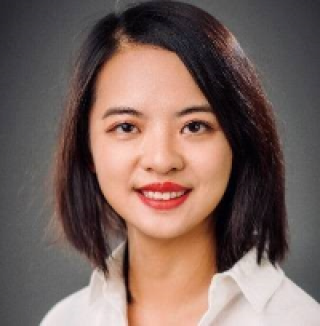 Yuncong Liu, Doctoral researcher
Yuncong is a PhD candidate at the Department of Education, Practice and Society at the IOE, UCL. Her research has centred on investigating the impact of the Medium of Instruction (MOI) on student opportunity to learn in Tanzanian secondary schools, employing a mixed-methods approach that includes interviews, surveys, and observations. Her research particularly highlights the severe constraints on teaching quality when English serves as the main MOI, and it sheds light on the long-lasting implications for social justice and education equity in the Tanzanian context.
As part of the ELEP project, she contributes as a student researcher, focusing on investigating and enhancing inclusive concepts for teaching and learning activities. Additionally, she will play an integral part in introducing refined tools and resources to aid module tutors in their upcoming instructional sessions.
 Havva Görkem Altunbas, Doctoral researcher
Görkem is a PhD candidate at the Department of Curriculum, Pedagogy, and Assessment (IoE). Her research focuses on immigrant Turkish students' attitudes toward science from a cultural perspective, exploring how sociocultural backgrounds influence their science aspirations.
She is currently in the process of writing her thesis and works as a Postgraduate Teaching Assistant in the Department of Learning and Leadership (IOE).
Professor Arathi Sriprakash, Honorary Professor
Arathi is Professor of Sociology and Education at Oxford University. Her current research examines reparative justice in educational systems and practices.
 Nasra Hersi, Intern (2022/23)
Nasra was a Comparative Education MA student when she worked as a student researcher on the ELEP project focussing on how students interact with eugenics in their education. Nasra has a keen interest in exploring innovative ways of tackling education inequality and comparative research.