Human Tissue Repair MRes

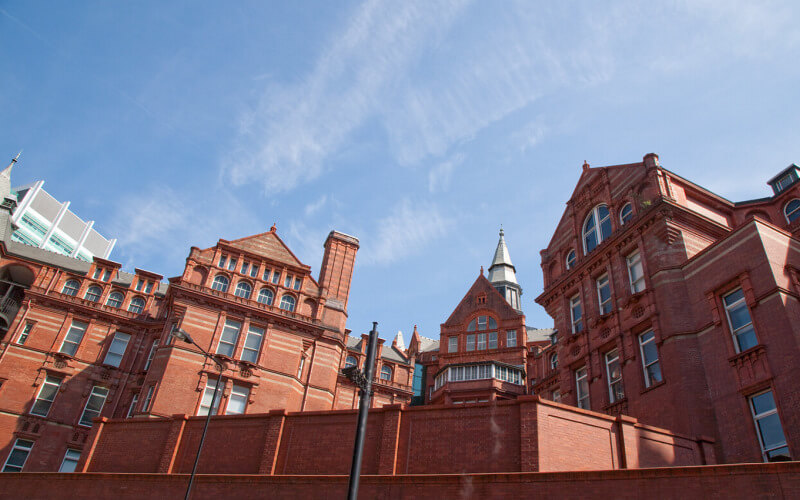
London, Hampstead (Royal Free Hospital)

Specialise in human tissue repair on this globally innovative MRes. You will be taught by leading research scientists and clinicians within UCL's world-class research and teaching environment, and receive in-depth, specialised research training. The course acts as the ideal foundation year for a biomedical research career and will equip you to work at the highest levels of biomedical science.

UK students International students
Study mode
UK tuition fees (2026/27)
£18,400
£9,200
Overseas tuition fees (2026/27)
£39,200
£19,600
Duration
1 academic year
2 academic years
Programme starts
September 2026
Applications accepted
Applicants who require a visa: 20 Oct 2025 – 26 Jun 2026
Applications close at 5pm UK time

Applications open

Applicants who do not require a visa: 20 Oct 2025 – 28 Aug 2026
Applications close at 5pm UK time

Applications open

Entry requirements

A medical degree or a UK bachelor’s degree in an appropriate subject (biological science, biomedicine, biophysics, chemistry, medicine), awarded with first or upper second-class honours, or an overseas qualification or an equivalent standard from a university or educational institution of university rank.

The English language level for this course is: Level 1

UCL Pre-Master's and Pre-sessional English courses are for international students who are aiming to study for a postgraduate degree at UCL. The courses will develop your academic English and academic skills required to succeed at postgraduate level.

Further information can be found on our English language requirements page.

Equivalent qualifications

Country-specific information, including details of when UCL representatives are visiting your part of the world, can be obtained from the International Students website.

International applicants can find out the equivalent qualification for their country by selecting from the list below. Please note that the equivalency will correspond to the broad UK degree classification stated on this page (e.g. upper second-class). Where a specific overall percentage is required in the UK qualification, the international equivalency will be higher than that stated below. Please contact Graduate Admissions should you require further advice.

About this degree


Human tissue repair after injury and in disease, and the development of effective treatments, is the focus of all biomedical research. This is the only programme in the world to offer an integrated multidisciplinary approach to learning about human tissue repair, regeneration and therapy at this level.

You will be equipped with a detailed knowledge of the fundamentals of immunology, inflammation and the immune response in human health and disease, while also studying cellular and molecular mechanisms of human tissue repair, and the therapies designed to repair and restore tissue function. Treatments covered include immunotherapy, stem cell therapy, transplantation, tissue constructs and medical devices.

You will also obtain the practical, analytical and transferable skills needed for conducting your own biomedical research.

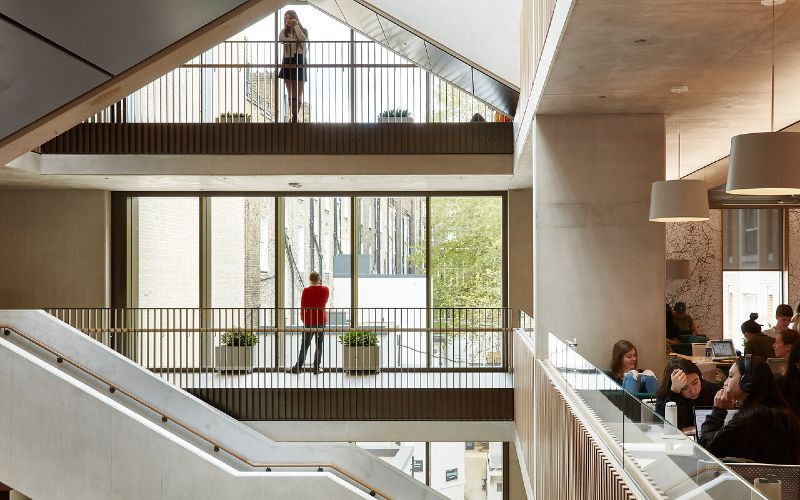
UCL offers a world-class research and teaching environment in biomedical sciences. You will be part of UCL's internationally renowned Divisions of Medicine and Surgery & Interventional Science and based at the new Institute of Immunity and Transplantation at the Royal Free Campus.

The course offers the ideal stringboard for embarking on further academic study and working at the highest levels of biomedical sciences.

Who this course is for

This programme is for scientists or clinicians who are looking to gain a thorough knowledge of the mechanisms involved in human tissue repair, inflammation, immunotherapy, tissue engineering or transplantation sciences. It is particularly relevant for those interested in working on cutting-edge biomedical research, with an emphasis on developing your practical laboratory and transferable skills for further research or working in the pharmaceutical industry.

What this course will give you

This programme offers you the following benefits and opportunities:

  • The chance to study in a world-class research and teaching environment in biomedical sciences, within UCL's new Institute of Immunity and Transplantation at the Royal Free Campus.
  • Access to teaching from UCL's internationally renowned Divisions of Medicine and Surgery and Interventional Science (the programme is run jointly by both).
  • Access to multi-disciplinary training in inflammation, immunology, tissue engineering, transplantation, drug discovery and in understanding and treating human disease.
  • Opportunities to work with experts across UCL institutes and divisions, in UCL partner hospitals, and with industrial partners.
  • The chance to develop the skills and techniques required to work successfully in a biomedical research science lab.
  • The chance to work on research that could lead to publication.

The foundation of your career

You will gain awareness of the commercial opportunities and diverse funding mechanisms for developing new ideas, technologies and applications, and be well prepared for careers in academia or industrial biomedical sciences.

According to the HESA Graduate Outcomes survey (2018-2022), 93% of Human Tissue Repair MRes graduates were either in work (53%) or further study (40%), with a majority of those in work taking highly skilled roles.

Graduates have gone on to work for healthcare charitable organisations such as Cancer Research, and retail operations such as the skincare and fragrance brand, NEOM Wellbeing. Their roles include biochemists, biomedical and biological scientists, laboratory technicians, beauticians, and managers.

Some have also gone onto work at universities or have entered graduate-entry programmes in Medicine or PhD programmes.

Employability

The programme provides a solid foundation and network for further academic study and for working at the highest levels of biomedical sciences.

You could take the specialist skills you develop into the public healthcare sector and NHS, industry and biopharma, government and research councils, biomedical charities and stakeholders, sports medicine, or scientific media and publishing houses.

Graduates are also equipped with transferable skills in presentation, writing, organisation and teamwork.

Networking

There are regular networking opportunities, including events where you can hear from expert speakers. We encourage students to broaden their skills and expand their networks by attending and participating at conferences.

Teaching and learning

The programme is delivered through a mix of seminars, lectures, e-learning, laboratory work, practicals and small group tutorials.

Assessment is through examination, presentations, coursework, practical reports and a dissertation. Examinations are taken in-person, coursework is submitted online, and practical reports are completed during lab time. Research project dissertations are written in the style of a thesis.

Term 1 has approximately 16 hours of teaching a week and 12 hours of independent learning. Typically, there are two days of lectures (four hours per day) at the beginning of each week. There is a study day (no contact) in midweek, followed by two days of tutorials (four hours per day) to consolidate the topics covered.

Term 2 has approximately 15 hours of teaching a week and 12 hours of independent learning. You spend four hours per week (lectures and tutorials) on your selective 'pathway' module. You also spend 1.5 days per week (11 hours) in a wet laboratory to gain practical research skills.

MRes students start their laboratory-based projects in the second term (part time) and continue this full-time in the third term.

Modules

Term 1 establishes the foundation of knowledge for the MRes with four compulsory core modules: 'Principles of Inflammation', 'Principles of Immunology', 'Tissue Repair and Regeneration' and 'Research Methods'.

Towards the end of the first term, you will be asked to select one of two routes (either 'Immunotherapy' or 'Applied Tissue Engineering'), and a research project based on your own scientific interests. You will then transfer onto that route. The following outlines what happens depending on which route you choose.

In Term 2, you will then choose one of two selective modules as your route: 'Immunological Basis of Disease' or 'Applied Tissue Engineering'. This will determine the name of your final degree, i.e. Human Tissue Repair ('Immunotherapy' or 'Tissue Engineering').

In the second term, you will also complete a compulsory 'Practical Laboratory Research Skills' module. This is a wet-laboratory module where you will be taught the basic skills and techniques required to work successfully in a biomedical research science lab. This will prepare you for your chosen research projects.

In Term 3, you will carry out a research project from a list of projects available within the Division of Medicine, according to your individual scientific interest and chosen route. You will be placed in, and be part of, research groups on active projects, generating valuable data which could lead to publication. Projects typically take six to eight months full time in our laboratories.

Year 1

Term 1:

  • Principles of Inflammation
  • Principles of Immunology

Term 2:      

  • Immunological Basis of Disease

or

  • Applied Tissue Engineering

Year 2

Term 1:

  • Tissue Repair and Regeneration
  • Research Methodologies and Transferable Skills

Term 2:

  • Practical Laboratory Research Skills

Term 2 and 3: 

  • Research Project

Optional modules

Inflammation and Disease


Please note that the list of modules given here is indicative. This information is published a long time in advance of enrolment and module content and availability are subject to change. Modules that are in use for the current academic year are linked for further information. Where no link is present, further information is not yet available.

Students undertake modules to the value of 180 credits. Upon successful completion of 180 credits, you will be awarded an MRes in Human Tissue Repair.

Accessibility

The department will endeavour to make reasonable adjustments for students with disabilities, including those with long-term health conditions, neurodivergence, learning differences and mental health conditions. This list is not exhaustive. If you're unsure of your eligibility for reasonable adjustments at UCL, please contact Student Support and Wellbeing Services.

Reasonable adjustments are implemented on a case-by-case basis. With the student's consent, reasonable adjustments are considered by UCL Student Support and Wellbeing Services, and where required, in collaboration with the respective department.

Details of the accessibility of UCL buildings can be obtained from AccessAble. Further information about support available can be obtained from UCL Student Support and Wellbeing Services.

For more information about the department and accessibility arrangements for your course, please contact the department.

Online - Open day

Graduate Open Events: Genetics and Multiomics in Medicine MSc

Join us for the Genetics and Multiomics in Medicine MSc Virtual Graduate Open Day at UCL! This event is a fantastic opportunity to learn more about our cutting-edge programme and meet our faculty. Discover how our curriculum can help you advance your career in the field of genetics and multiomics. The event includes a programme overview, followed by a Q&A with the programme lead and alumni.

Fees and funding

Fees for this course

UK students International students
Fee description Full-time Part-time
Tuition fees (2026/27) £18,400 £9,200
Tuition fees (2026/27) £39,200 £19,600

Postgraduate Taught students benefit from a cohort guarantee, meaning that their tuition fees will not increase during the course of the programme, but UCL reserves the right to increase tuition fees to reflect any sums (including levies, taxes, or similar financial charges) that UCL is required to pay any governmental authority in connection with tuition fees.

The tuition fees shown are for the year indicated above. Where the course is offered on a flexible/modular basis, fees are charged pro-rata to the appropriate full-time Master's fee taken in an academic session. Further information on fee status, fee increases and the fee schedule can be viewed on the UCL Students website: ucl.ac.uk/students/fees.

Additional costs

If you want to make the most of our facilities, you may need to factor in the cost of travel between our campuses. Find out about the cost of using public transport at Transport for London.

For in-person teaching, UCL’s main teaching locations are in zones 1 (Bloomsbury) and zones 2/3 (UCL East). The cost of a monthly 18+ Oyster travel card for zones 1-2 is £119.90. This price was published by TfL in 2025. For more information on additional costs for prospective students and the cost of living in London, please view our estimated cost of essential expenditure at UCL's cost of living guide.

Funding your studies

Bursaries are available for several Division of Medicine programmes. Find out if this course is eligible.

For a comprehensive list of the funding opportunities available at UCL, including funding relevant to your nationality, please visit the Scholarships and Funding website.

Next steps

Students are advised to apply as early as possible due to competition for places. Those applying for scholarship funding (particularly overseas applicants) should take note of application deadlines.

When we assess your application, we would like to learn:

  • why you want to study Human Tissue Repair at graduate level
  • why you want to study Human Tissue Repair at UCL
  • what particularly attracts you to a laboratory research programme
  • how your academic and professional background meets the demands of this and where you would like to go professionally with your degree

Together with essential academic requirements, the personal statement is your opportunity to illustrate whether your reasons for applying to this programme match what the programme will deliver.

Please note that you may submit applications for a maximum of two graduate courses (or one application for the Law LLM) in any application cycle.

Choose your programme

Please read the Application Guidance before proceeding with your application.

Year of entry: 2026-2027

Got questions? Get in touch

UCL is regulated by the Office for Students.