 Close
Close


Contact details and team information for Higher Education Development & Support Institute (HEDS) - Arena. HEDS is part of UCL Education & Student Experience.
Arena offers a range of support and professional development for those who teach and support students at UCL. We deliver a variety of programmes that aim to improve the quality and consistency of teaching across the institution. Find out more about HEDS.
The team develop face-to-face and online courses, as well as bespoke resources and guidance for UCL's educators. The team also assists UCL staff who deliver or support education to obtain HEA-accredited Fellowship status.
There are three main functions:
- Arena Consultancy: Arena Consultants provide support to faculties for pedagogy and practice development
- Arena Staff Development: Develop and deliver courses for staff that deliver and support education at UCL, including support for use of technology in teaching. Support the HEA-accredited Arena Fellowship scheme. Lead on reward, recognition and support of good practice in teaching and assessment.
- Programme Development: Work with all new programmes, and many existing programmes, on their learning design approaches. Lead on assessment diversification.
 Dr Danielle Tran, PFHEA
Associate Professor (Teaching)
Deputy Director of Higher Education Development & Support Institute (HEDS)
Email: danielle.tran@ucl.ac.uk
Prior to joining HEDS, I was Director of Education and Reader in Developmentally Disruptive Practices and Pedagogies at the University of the Arts London (UAL), UK. I've worked at various UK HE institutions across different roles and areas.
My research interests include decolonising teaching and learning, belonging, and reflective practice.
 Dr Peter Fitch, SFHEA
Associate Professor (Teaching)
Associate Director UCL Higher Education and Development Support Institute (Faculty Partnership & Programme Enhancement)
Email: p.fitch@ucl.ac.uk
Tel: +44 (0)20 3108 5656 (internal: 55656)
I teach across the UCL Arena Centre’s professional development provision for PhD students and staff involved in learning, teaching, and supporting the student experience
I lead on Arena's Faculty Partnership and Programme Development & Enhancement work, and have responsibility for Personal Tutoring staff development across UCL.
I work closely with the Faculty of Mathematical and Physical Sciences (MAPS) to support and enhance their education provision.
Research interests
My educational research interests focus on personal tutoring in higher education, flipped learning in the STEM classroom (particularly student perceptions and engagement approaches), PGT students’ learning approaches, digital communities of learning, and peer support networks.
Dr Pete Fitch on UCL Profiles.
Contact me about
- Arena Faculty Partnerships.
- Programme Development & Enhancement.
- Personal Tutoring.
- Flipped learning approaches (including Team-based Learning)
- Educational enhancement in the Faculties of MAPS and Brain Sciences.
 Dr Jennifer Griffiths, SFHEA
Associate Professor (Teaching)
Associate Director UCL Higher Education and Development Support Institute (Staff development and recognition)
Email: j.griffiths@ucl.ac.uk
I lead on UCL’s staff educational development programme and AdvanceHE accredited professional recognition for all staff involved in education and student experience. The covers everyone from our newest Teaching Assistants through to senior education leadership, supporting their development as educators, and recognition through our HEA fellowship scheme.
Prior to joining the Arena Centre, I worked in Medical Physics research and Engineering Education. I have significant experience of developing new cross-disciplinary programmes that embed active and authentic learning and assessments to develop students’ understanding and skills, especially at Postgraduate level. I have delivered workshops and presentations internationally on Capacity Building and staff development, Engineering Education and Authentic Assessment. I am a degree accreditor for the Institute of Physics and Co-Chair of the SEFI (European Society for Engineering Education) Special Interest Group on Capacity Building.
My areas of active education research include
- Capacity building/staff pedagogical development of engineering educators
- Staff and student engagement with feedback
Contact me about
- Arena Fellowships (AFHEA, FHEA, SFHEA, PFHEA).
- The UCL Education Awards
- Educational enhancement in the Faculty of Engineering Sciences
- Leading Change in Education (UCL’s senior education leadership development programme)
 Dr Jason Davies, SFHEA
Associate Professor (Teaching)
Email: j.p.davies@ucl.ac.uk
Tel: +44 (0)20 3108 6457 (internal: 56457)
I teach across the UCL Arena Centre's professional development provision and lead the Arena Senior Fellowship Pathway as well as co-chairing Liberating the Curriculum.
My areas of active research include
- Interdisciplinarity.
- Threshold concepts.
- Inclusive curriculum.
Contact me about
- Inclusive curriculum.
- Threshold concepts.
- Educational enhancement in the departments/faculties listed above.
Email Tuesday-Friday is the best way to reach me (I don't work Mondays).
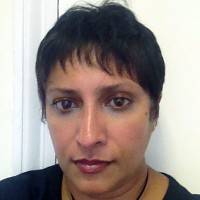 Dr Manjula Patrick, SFHEA
Associate Professor (Teaching)
Email: m.patrick@ucl.ac.uk
I am Arena’s inclusive education lead with a focus on reducing awarding gaps for racially minoritised, disabled and mature students.
I joined Arena in August 2022 but have worked at department and faculty level across UCL for many years. Equity and inclusion form the core of my work, and I am an advocate for intersectional solutions to inequity.
I work with different stakeholders across the institution to develop innovative, workable interventions that progress inclusive education practices.
Contact me about
 Jesper Hansen, SFHEA
Associate Professor (Teaching)
Email: j.hansen@ucl.ac.uk
Tel: +44 (0)20 3108 6455 (internal: 56455)
I lead Arena for Lecturers on Probation (ALP) which is a development course for all UCL lecturers and associate lecturers on probation. It is mandatory, but you can apply for an exemption if you have undertaken similar training (such as a PGCert) and/or have already obtained Fellowship of the Higher Education Academy (FHEA).
I am one of the founding editors of the journal Postgraduate Pedagogies.
My areas of active research include
Representation of gender and sexuality in higher education teaching, with a particular focus on language teaching. An example of how I work to support teachers at UCL can be found in the Teaching Toolkit 'Recognising and including LGBTQ+ identities in language teaching'.
Contact me about
- Educational enhancement in the departments/faculties listed above.
- For Arena for Lecturers on Probation (ALP), please contact arenacentre.probation@ucl.ac.uk in the first instance.
 Helen Knowler
Associate Professor (Teaching)
Email: h.knowler@ucl.ac.uk
Tel: +44 (0)20 3108 6434 (internal: 56434)
I am an Associate Professor (Teaching) based in the Arena Centre. I am a qualified teacher and experienced tutor at both undergraduate and postgraduate level. I worked at the universities of Bristol and Exeter before joining UCL in September 2022.
My expertise is in Inclusive Education, and I have published widely on exclusionary practices in a range of education contexts. I specialise in developing inclusive approaches to teaching and learning related to controversial or problematic issues. I am currently the academic lead for developing the educational responses to the Eugenics Legacy Education Project and I work across all departments and faculties.
Contact me about:
Eugenics Legacy Education Project
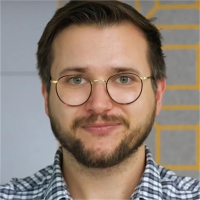 Dr Jamie Cawthra, FHEA
Lecturer (Education and Practice Development)
Email: j.cawthra@ucl.ac.uk
I've taught and researched at a few very different Higher Education institutions since 2015, and in subjects including Foundation Year and Business Management. My background, though, is in philosophy. This includes ethics and aesthetics, but I'm particularly interested in the philosophy of pedagogy.
I joined the Arena team in 2024. Here, I teach on Arena's range of professional development courses for UCL staff and PGTAs.
My research interests include
the role of trust and inclusivity in higher education, particularly when it comes to academic integrity. Drop me a line if you'd ever like to talk about those areas!
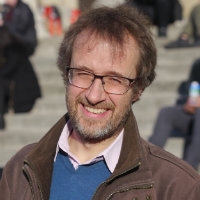 Dr Nick Grindle, SFHEA
Lecturer (Teaching)
Email: n.grindle@ucl.ac.uk
Tel: +44 (0)20 3108 6458 (internal: 56458)
I am leading the development of the UCL ChangeMakers Change Projects, and I teach on the UCL Arena events we run for staff and PhD students.
I joined the UCL Arena Centre in 2011 from the History of Art department.
My areas of active research include
What role audiences play in shaping what, and how, students learn. I'm particularly interested in the potential that digital environments play in helping students identifying their audiences and communicating their work.
I am also working with colleagues across UCL to investigate ways of connecting students with research, and in particular to evaluate different versions of Meet the Researcher activities.
Contact me about
- UCL ChangeMakers
- Meet the Researcher and connecting students with research.
- Educational enhancement in the departments/faculties listed above.
 Frances Lane, SFHEA PGCE
Lecturer (Teaching)
Email: f.lane@ucl.ac.uk
I began my career as a secondary school teacher. I started training teachers in Higher Education in 2012, where I have led Post Graduate Certificate in Education (PGCE) and Post Graduate Diploma programmes in education. I have also worked within learning and development for professionals in government.
I teach across the UCL Arena Centre’s professional development provision for PhD students, research staff and early career academics.
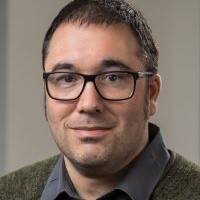 Tom Langston, SFHEA
Lecturer (Teaching)
Email: t.langston@ucl.ac.uk
I have worked in Higher Education since 2006 and joined UCL in 2024. I have worked across many areas in Higher Education although my focus has always been effective digital learning spaces and student engagement. My areas of interest included creative approaches within taught spaces using Active Blended Learning (ABL). This often manifested itself through the use of Audience Response Tools (ARS) to create active learning spaces.
I completed my PGCert in HE in 2020 and started teaching on the programme, I helped to develop how the feedback for the assessment was approached, incorporating written, audio and video into the process.
I now teach as part of the UCL Arena team on the range of professional development areas.
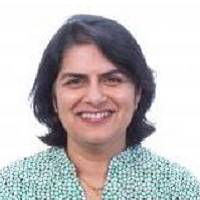 Dr Anjoom Mukadam PGCE, SFHEA
Lecturer (Teaching)
Email: anjoom.mukadam@ucl.ac.uk
I am the Programme Director of UCL Arena for PGTAs. I also teach across UCL Arena Centre’s professional development provision for PhD students, research staff and early career academics.
My areas of active research include:
- Student empowerment in Higher Education
- Active learning online
- Coaching approaches for supporting students
- Tactile pedagogies and gamification
- Inclusive practice
Faculty Liaison: IOE, UCL’s Faculty of Education and Society
Contact me about
Arena for PGTAs (for PhD students and Postdocs who teach) and any other support needed for postgraduate teaching assistants – you can also email arena.pgta@ucl.ac.uk
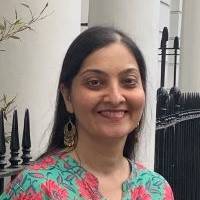 Dr Sharmina Mawani SFHEA
Lecturer (Teaching)
I have extensive experience of teaching postgraduate students in higher education from different cultural contexts. I am passionate about enhancing student empowerment, and am an advocate of a learner-centred approach, as well as a firm believer in working in partnership with students to bring diverse perspectives into the classroom, thereby creating transformative learning and teaching experiences.
I am committed to creating spaces where educators can reflect on their own teaching practice, share challenges, as well as best practices in innovative teaching strategies that have made their students feel that they, as individuals, and their cultures are valued and respected.
I teach across the UCL Arena Centre’s professional development provision for PhD students, research staff and early career academics.
My research interests include:
- decolonising and diversifying the curriculum
- assessment and feedback practices
- personal tutoring and student well-being
- coaching in education
- student engagement and partnership
Dr Sharmina Mawani's staff profile
Faculty Liaison: UCL Faculty of Life Sciences
 Ronan Haughton
Senior Teaching and Learning Administrator
Email: r.haughton@ucl.ac.uk
Tel: +44 (0)207 907 4625 (internal: 54625)
I manage the UCL Arena Centre’s administration for provisions aimed at research staff, early career academic development, UCL Personal Tutors and PS Staff supporting students.
This includes:
- Managing the Arena for Probationary Lecturers programme, the UCL development pathway for Lecturers on probation.
- Development and training for research supervisors, personal tutors and professional service staff.
- Other one-off events and opportunities for early-career staff.
- Managing the UCL PGTA Hub's content
- Co-ordinating the SSW provisions for staff supporting students.
Contact me about
- Arena for Probationary Lecturers (for Lecturers and Teaching Fellows on probation) – you can also email arenacentre.probation@ucl.ac.uk.
- Research Supervisor development.
- Personal tutoring.
- Support and development opportunities for early career academics and Professional Service staff supporting PGRs.
 Moira Paganelli
Teaching and Learning Administrator
Email: m.paganelli@ucl.ac.uk
Tel: +44 (0)20 3108 9397 (internal: 59397)
I lead the administration of the UCL Arena for PGTAs, Gateway workshops and the Teaching Associate Programme, which interacts with over 700 attendants every year.
I also co-ordinate UCL Arena Events, run by UCL staff and external colleagues.
Contact me about
- Arena for PGTAs (for PhD students and Postdocs who teach) and any other support needed for postgraduate teaching assistants – you can also email arena.pgta@ucl.ac.uk.
 Peter Phillips, AFHEA
Senior Teaching and Learning Administrator
Email: peter.phillips@ucl.ac.uk
Tel: +44 (0)20 3108 6468 (internal: 56468)
I manage the administration of the Arena Fellowship scheme, offering support and guidance to staff at all stages of the application process
Contact me about
 Sandra Lusk, AFHEA
Projects Manager (Academic Development)
Email: s.lusk@ucl.ac.uk
Tel: +44 (0)20 3108 6467 (internal: 56467)
I manage the administration of the UCL’s programme design service to drive enhancement in learning and teaching practice.
In partnership with UCL ChangeMakers, UCL Student Union, I co-ordinate the Student Quality Reviewers programme, which provides opportunity for students to engage with UCLs quality assurance and enhancement activities.
On behalf of UCL Arena team, I co-ordinate a range of academic development events for UCL staff and students, including UCL Education Conference and Academic Practice Conference (APT)
Contact me about:
- UCL Arena Programme Design
- Peer Dialogue: Option C, Student Reviewers of Teaching
- UCL Education Conference
- UCL Education Awards
- Academic Practice Conference (APT)
 Tor Wright
Eugenics Legacy Education Project (ELEP) - Project Manager
Email: t.wright@ucl.ac.uk
Tel: +44 (0)20 7679 6127 (internal: 56127)
I joined the Arena team after nearly seven years working in the UCL Medical School.
I am working with Helen Knowler, the associate professor (teaching) developing UCL’s Eugenics Legacy Education Project, one of the outcomes of the Inquiry into the History of Eugenics at UCL, who published their report and recommendations in 2021.
Contact me about:
The Eugenics Legacy Education Project.
 Richard Steele
Communications Manager
Email: richard.steele@ucl.ac.uk
Tel: +44 (0)20 7911 5320 (internal: 05320)
I joined the Arena team in June 2023. I am working with Helen and Tor to help organise the activities of ELEP with a particular focus on events and engagement activities. I’m also looking at how we evaluate and report back on aspects of the project.
I also work in the communications team of the UCL Centre for Longitudinal Studies for some of the week.
Contact me about:
The Eugenics Legacy Education Project.
 Leo Havemann
Programme Development Advisor
Email: l.havemann@ucl.ac.uk
Tel (internal): 58043
I work with teaching teams to design programmes and modules. Working closely with the Director and Head of Programme Development, I lead the development, promotion and sharing of excellent practice in the design of programmes and modules across UCL’s faculties and departments.I work as a core member of UCL’s programme development service to drive enhancement in learning and teaching practice.
I develop and implement a framework for programme and module development linked to effective learning design and assessment.
I work closely with Arena Consultants, Digital Education and Faculty colleagues to ensure that staff receive expert consistent, coordinated and practical support and guidance.
Contact me about
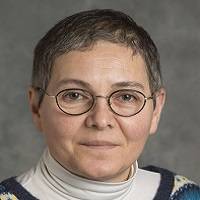 Nataša Perović
Programme Development Advisor
Email: n.perovic@ucl.ac.uk
Tel (internal): 65443
I work with teaching teams to design programmes and modules. Working closely with the Director and Head of Programme Development, I lead the development, promotion and sharing of excellent practice in the design of programmes and modules across UCL’s faculties and departments.I work as a core member of UCL’s programme development service to drive enhancement in learning and teaching practice.
I develop and implement a framework for programme and module development linked to effective learning design and assessment.
I have a background in science, web development and teaching and have been working on education development in medical and allied health sciences in higher education since 2006. I am co-creator of the ABC Learning Design method.
I work closely with Arena Consultants, Digital Education and Faculty colleagues to ensure that staff receive expert consistent, coordinated and practical support and guidance.
Contact me about
 Karen Shackleford-Cesare
Programme Development Advisor
Email: k.shackleford-cesare@ucl.ac.uk
Tel (internal): 56238
I work with teaching teams to design programmes and modules. Working closely with the Director and Head of Programme Development, I lead the development, promotion and sharing of excellent practice in the design of programmes and modules across UCL’s faculties and departments.I work as a core member of UCL’s programme development service to drive enhancement in learning and teaching practice.
I develop and implement a framework for programme and module development linked to effective learning design and assessment.
I work closely with Arena Consultants, Digital Education and Faculty colleagues to ensure that staff receive expert consistent, coordinated and practical support and guidance.
Contact me about
- Supporting the design of new programmes or modules
- Assessment design
- Review of existing programme