Special Care Dentistry MSc

London, Bloomsbury

Special Care Dentistry ensures that all patients are appropriately managed to enhance their function and quality of life. This master's degree provides dentists with the knowledge to enhance their ability to provide care to patients with special needs. It is available full-time or part-time and is taught at new facilities in the heart of London.

UK students International students
Study mode
UK tuition fees (2026/27)
£41,800
£20,900
Overseas tuition fees (2026/27)
£70,300
£35,150
Duration
1 academic year
2 academic years
Programme starts
September 2026
Applications accepted
All applicants: 20 Oct 2025 – 30 Jun 2026
Applications close at 5pm UK time

Applications open

Entry requirements

All applicants must hold an approved dental qualification and normally have a minimum of two years clinical experience post-qualification.

The English language level for this course is: Level 3

UCL Pre-Master's and Pre-sessional English courses are for international students who are aiming to study for a postgraduate degree at UCL. The courses will develop your academic English and academic skills required to succeed at postgraduate level.

Further information can be found on our English language requirements page.

Equivalent qualifications

Country-specific information, including details of when UCL representatives are visiting your part of the world, can be obtained from the International Students website.

International applicants can find out the equivalent qualification for their country by selecting from the list below. Please note that the equivalency will correspond to the broad UK degree classification stated on this page (e.g. upper second-class). Where a specific overall percentage is required in the UK qualification, the international equivalency will be higher than that stated below. Please contact Graduate Admissions should you require further advice.

About this degree


The number of individuals with complex systemic disease that may impact upon oral health and the provision of dental care is rising. Increasing lifespans have led to an increase in cardiac, neurological, endocrine, and other disease processes. Special Care Dentistry is now more relevant than ever to ensure all patients are managed appropriately to enhance their function and quality of life.

Our Special Care Dentistry MSc provides a detailed understanding of the common systemic disorders likely to be of implication for routine dental care. You will gain an understanding of the appropriate management and the ability to undertake clinical investigations for patients with systemic disease likely to complicate dental treatment.

We emphasise putting theory into practice to ensure that graduates are well equipped to manage patients with complex needs and help them maintain good oral health and general wellbeing.

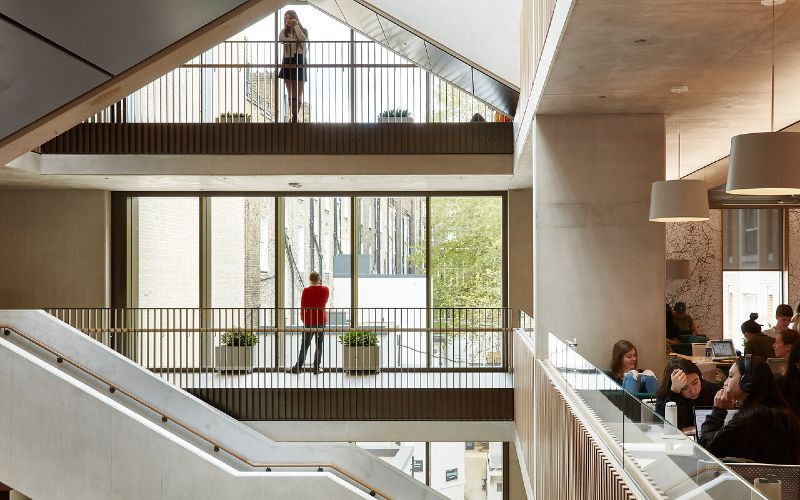
Our students are taught in new facilities in the heart of London and the campuses of UCL and UCLH NHS Foundation. All clinical teaching takes place within the newly opened UCLHT Eastman Dental Hospital, while all non-clinical teaching is within UCL Eastman Dental Institute. The facilities within these sites and the UCL libraries provide a unique twenty-first century educational experience.

Who this course is for

The programme is directed towards dentally qualified clinicians who wish to extend their knowledge and skills in special care dentistry to become a competent practitioner in the field within and outside the United Kingdom.

What this course will give you

This programme offers you the following benefits and opportunities:

  • Teaching in new facilities in the heart of London. All clinical teaching takes place within the newly opened UCLHT Eastman Dental Hospital.
  • Friendly, welcoming staff, and a highly experienced Professional Services team.
  • A comprehensive education portfolio.
  • Teaching by national and international leaders of special care dentistry and allied subjects who bring a wealth of experience in teaching at the postgraduate level and the clinical care of patients with complex needs.
  • Access to a wealth of online material allied to the course and UCL library services.

The foundation of your career

Students establish important working collaborations with staff at the institute and other parts of UCL. They will be encouraged to present aspects of their work at international conferences, which provides further opportunities to collaborate with specialists from across the globe.

Employability

The course provides students with knowledge, skills, and collaborations to further their clinical careers. According to the HESA Graduate Outcomes survey (2018-2022), 80% of Special Care Dentistry graduates have remained in, or progressed onto, highly skilled work in dental practice. This includes roles in UK NHS Trusts and overseas in dental services and governments in Australia and Hong Kong. The remainder went onto further study.

Historically, former students have gone on to become specialists and/or consultants in special care dentistry in the UK and abroad. Some have gone on to establish special care dental services, create undergraduate or postgraduate programmes, and become leaders of specialist organisations relevant to special care dentistry.

Notable alumni

Networking

There are regular networking opportunities, including events where you can hear from expert speakers. We encourage students to broaden their skills and expand their networks by attending and participating at conferences.

Teaching and learning

The programme is delivered through a combination of lectures, tutorials, seminars, journal clubs and clinics organised by staff from the institute and its allied hospital. The more didactic elements of teaching are delivered via online and face-to-face lectures, seminars, and tutorials. All clinical teaching is provided via attendance at the many clinics of special care dentistry in UCLHT Eastman Dental Hospital.

Assessments / examinations include:

  • Essay-type written examinations
  • Completion of a logbook of clinical activities
  • Completion of case reports
  • Completion of written dissertation
  • Viva-type examinations.

The programme is approximately 46 weeks long and extends over one academic year with students expected to attend in person throughout.

The workload will be roughly equivalent to a full-time job. Approximately 25% of your time (around 10 hours per week) is dedicated to lectures, seminars, and other teaching activities.

The remaining 75% is allied to clinical teaching via direct patient contact (around 20 hours per week) and personal study, which includes completing a research dissertation (around 10 hours per week).

In view of its clinical nature, students will attend the Bloomsbury Campus on most weekdays throughout the programme.

Modules

You will take five compulsory taught modules and the research dissertation.

Areas covered include: 

  • Clinical Science and Research Methods
  • Principles of Therapeutics and Treatment
  • Clinical Care
  • Applied Biology
  • Systemic Disease and Behavioural Sciences of Relevance to Special Care Dentistry
  • Ethics
  • Governance and Public Health of Relevance to Special Care Dentistry
  • A dissertation.

Modules are undertaken in parallel. You will receive conventional teaching as well as clinical teaching spread across each week of the programme. In the early stages, teaching is principally conventional to ensure you have the understanding to be able to manage patients appropriately.

The programme can be taken part-time over two academic years. While we make every effort to accommodate the needs of students, it is essential that:

  1. In the first year, students always attend on a Monday, when the majority of lectures are delivered.
  2. Students attend for two or three consecutive days in the first year (with additional contact days during the induction period).

Please note that the list of modules given here is indicative. This information is published a long time in advance of enrolment and module content and availability are subject to change. Modules that are in use for the current academic year are linked for further information. Where no link is present, further information is not yet available.

Students undertake modules to the value of 180 credits. Upon successful completion of 180 credits, you will be awarded an MSc in Special Care Dentistry.

Accessibility

The department will endeavour to make reasonable adjustments for students with disabilities, including those with long-term health conditions, neurodivergence, learning differences and mental health conditions. This list is not exhaustive. If you're unsure of your eligibility for reasonable adjustments at UCL, please contact Student Support and Wellbeing Services.

Reasonable adjustments are implemented on a case-by-case basis. With the student's consent, reasonable adjustments are considered by UCL Student Support and Wellbeing Services, and where required, in collaboration with the respective department.

Details of the accessibility of UCL buildings can be obtained from AccessAble. Further information about support available can be obtained from UCL Student Support and Wellbeing Services.

For more information about the department and accessibility arrangements for your course, please contact the department.

Fees and funding

Fees for this course

UK students International students
Fee description Full-time Part-time
Tuition fees (2026/27) £41,800 £20,900
Tuition fees (2026/27) £70,300 £35,150

Postgraduate Taught students benefit from a cohort guarantee, meaning that their tuition fees will not increase during the course of the programme, but UCL reserves the right to increase tuition fees to reflect any sums (including levies, taxes, or similar financial charges) that UCL is required to pay any governmental authority in connection with tuition fees.

The tuition fees shown are for the year indicated above. Where the course is offered on a flexible/modular basis, fees are charged pro-rata to the appropriate full-time Master's fee taken in an academic session. Further information on fee status, fee increases and the fee schedule can be viewed on the UCL Students website: ucl.ac.uk/students/fees.

Additional costs

For full-time and part-time offer holders with a fee status classification of UK, a fee deposit will be charged at 2.5% of the first year fee.

For full-time and part-time offer holders with a fee status classification of Overseas, a fee deposit will be charged at 10% of the first year fee.

Further information can be found in the Tuition fee deposits section on this page: Tuition fees.

Students must arrange their own financial support for travel / living in London for the face-to-face teaching period, including clinical teaching in the partner University College London Hospital.

This course requires a completed DBS check for some compulsory modules. You will receive more information from UCL on how to complete the check once you have firmly accepted an unconditional offer for the programme. A charge for Post Office ID verification (£15.00) needed for an application to the Disclosure and Barring Service (DBS) is payable by the student. The cost of the DBS check itself is paid for by UCL.

If you have lived, worked, studied or travelled in any single country outside of the UK for six continuous months or more, in the last five years, you will be required to obtain a Certificate of Good Conduct/Police Check from the relevant country/countries. The cost of this check varies by country and is payable by the student. More information on how to obtain these can be found on gov.uk.

For more information about the DBS application process, please contact the UCL Graduate Admissions team.

For in-person teaching, UCL’s main teaching locations are in zones 1 (Bloomsbury) and zones 2/3 (UCL East). The cost of a monthly 18+ Oyster travel card for zones 1-2 is £119.90. This price was published by TfL in 2025. For more information on additional costs for prospective students and the cost of living in London, please view our estimated cost of essential expenditure at UCL's cost of living guide.

Funding your studies

For a comprehensive list of the funding opportunities available at UCL, including funding relevant to your nationality, please visit the Scholarships and Funding website.

Next steps

Students are advised to apply as early as possible due to competition for places. Those applying for scholarship funding (particularly overseas applicants) should take note of application deadlines.

There is an application processing fee for Eastman Dental Institute courses of £120 for online applications. Further information can be found at Application fees.

When we assess your application, we would like to learn:

  • how your academic and professional background meets the demands of this programme
  • why you want to study special care dentistry at graduate level
  • what particularly attracts you to this programme
  • what is your source of funding and is this something you have applied for already
  • what is your previous experience of special care dentistry
  • what your plans are after completing this master's degree and how you expect this qualification to help you.

Together with essential academic requirements, the personal statement is your opportunity to illustrate whether your reasons for applying to this programme match what the programme will deliver.

What happens next?

If you are shortlisted, we shall invite you for an online interview to assess your understanding of the discipline, your professional values, your strengths, motivations, interests, and communication skills.

What qualities are we looking for?

In addition to an enjoyment of academic learning and research:

  • An understanding of professional integrity and a commitment to patient care.
  • Good interpersonal and communication skills.
  • Good manual dexterity and an ability to follow surgical guidance.
  • An understanding of the values of teamwork, safety, and improvement.
  • Always treating others with compassion, kindness, dignity, and respect, ensuring patient-centred care, listening, and responding to the specific needs of individuals.

Further requirements if accepted

Working with the public, you will be subject to screening by UCL Occupational Health and through the Criminal Records Bureau Disclosure and Barring Service (DBS).

You will need to consent to vaccinations to protect yourself and your patients.

Please note that you may submit applications for a maximum of two graduate courses (or one application for the Law LLM) in any application cycle.

Choose your programme

Please read the Application Guidance before proceeding with your application.

Year of entry: 2026-2027

UCL is regulated by the Office for Students.