
UCL Logo Navigate back to homepage

Main navigation

  • Home
  • Study

    Study

    • Study at UCL
    • Prospective students
    • Current students
    • Languages and international education
    • Accommodation
    • Careers
    • Doctoral School
    • Immigration and visas
    • Student finances
    • Support and wellbeing
  • Research

    Research

    • Research at UCL
    • Engage with us
    • Explore our Research
    • Initiatives and networks
    • Research news
  • Engage

    Engage

    • Engage with UCL
    • Alumni
    • Business partnerships and collaboration
    • Global engagement
    • News and Media relations
    • Policy and political engagement
    • Schools and priority groups
    • Give to UCL
  • About

    About

    • About UCL
    • Who we are
    • Faculties
    • Governance
    • President and Provost
    • Strategy
    • UCL's Bicentenary

Sophie's story

Sophie, 26, began CAR T-cell therapy after her leukaemia returned for a third time. Now. things are finally getting back to normal for the horse trainer.
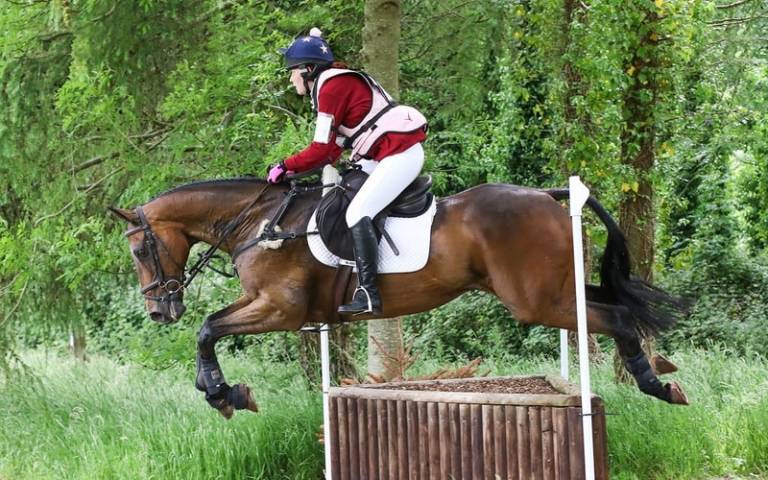
Sophie, trial patient, leaping over a barrier on a horse

Breadcrumb trail

  • Faculty of Medical Sciences

Breadcrumb trail

  • Faculty of Medical Sciences
  • Sophie's story

Sophie was 17 years old when she was first diagnosed with leukaemia.

A keen horse trainer who was also working in a bridal shop, she had begun to lose weight and was often feeling tired. Although she put this down to being so busy, when she got a nosebleed that wouldn’t stop, her dad took her to hospital. 

“The nurses told me, ‘we think you’ve got something. It is curable, but the doctor will come back tomorrow and tell you’. The doctor came the next day and said, ‘you’ve got leukaemia’.”

The news was a shock, and Sophie soon began chemotherapy treatment. Although effective at first, the cancer eventually returned. This time, it was more aggressive, attacking her central nervous system. 

As a result, Sophie had a bone marrow transplant. This was an uncomfortable procedure which kept her in hospital for three months, but it cleared the leukaemia, and she was able to get back to work, and back to her horses.

But Sophie explains what happened next: “About a year later, I didn’t feel right, it was weird. So I went to the hospital and got tested and they said ‘look, it’s come back’. I just thought ‘oh god, not again’. This was the third time now.”

With the leukaemia even more aggressive than before, Sophie’s consultant suggested CAR T-cell therapy. This would, however, involve the daunting step of travelling from rural Somerset where she lived to busy central London, where the treatment was being trialled at UCLH.

Sophie is keen to reassure others who may face a similar journey that there was nothing to worry about. She met Dr Claire Roddie and the team: “They are a lovely team up there. You couldn’t wish for nicer people. They make you feel quite positive and tell you what it’s like, in simple terms.”

After initial tests, Sophie began CAR T-cell therapy.

She had to be closely monitored, and her experience wasn’t without side-effects (which, a month after therapy, meant a further weekend in hospital and steroid treatment), but Sophie is now in complete remission.

For someone who was always so physically active, she has needed a period of adjustment, but is making progress by the day: “I can do early mornings, but I used to get up at 5 or 6 o’clock, and now if I do that for too long, it does catch up with me. I’ll try and keep going, but now I just feel when I need to stop, and listen to my body, and have a quiet day.”

Sophie is now glad to be back to riding horses, taking part competitions for the first time since her treatment. She speaks with us after spending the previous evening paddleboarding with friends. Things are getting back to normal: “My life’s just busy,” she smiles.

Support us

If you are interested in supporting the work we do, you can donate to support cancer research at UCL, or contact advancement@ucl.ac.uk to discuss making a donation or leaving a gift for cancer research in your will.

Donate


Highlights in Medical Sciences

Groundbreaking bowel cancer trial follow-up shows zero relapses
close up view of a mans arm while having an IV immunoglobulin infusion at hospital

Research

Groundbreaking bowel cancer trial follow-up shows zero relapses

Patients with a specific bowel cancer who were given short-course immunotherapy before surgery, instead of post-op chemotherapy, remained cancer-free after nearly three years of follow-up.

Drug to treat aggressive leukaemia approved for use in adults
Fluorescence microscopy image of immune cells, showing blue-stained nuclei surrounded by green cell membranes with red marker signals indicating specific proteins or activity within the cells.

Research

Drug to treat aggressive leukaemia approved for use in adults

Adult patients with aggressive leukaemia will soon be able to receive a breakthrough immunotherapy, developed by UCL researchers, on the NHS after approval by NICE.

Millions could benefit from faster prostate cancer scan
healthy prostate scan

Research

Millions could benefit from faster prostate cancer scan

Results of the PRIME trial involving UCL Medical Sciences researchers have found that a quicker, cheaper MRI scan was just as accurate at diagnosing prostate cancer as the current 30-40 minute scan.

UCL footer

Visit

  • Bloomsbury Theatre and Studio
  • Library, Museums and Collections
  • UCL Maps
  • UCL Shop
  • Contact UCL

Students

  • Accommodation
  • Current Students
  • Moodle
  • Students' Union

Staff

  • Inside UCL
  • Staff Intranet
  • Work at UCL
  • Human Resources
UCL Logo

University College London

Gower Street, London, WC1E 6BT

Telephone: +44 (0) 20 7679 2000

UCL social media menu

  • Link to Instagram
  • Link to LinkedIn
  • Link to Youtube
  • Link to TikTok
  • Link to Facebook
  • Link to Bluesky
  • Link to Threads
  • Link to Soundcloud
Here, it can happen.
Back to top

Essential

  • Disclaimer
  • Freedom of Information
  • Accessibility
  • Cookies
  • Privacy
  • Slavery statement
  • Log in

© 2026 UCL