 Close
Close


Panos's story
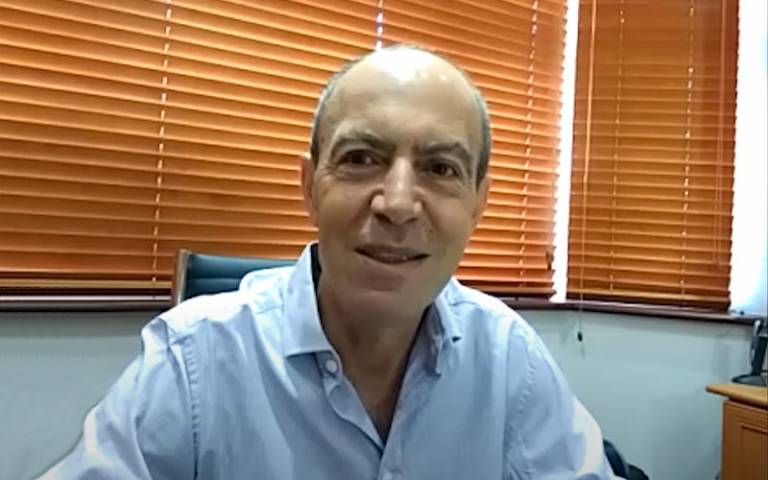
After three unsuccessful courses of chemotherapy, Panos underwent CAR T-cell therapy, which proved to be a 'miraculous treatment' for him.
1 February 2023
Panos, 61, had been diagnosed with lymphoma and had undergone three unsuccessful courses of chemotherapy. Following this, he had a stem cell transplant, which was intended to grant him up to five years without cancer. It was hoped that, within this timeframe, new treatments might become available which would be better able to target his condition.
However, within five months, he received the devastating news that his lymphoma had returned for the fourth time.
As Panos puts it, he was not sure that he would reach his 60th birthday.
"We were running out of options. I was ready to die, essentially. I accepted the news that there was nothing else that could be done, and I was ready for it, I was prepared for it."
The physical toll was immense. Just to prevent his lymphoma from getting worse, Panos was having frequent blood transfusions and hospital treatment. During this, he had an infection, which left him hospitalised for a week.
It was then that Panos’s consultant at UCLH put his name forward for a CAR T-cell therapy trial. An anxious wait followed, but three days after his referral, he received a phone call inviting him for preliminary tests.
For Panos, this was a lifeline. "It was very emotional when I received that phone call, both for me and for my family, because that was another chance. It was the best news I'd had over the last four or five years."
After years of unsuccessful treatment, Panos began CAR T-cell therapy in October 2020 as part of a clinical trial in which he was the second person to enrol.
"It was nothing like what I expected it to be. I was only in hospital for two weeks, and I only had two bad days - I was on the verge of catching pneumonia, but my doctors quickly spotted it and treated it.
"Most of the time I spent outside chatting with nurses and doctors and visiting the Macmillan Cancer Centre. I wasn't unwell; in fact, I was the best I'd felt for five years. And I was regularly monitored."
When the all-clear came, it was great news: "For me, it was a miraculous treatment, and it still is, I'm pleased to say." He is immensely grateful to the team at UCLH who looked after him: "I do get emotional every time I express my gratitude to them - I owe them my life, essentially, and I thank them for it, and I will be grateful for as long as I live."
In August 2022, for the first time since his initial diagnosis, Panos was able to take a long-awaited family trip to Greece, spending time driving back across Europe with his son. It was an emotional journey following his years of treatment.
"I thought that now the coronavirus has weakened, I could go for that much-deserved family holiday. And I’m so happy to have done that and to be here talking to you."
Support us
If you are interested in supporting the work we do, you can donate to support cancer research at UCL, or contact advancement@ucl.ac.uk to discuss making a donation or leaving a gift for cancer research in your will.