
UCL Logo Navigate back to homepage

Main navigation

  • Home
  • Study

    Study

    • Study at UCL
    • Prospective students
    • Current students
    • Languages and international education
    • Accommodation
    • Careers
    • Doctoral School
    • Immigration and visas
    • Student finances
    • Support and wellbeing
  • Research

    Research

    • Research at UCL
    • Engage with us
    • Explore our Research
    • Initiatives and networks
    • Research news
  • Engage

    Engage

    • Engage with UCL
    • Alumni
    • Business partnerships and collaboration
    • Global engagement
    • News and Media relations
    • Policy and political engagement
    • Schools and priority groups
    • Give to UCL
  • About

    About

    • About UCL
    • Who we are
    • Faculties
    • Governance
    • President and Provost
    • Strategy
    • UCL's Bicentenary

Blood filtration device could revolutionise how doctors treat disease

A UCL spinout MediSieve has devised innovative blood filtration technology to transform the treatment of malaria, sepsis, leukaemia and COVID-19.
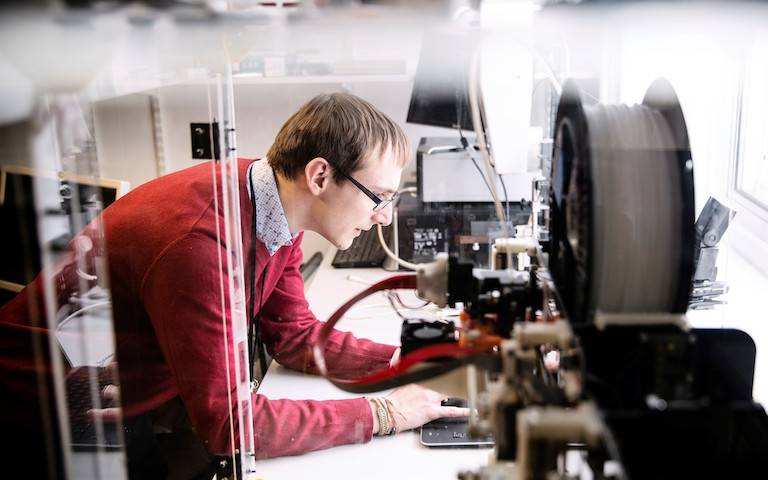
Dr George Frodsham reviews the machinery in a bioengineering lab

Breadcrumb trail

  • Faculty of Medical Sciences

Breadcrumb trail

  • Faculty of Medical Sciences
  • Blood filtration device could revolutionise how doctors treat disease

It was while Dr George Frodsham was studying his PhD in Biomechanical Engineering at UCL that he came up with the idea for MediSieve. Having completed his Master’s in Nanotechnology, he drew on his experience to invent a device with the potential to change therapeutics.

Magnetic drug filtration is a method of removing pathogens directly from a patient’s bloodstream. The technology is like dialysis, circulating a patient’s blood outside their body. Unlike dialysis, which relies on molecular weight to remove individual blood components, MediSieve uses magnetic particles coated with antibodies to target harmful substances. Magnetic forces then extract the particles from the blood.

MediSieve is currently working on applications for sepsis, malaria and leukaemia. The company is also investigating how it can help patients with severe forms of COVID-19 by filtering inflammatory cytokines from their bloodstream.

In recognition of his ground-breaking work, Dr Frodhsam won at the 2019 BBSRC Innovator of the Year Awards and was named one of MIT Technology Review’s ‘Innovators Under 35, Europe’. UCL Business, part of UCL Innovation & Enterprise, helped Dr Frodsham launch and develop MediSieve. The spinout has received funding from Innovate UK, NIHR and the Wellcome Trust.

Further reading
‘Innovator of the Year Award’ for UCL alumnus who developed revolutionary blood filtration device
 

Highlights in Medical Sciences

CAR T-cell therapy shows early promise in severe lupus
Katie Tinkler being treated as part of the CARLYSLE study

Research

CAR T-cell therapy shows early promise in severe lupus

Early results from a UCL and UCLH-led clinical trial suggest that a type of CAR T-cell therapy could offer a new treatment approach for people with severe, treatment-resistant lupus.

Microplastics mapped in living tissue for the first time
Photoacoustic images acquired from the study

Research

Microplastics mapped in living tissue for the first time

Microplastics have been mapped deep within the tissue of living organisms in fine detail for the first time, in a new study led by UCL researchers.

Gene test can spare breast cancer patients from chemotherapy
Two scientists in white coats reviewing x-ray of breast on computer screen.

Research

Gene test can spare breast cancer patients from chemotherapy

Many people with breast cancer can avoid chemotherapy with the use of a gene test, potentially sparing them from unnecessary side effects without increasing the risk of the cancer returning.

UCL footer

Visit

  • Bloomsbury Theatre and Studio
  • Library, Museums and Collections
  • UCL Maps
  • UCL Shop
  • Contact UCL

Students

  • Accommodation
  • Current Students
  • Moodle
  • Students' Union

Staff

  • Inside UCL
  • Staff Intranet
  • Work at UCL
  • Human Resources
UCL Logo

University College London

Gower Street, London, WC1E 6BT

Telephone: +44 (0) 20 7679 2000

UCL social media menu

  • Link to Instagram
  • Link to LinkedIn
  • Link to Youtube
  • Link to TikTok
  • Link to Facebook
  • Link to Bluesky
  • Link to Threads
  • Link to Soundcloud
Here, it can happen.
Back to top

Essential

  • Disclaimer
  • Freedom of Information
  • Accessibility
  • Cookies
  • Privacy
  • Slavery statement
  • Log in

© 2026 UCL