 Close
Close


UCL Special Collections is home to over 100,000 rare books, pamphlets and periodicals, dating from the fifteenth century to the present day.
The collections

Collection descriptions
- Strong Room B, C and E Rare Books
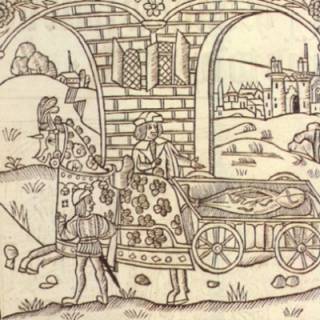
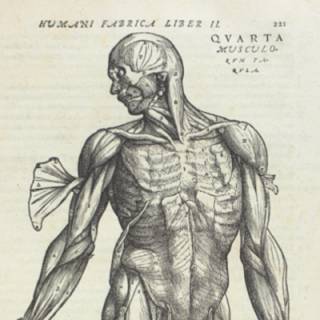
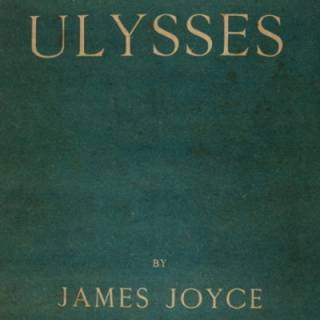
The collection begins with English and other so-called ‘Western’ books printed between 1501 and 1640. The earliest English book in the Library is Andrew Chertsey's The crafte to lyve well and to dye well, printed in 1505 by Wynkyn de Worde and illustrated with woodcuts. The collection also includes medical texts, most notably two copies of Vesalius's illustrated De fabrica (1555) and Hans Gersdorff's Feldtbuch der Wundartzney (1530), the latter of which contains the first picture of an amputation in a printed work. Another principle strength is early Italian literature, for instance, many rare editions of Dante's Divina Commedia and works by authors such as Bembo, Petrarch, Ariosto, Boccaccio, Colonna, Giovio, Gelli and Michelangelo. Books printed after 1640 also feature, such as first editions of Newton's Principia (1687) and Darwin's Origin of Species (1859). An important modern work is the first edition of James Joyce's Ulysses, published in Paris in 1922.
Links
- Strong Room Mocatta
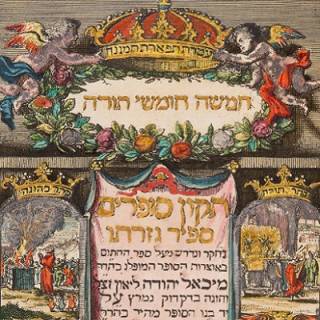
The collection comprises the Mocatta, Gollancz, Wolf, Solomons and Myers libraries and dates mostly from 16th-18th centuries. The subjects covered are chiefly liturgies, Bibles, commentaries, editions of Mishna, works on the Cabbalah, sermons, polemical tracts, service books, grammars and dictionaries. Some examples of titles from the collection include: Burnet's The conversion and persecution of Eve Cohan (1680), George Foxe's A visitation to the Jews (1656) and Prynne's A short demurrer to the Jewes (1656). Also of note is a service book of the Roman rite, printed in Bologna in 1537, on vellum with gold initials.
Links
- Incunabula
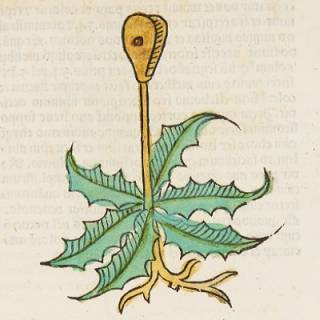
An important collection of books printed before 1501 and all now added to the ISTC. Subjects include mathematics, astronomy, medicine, theology, literature and astrology. Most were presented to the Library by generous benefactors over the years, though some were purchased. Highlights include the 1477 Vendelin de Spira of Venice edition of Dante's Divina Commedia, the first illustrated edition of the same work printed by Nicholas de Lorenzo in Florence, 1481, a 1493 edition of the Nuremberg Chronicle (given by Jeremy Bentham), the editio princeps of Euclid published by Ratdolt in Venice in 1482, and a handpainted herbal printed in Padua in 1485.
Links
- James Joyce Collection
This collection includes around 1400 printed editions, including first editions of all Joyce’s major works, most other early and later editions (including translations), as well as critical and background literature. The only major Joyce research collection in the UK, it also includes archival material donated by Jane Lidderdale, relating to both Harriet Shaw Weaver (Joyce's patron) and Lucia, Joyce's daughter.
Links
- Laurence Housman Collection
Laurence Housman (1865-1959), brother of poet and scholar A. E. Housman, was an extremely versatile artist, writer and social reformer whose output covered all kinds of literature, from socialist and pacifist pamphlets to children's stories. The collection contains books of verse, poems in anthologies, magazines and journals, including 'Armageddon - and after' in The paths of glory: a collection of poems written during the War 1914-1919 (1919); poems in fifteen issues of Pall Mall Magazine from 1901-1912; numerous first editions, including the 1902 publication of Bethlehem, together with Joseph Moorat's music scores for the play; Prunella, or, Love in a Dutch garden (1906); Victoria Regina (1934) and Little plays of St. Francis (1922), each of which has a scene design by Housman.
Prose fiction first editions include An Englishwoman's love-letters (1900); What next? Provocative tales of faith and morals (1938); The kind and the foolish: short tales of myth, magic and miracle (1952), and A doorway in fairyland (1922). His children's poems and stories were also published in a wide range of children's magazines, journals and annuals. Non-fiction works in the collection which reflect his Suffragette sympathies include an introductory poem by Housman, 'O ye that seek through blood and tears' in Great Suffragists - and why: modern makers of history (1909) and The bawling brotherhood (1910?) published by the Women's Press. Elsewhere, Housman wrote articles on religion, justice, social subjects, literature and art, many of which can be found in the collection.
Links
- London History Collection
A collection of over 5000 volumes, 500 maps, and many pamphlets on the topography, architecture, and the social and economic history of Greater London. There are 9 STC, 36 Wing, more than 300 18th-century English imprints, and 500 early to mid-19th-century items. Tract collections of the 18th and 19th centuries include 10 volumes from the Ward bequest (‘Ward Tracts’) and 12 volumes from the London Institution (‘SOS Tracts’). There are around 200 volumes of the histories of the City livery companies.
Links
- Ogden Collection
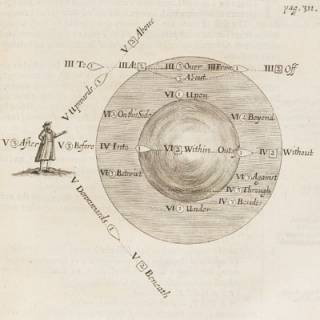
Charles Kay Ogden (1889-1957) once described his book collecting interests as "semantics, meaning, word magic, supplemented by subsections of sign systems, symbol systems and non-verbal notations (including cryptography and shorthand), universal language, translation and simplification". This substantial rare books collection ranges from the 15th to 20th centuries (including 24 incunabula and 394 STC items) and is broadly built around language. Notable names represented in the Ogden Library (first editions, association copies and/or manuscripts, letters, diaries, related source material) include Francis Bacon, John Milton, John Dee, Samuel Coleridge, Robert Boyle, Ben Jonson, William Shakespeare, Percy Shelley, Lord Byron, Emile Zola, Dante Rossetti, John Bright, Joseph Conrad, André Gide and Arnold Bennett.
Links