 Close
Close


'Health for All': How relevant is the Alma-Ata Declaration 40 years on?
25 October 2018, 12:30 pm–2:00 pm
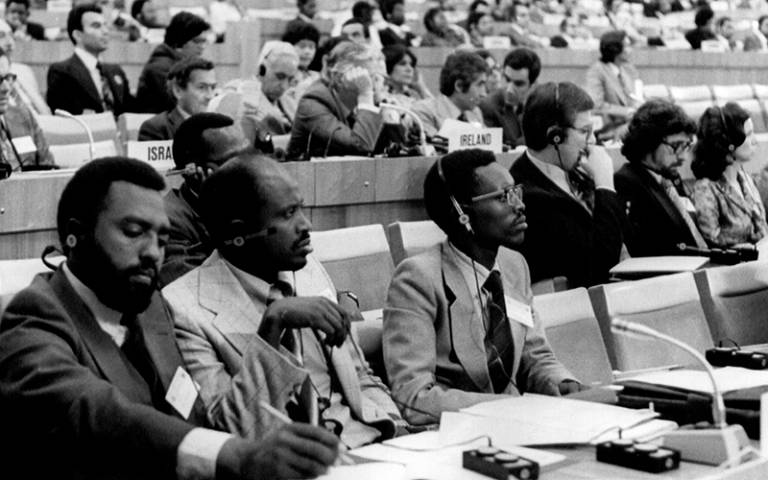
To coincide with the 40th anniversary of the Alma-Ata Declaration (a major public health milestone of the twentieth century), the Faculty of Population Health Sciences is hosting a panel session to discuss what progress has been made towards its aim of 'health for all' and the relevance of the Declaration today.
This event is free.
Event Information
Open to
- All
Availability
- Yes
Cost
- Free
Organiser
-
Alice Ferns
Location
-
Kennedy Lecture TheatreGreat Ormond Street Institute of Child Health30 Guilford StreetLondonWC1N 1EHUnited Kingdom
About the event
The 1978 Alma-Ata Declaration was a major public health milestone of the twentieth century. It was adopted at the International Conference on Primary Health Care, Almaty (formerly Alma-Ata), Kazakhstan (formerly Kazakh Soviet Socialist Republic), 6–12 September 1978.
The international declaration was the first of its kind to state the importance of primary health care, community action and the determinants of health outside the health system. It also emphasised the right to health and outlined governments' role and responsibilities to the health of their citizens.
Forty years on, an Alma- Ata Declaration 2.0 is to be discussed in October at the World Health Assembly in May 2019 and is expected to renew the emphasis on primary care as the main driver of people-centred health systems leading to universal health care.
To coincide with the anniversary, UCL's Faculty of Population Health Sciences is bringing together a panel of experts to discuss what progress has been made and the relevance of the Declaration in 2018.
Speakers
Panellists:
- Dr Sophie Park, general practioner and Director of Medical Education in Primary Care, UCL Medical School
- Professor Sarah Hawkes, Professor of Global Public Health, UCL Institute for Global Health
- Suzanne Taunton, Deputy Head of Health, Save the Children UK
- Dr Rob Aldridge, Wellcome Clinical Research Career Development Fellow and Consultant in Public Health, UCL Institute of Health Informatics
Chair: Mike Rowson, Vice Dean (Education), UCL Faculty of Population Health Sciences
Read the original Alma-Ata Declaration.
Read a draft of the 2018 Astana Declaration.
Photograph credit: World Health Organization
About the Speakers
Dr Sophie Park
General Practitioner and Director of Medical Education in Primary Care at UCL Medical School
Sophie Park is a general practitioner and Director of Medical Education in Primary Care at UCL Medical School. She is also Chair of the National ‘Society of Academic Primary Care’ Education research group. She previously led an National Institute for Health Research (NIHR) funded systematic review of medical education in the UK general practice setting. More recently, she has been collaborating across the NIHR School for Primary Care Research to look at delegation of home visits in general practice, as part of the £2 million Evidence Synthesis Working Group.
Professor Sarah Hawkes
Professor of Global Public Health at UCL Institute for Global Health
Sarah Hawkes is the Director of the Centre for Gender and Global Health, and a medical doctor with a degree in sociology and a PhD in epidemiology. She is Professor of Global Public Health at UCL, where she leads a research theme analysing the use of evidence in policy processes, particularly in relation to gender and health, and sexual health. She has lived and worked for much of the past 20 years in Asia, where she has gathered evidence, built capacity and helped develop policy for programmes focusing on gender, sexual health and human rights. She works closely with national governments, research organisations, WHO and UNFPA in Asia and the Middle East.
More about Professor Sarah HawkesSuzanne Taunton
Head of Health (Policy Advocacy and Campaigns) at Save the Children UK
Dr Rob Aldridge
Wellcome Clinical Research Career Development Fellow and Consultant in Public Health at UCL Institute of Health Informatics
More about Dr Rob Aldridge