Sainsbury Wellcome Centre Systems Neuroscience PhD

London, Bloomsbury

Students at the Sainsbury Wellcome Centre (SWC) study toward a Sainsbury Wellcome Centre Systems Neuroscience PhD. You will receive a comprehensive introduction to theoretical and systems neuroscience, as well as intensive training in experimental techniques, including imaging, physiology, molecular, and behavioural methods.

UK students International students
Study mode
Full-time
UK tuition fees (2026/27)
£6,400
Overseas tuition fees (2026/27)
£38,300
Duration
4 calendar years
Programme starts
September 2026
Applications accepted
All applicants: 23 Sep – 03 Nov 2025

Applications closed

Entry requirements

Applicants should have a keen interest in neuroscience combined with an undergraduate degree in a relevant field (for example Neuroscience, Life Sciences, Physics, Mathematics, or Computer Science) at a minimum of upper second-class UK Bachelor’s level or overseas equivalent.

The English language level for this course is: Level 2

UCL Pre-Master's and Pre-sessional English courses are for international students who are aiming to study for a postgraduate degree at UCL. The courses will develop your academic English and academic skills required to succeed at postgraduate level.

Further information can be found on our English language requirements page.

This course is suitable for international students on a Student visa – study must be full-time, face-to-face, starting October.

If you are intending to apply for a time-limited visa to complete your UCL studies (e.g. Student visa, Skilled worker visa, PBS dependant visa etc.) you may be required to obtain ATAS clearance. This will be confirmed to you if you obtain an offer of a place. Please note that ATAS processing times can take up to six months, so we recommend you consider these timelines when submitting your application to UCL.

Equivalent qualifications

Country-specific information, including details of when UCL representatives are visiting your part of the world, can be obtained from the International Students website.

International applicants can find out the equivalent qualification for their country by selecting from the list below. Please note that the equivalency will correspond to the broad UK degree classification stated on this page (e.g. upper second-class). Where a specific overall percentage is required in the UK qualification, the international equivalency will be higher than that stated below. Please contact Graduate Admissions should you require further advice.

About this degree


The Sainsbury Wellcome Centre PhD Programme is designed to provide thorough training in experimental and computational neuroscience, a perfect start for a career in academia or industry.

The first-year courses are taught by faculty from the Sainsbury Wellcome Centre, the Gatsby Computational Neuroscience Unit (GCNU), and affiliated institutions, all experts in their respective fields. Right from the start of the programme, this team teaching approach allows students to interact with our faculty. The taught courses will provide you with a solid foundation in systems and theoretical neuroscience, as well as in modern experimental techniques and approaches to data analysis.

Regular large scientific events and informal internal meetings offer a wealth of opportunities to learn about the latest research going on within the Centre and in the larger neuroscience community.

Students in our programme play an active role in public outreach activities, internal learning groups, seminars and events.

Students admitted to the Sainsbury Wellcome Centre PhD Programme receive a generous tax-free stipend and a travel and education budget for attending conferences and courses. We also cover tuition fees in full for home and international students. 

Who this course is for

We are looking for candidates with a demonstrable interest in systems neuroscience and in using experimental techniques in imaging, physiology, molecular biology, and behaviour to address questions in systems neuroscience.

What this course will give you

In the programme, you will work within research labs with expertise in perception, cognition, planning, decision-making and learning, and corresponding experimental and theoretical techniques. In addition to developing advanced skills in neuroscience research, analysis and writing, you will practise presentation skills, teaching, and managing projects.

The foundation of your career

Alumni from the programme have gone on to join prestigious labs or world-renowned companies, build their own start-ups or run their own labs. Read about the graduate destinations of some of our alumni.

Employability

As a graduate from the Sainsbury Wellcome PhD programme, you will have developed advanced skills in neuroscience research techniques, analysis and writing, public presentations, teaching at university level, and managing projects. These transferable skills are also useful for careers outside of academia.

Networking

In addition to regular internal events, Sainsbury Wellcome Centre PhD students benefit from activities hosted by the Gatsby Computational Neuroscience Unit and the UCL Neuroscience community as a whole, offering opportunities to network with a wide variety of both junior and senior scientists.

Students are invited to small, informal lunches with seminar speakers from around the world. They also receive a travel and education budget, allowing them to form further connections by attending international courses and conferences.

Teaching and learning

You will learn through a mixture of lectures, tutorials, journal clubs, and hands-on practicals.

There are two main assessments for students in the programme: the upgrade from MPhil to PhD, and the PhD examination. Both consist of a written and an oral component. The upgrade normally takes place early in Year 3, and the PhD examination takes place at the end of the degree.

Courses and talks are scheduled between 9am and 5pm. Hours of self-directed study are flexible. Students are expected to commit to a minimum of 36.5 hours per week, as consistent with a full-time post at UCL.

This time frame includes self-directed learning. The demands of a PhD may also necessitate additional out-of-hours work to accommodate a project’s need e.g. data collection.

Research areas and structure

Research environment

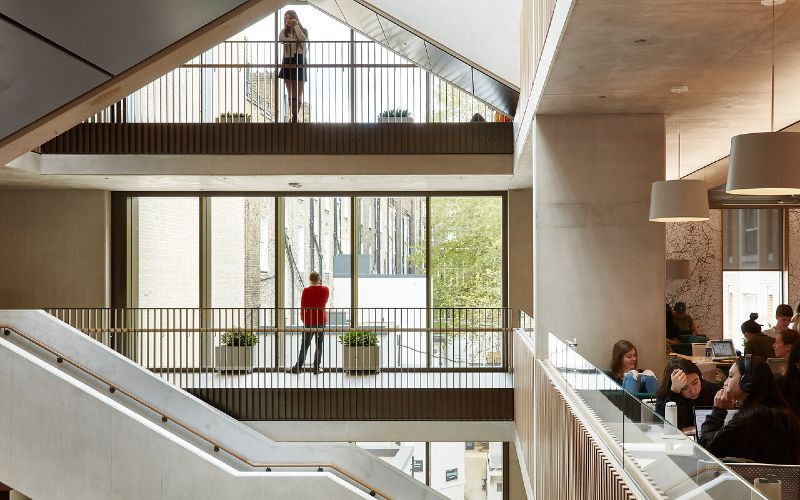
Sainsbury Wellcome Centre comprises thirteen research groups, focusing on perception, cognition, decisions, learning, and planning. Our state-of-the-art research facilities in central London are close to a wealth of other excellent neuroscience research institutions. You will work alongside outstanding scientists at all career levels and from around the globe, and also have access to on-site core facilities and platforms including: advanced microscopy and imaging; advanced manufacturing and innovation; a research fabrication laboratory; high performance computing; and the neurobiological research facility.

The first year is centred around courses and rotations.

Within the first few months of Year 2 you will choose a project and a supervisory team; produce a project proposal; arrange for a meeting with your supervisors to agree on the basic structure of your research project, an appropriate methodology, and a realistic work plan.

At the beginning of Year 3, you will be expected to complete the MPhil to PhD upgrade process. This involves submitting a short upgrade report which must be presented and successfully defended in an upgrade viva.

In your final year, you will submit your PhD thesis and defend it to a panel in a viva examination.

Throughout your PhD you will hone your presentation skills by showcasing your work to fellow students and academics at internal and external events. You will also gain teaching skills by leading tutorials for more junior peers in the programme.

In addition to courses mandated by UCL Doctoral School, students in our programme need to complete training in statistics and in public engagement.

Accessibility

The department will endeavour to make reasonable adjustments for students with disabilities, including those with long-term health conditions, neurodivergence, learning differences and mental health conditions. This list is not exhaustive. If you're unsure of your eligibility for reasonable adjustments at UCL, please contact Student Support and Wellbeing Services.

Reasonable adjustments are implemented on a case-by-case basis. With the student's consent, reasonable adjustments are considered by UCL Student Support and Wellbeing Services, and where required, in collaboration with the respective department.

Details of the accessibility of UCL buildings can be obtained from AccessAble. Further information about support available can be obtained from UCL Student Support and Wellbeing Services.

For more information about the department and accessibility arrangements for your course, please contact the department.


Fees and funding

Fees for this course

UK students International students
Fee description Full-time
Tuition fees (2026/27) £6,400
Tuition fees (2026/27) £38,300

Additional costs

There are no course-specific additional costs for students.

For in-person teaching, UCL’s main teaching locations are in zones 1 (Bloomsbury) and zones 2/3 (UCL East). The cost of a monthly 18+ Oyster travel card for zones 1-2 is £119.90. This price was published by TfL in 2025. For more information on additional costs for prospective students and the cost of living in London, please view our estimated cost of essential expenditure at UCL's cost of living guide.

Funding your studies

A number of fully-funded studentships are available each year. Each studentship covers tuition fees, a generous tax-free stipend, and a travel budget for conference/workshop attendance. Studentships are available to students of any nationality.

For a comprehensive list of the funding opportunities available at UCL, including funding relevant to your nationality, please visit the Scholarships and Funding website.

Next steps

All applications must be made directly to the Sainsbury Wellcome Centre via https://apply.sainsburywellcome.org/. Details on how to apply are available on the SWC PhD programme website. Late applications will be held until all applications received by the deadline have been assessed. It is very likely that all available positions will be filled by then.

Please note that you may submit applications for a maximum of two graduate courses (or one application for the Law LLM) in any application cycle.

UCL is regulated by the Office for Students.