 Close
Close


What's the charge?
23 June 2014
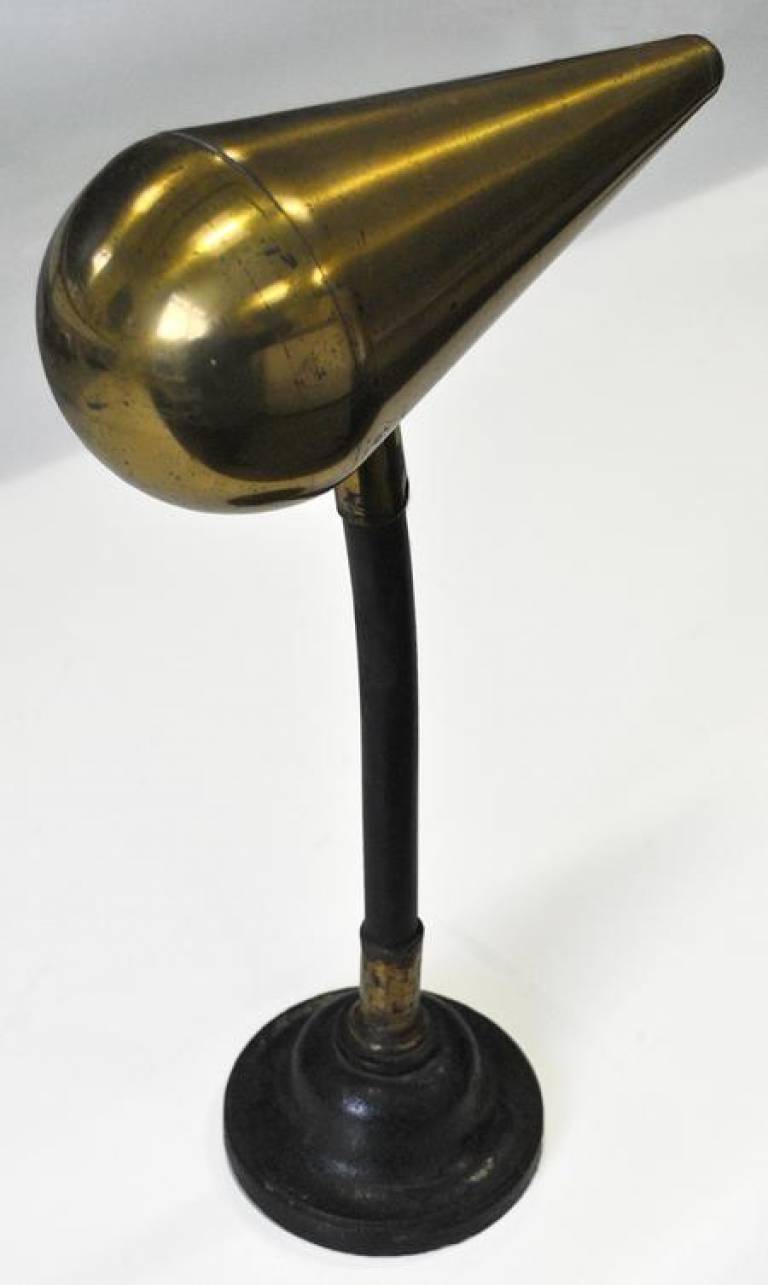
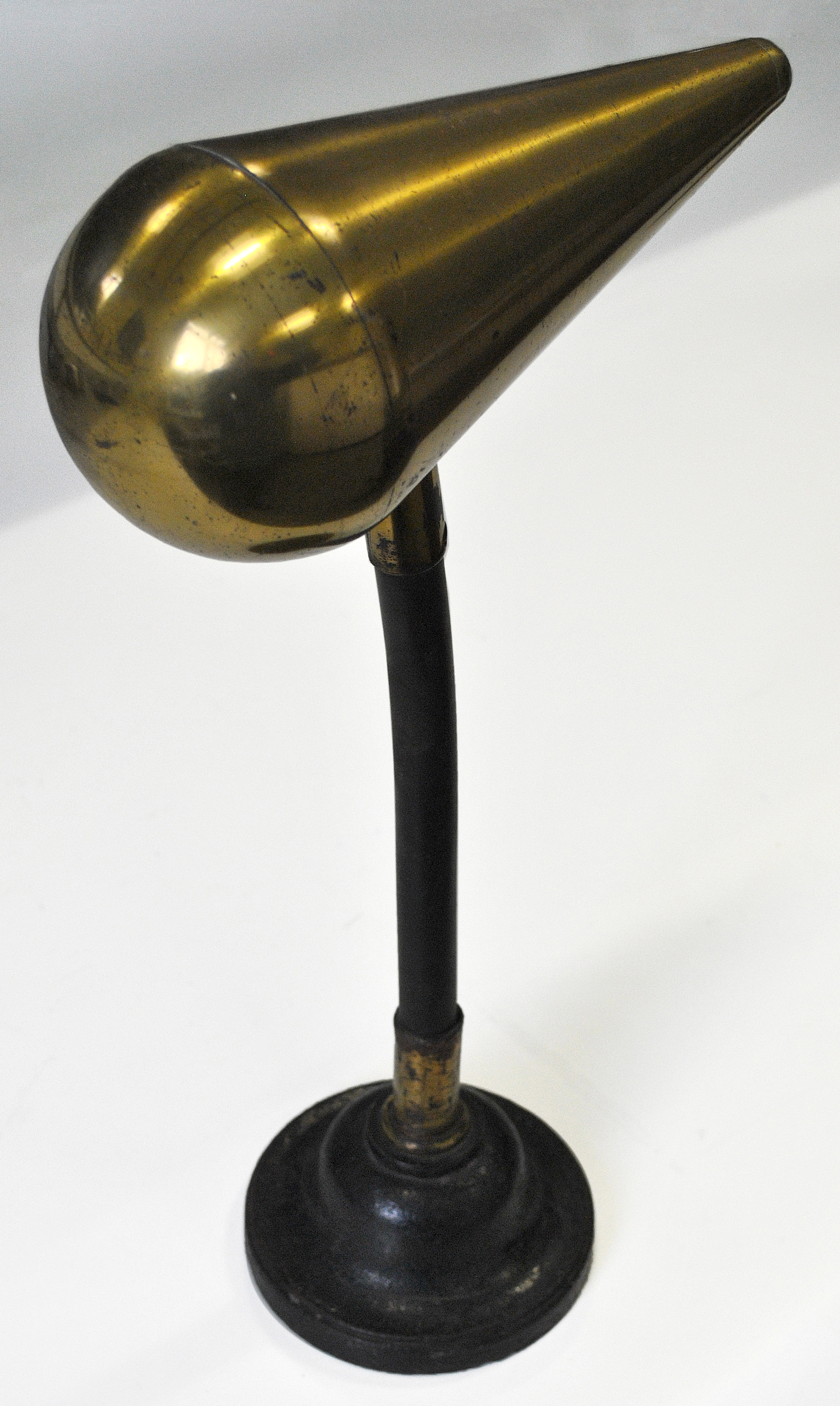
When metal objects are given an electric charge, the charge is not evenly spread through it. It collects on the surface, and in particular on parts of the surface which are curved.
This object from the collections of the Department of Physics & Astronomy is a historic teaching device that would have been used to demonstrate this phenomenon in times past.
Sitting atop an insulating stand, the device would be charged up and retain the charge long enough for a lecturer to carry out a demonstration. Using a small square of metal on an insulating handle, attached to an electroscope, the demonstrator would be able to show that the charge was concentrated on the sharply curved area on the right hand side in this photo.
Photo credit: O. Usher (UCL MAPS). Acknowledgement: Jim Grozier
Links
High resolution images
This image can be reproduced freely providing credit is given.
Open Days
The Faculty participates in a number of open days throughout the academic year, including the UCL Undergraduate Open Days and the UCL Graduate Open Day.

Friends of Out@UCL
Professor Ivan Parkin - Dean, UCL Faculty of Mathematical and Physical Sciences
"I fully support the aims of the Friends of Out@UCL campaign. I have personal experience of the need for such a campaign and the difficulties that the LGBTQ+ community face." Read more...
Snapshots from Space History
Online exhibition of historic space photos from the faculty's planetary science archives.