 Close
Close


Research with impact
15 July 2013
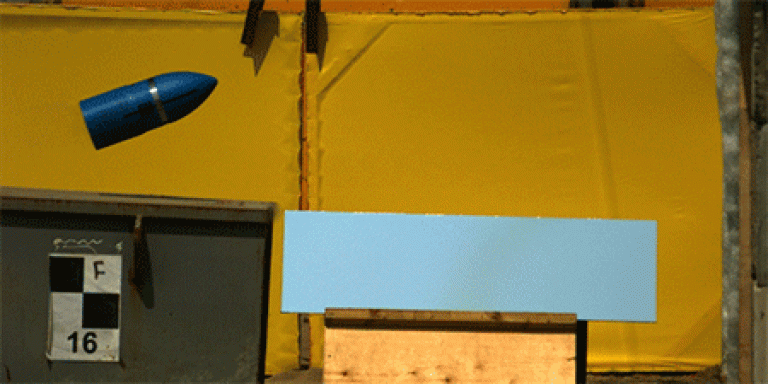
While probes have landed on many bodies in the Solar System, the knowledge scientists have gained from them literally only scratches the surface. The rocks, ice and dust beneath planetary surfaces remain largely unexplored, with radar maps giving broad but imprecise knowledge, and landers unable to dig more than a few centimetres down.
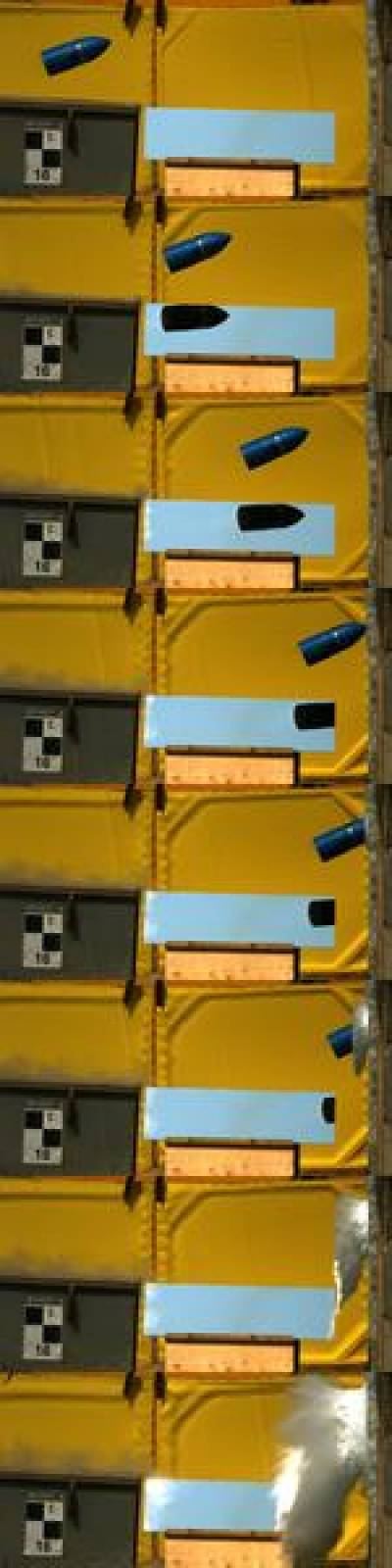
Future probes, if they are to find out more about planetary geology, will need to go beneath the surface.
On 11th July, a team of scientists and engineers led by aerospace company Astrium UK and including UCL's Mullard Space Science Lab tested a key piece of technology that will allow this in future. The penetrator looks alarmingly like a large bullet, and is designed to hit planetary surfaces at speeds of over 1000 kilometres per hour, digging deep into the ground and giving a first glimpse of what lies deep below.
The prototype was fired into a ice target at approximately 340 metres per second (1220 kilometres per hour, the speed of sound at sea level) at a test site at Pendine Sands in Wales. The test is part of a more extensive programme that is funded by European Space Agency which follows an earlier successful set of trials related to future lunar exploration.
In this test the important and novel thermal isolation was demonstrated, which is essential for any future planetary mission since target sites on the Moon, Mars and the Jovian moons are extremely cold while the inner instrumentation within the penetrator must remain near room temperature. The instrumentation must also survive the extreme g-forces experienced by the penetrator as it hits the surface at around the speed of sound.
Alan Smith, Director of UCL's Mullard Space Science Laboratory, said "this is a very important next step in the development of this novel technology and shows UK science and engineering at its finest".
The consortium building and testing the penetrator includes aerospace firm Astrium UK, UCL, technology firm QinetiQ, Rapid Space and the Open University.
Photo credit: QinetiQ
Links
- Mullard Space Science Laboratory
- News story on the MSSL website
- MSSL planetary science instrumentation pages
- News story on the BBC website
High resolution images
Animated GIF of penetrator test
- Download image in full resolution
- Animated GIFs cannot be viewed on Flickr
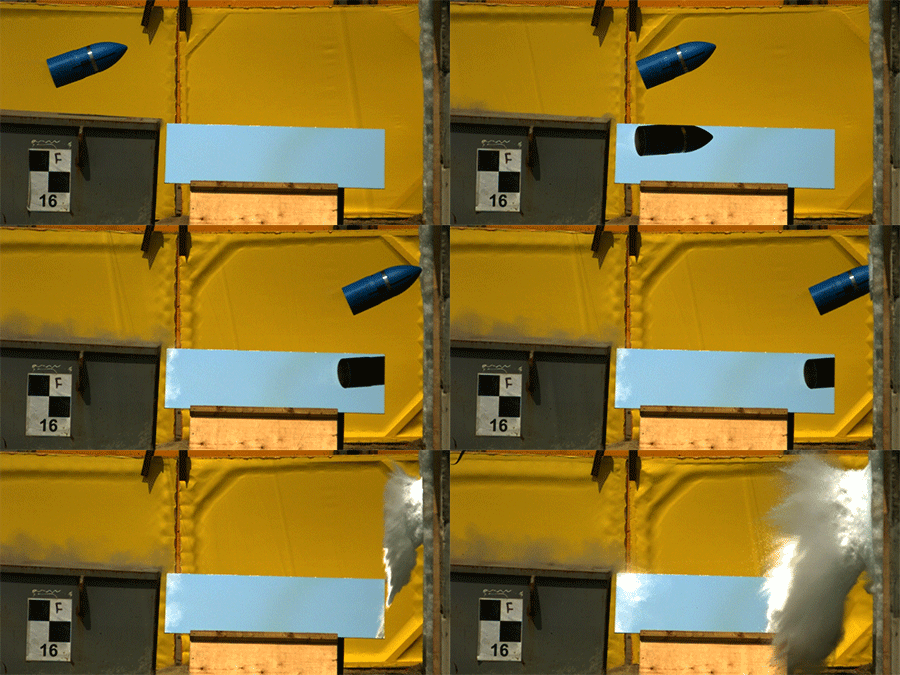
Individual frames of penetrator test
© All rights reserved. Contact QinetiQ press office on +44 (0) 1252 393500 for reproduction queries
Open Days

The Faculty participates in a number of open days throughout the academic year, including the UCL Undergraduate Open Days and the UCL Graduate Open Day.

Friends of Out@UCL
Professor Ivan Parkin - Dean, UCL Faculty of Mathematical and Physical Sciences
"I fully support the aims of the Friends of Out@UCL campaign. I have personal experience of the need for such a campaign and the difficulties that the LGBTQ+ community face." Read more...
Snapshots from Space History
Online exhibition of historic space photos from the faculty's planetary science archives.