
Prof. Tao Cheng
PI
- Professor of Geoinformatics

- Dept of Civil, Environmental & Geomatic Engineering
- Faculty of Engineering Science
Tao Cheng is a Professor in GeoInformatics, director of SpaceTimeLab
and the Course Director of MSc in GIS. She is the Principal Investigator of the Crime, Policing and Citizenship project. She has studied and lectured in China, the Netherlands, Hong Kong, France and the UK. She has broad knowledge and experience in Geographic Information Sciences (GISc), from data acquisition, to information processing, management and analysis, with applications in environmental monitoring, natural resource management, health, transport and crime studies. She has over 140 publications and is a past recipient of the U. V. Helava Award for the best paper in the ISPRS Journal of Photogrammetry and Remote Sensing. She is also a visiting professor at Wuhan University and at the Institute of Remote Sensing Applications, Chinese Academy of Science.
She has been the Departmental Equal Opportunity Liaison Officer (DEOLO) since 2006, and led the departmental successful bid for the Athena SWAN Silver Award in 2009, which recognises and celebrates good employment practice for women working in science, engineering and technology (SET) in higher education and research.
Prof. John Shawe-Taylor
Co-I
- Professor of Computational Statistics and Machine Learning
- Head of UCL Computer Science
- Dept of Computer Science
- Faculty of Engineering Science
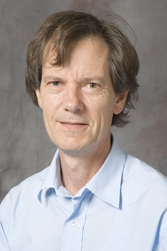
John S Shawe-Taylor is a professor at University College London (UK) where he is the Head of the Department of Computer Science. His main research area is Statistical Learning Theory, but his contributions range from Neural Networks, to Machine Learning, to Graph Theory. He is a co-investigator of the Crime, Policing and Citizenship project.
John Shawe-Taylor obtained a PhD in Mathematics at Royal Holloway, University of London in 1986. He subsequently completed an MSc in the Foundations of Advanced Information Technology at Imperial College. He was promoted to Professor of Computing Science in 1996. He has published over 150 research papers. He moved to the University of Southampton in 2003 to lead the ISIS research group. He has coordinated a number of European wide projects investigating the theory and practice of Machine Learning, including the NeuroCOLT projects. He is currently the scientific coordinator of a Framework VI Network of Excellence in Pattern Analysis, Statistical Modelling and Computational Learning (PASCAL) involving 57 partners. He was previously the Director of the Centre for Computational Statistics and Machine Learning (CSML) at UCL.
Prof. Kate Bowers
Co-I
- Professor of Crime Science
- Dept of Security and Crime Science
- Faculty of Engineering Science
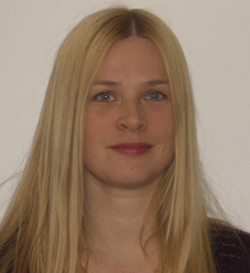
Kate Bowers is a Professor in Crime Science at the UCL Department of Security and Crime Science. She is a co-investigator of the Crime, Policing and Citizenship project. Kate has worked in the field of crime science for almost 20 years, with research interests focusing on the use of quantitative methods in crime analysis and crime prevention. She has published 70 papers and book chapters in criminology and in journals such as Criminology, the Journal of Quantitative Criminology and the Journal of Research in Crime and Delinquency. She has guest edited a special issue of Crime Prevention Studies and co-edited a book on Crime Mapping. She serves on a number of journal editorial boards, and she has number of external appointments such as academic expert for the Crime and Policing Group in the Home Office and expert reviewer for a project run by the US Office of the Assistant Attorney General. Her work has been funded by grants from the Home Office, the US Department of Justice the Police, the Department for Education and Skills, and UK research councils such as the ESRC and AHRC.
Prof. Paul Longley
Co-I
- Professor of Geographic Information Science

- Dept of Geography
- Faculty of Social and Historical Sciences
Paul Longley (B.Sc., Ph.D., D.Sc., AcSS) is Professor of Geographic Information Science at University College London, UK. He is a co-investigator of the Crime, Policing and Citizenship project. His publications include 14 books and more than 125 refereed journal articles and contributions to edited collections. He has held over 40 research grants and has supervised more than 35 Ph.D. students (most funded by research councils). He is a co-editor of the journal Environment and Planning B and a member of five other editorial boards. He has held ten externally-funded visiting appointments and given over 150 conference presentations and external seminars. He teaches Geographic Information Systems and Science and is a co-author of the best-selling book of that name.
Prof. Tomoki Nakaya
Visiting Professor
- Professor
- Dept of Geography
- Ritsumeikan University
Tomoki Nakaya (B.Sc., Ph.D.) is a Professor of Geography at Ritsumeikan University in Tokyo, Japan. He has received 13 awards and grants, and has over 50 publications. He is particularly interested in crime and health geographies as well as general spatial analysis in a GIS environment.
Toby Davies
Research Staff
After completing a first degree in Mathematics, Toby joined UCL’s SECReT Doctoral Training Centre in Security Science in 2009. His subsequent doctoral research was concerned with the modelling of spatio-temporal patterns arising within various issues related to crime and security. This involved primarily the use of techniques from complexity science, with a particular focus on networks, though also including elements of dynamical systems theory and agent-based modelling. In the context of urban crime, his work is focussed on the relationship between urban form – specifically, the street network – and the distribution of crime, and the potential use of this to aid predictive policing. He has also worked on the modelling of the London riots, and on the development of methods for the characterisation of spatio-temporal clustering in sets of events. In the course of these projects, he has collaborated with a number of UK police forces, providing analytical support and software tools.
James Haworth
Research Staff
Gabriel Rosser
Research Staff
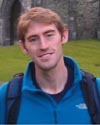
Gabriel is a PDRA working in the SpaceTimeLab under the supervision of Professor Tao Cheng. He is a member of the Crime, Policing and Citizenship project team. Gabriel completed a DPhil at Oxford University in mathematical biology, where he used modelling and statistical data analysis to study the process by which bacteria propel themselves through a liquid. His current research interests include developing novel methods to analyse spatiotemporal data patterns, with a particular emphasis on machine learning and point process models. He is also interested in improving computational methods through parallelisation and intelligent algorithms.
Sarah Wise
Research Staff

Sarah Wise did her PhD work in the Computational Social Science department of George Mason University. She graduated from the University of Chicago in 2009 with a double major in Computer Science and East Asian Cultures and Language, and was a recipient of the George Mason University three-year Presidential Scholarship. She worked at Argonne National Laboratory, the United States Department of State and a number of government contractors. Her research interests lie in exploring and forecasting the development of systems involving people, infrastructure, and information using methodologies including agent based modeling (ABM), social network analysis (SNA), data mining, statistical analysis, and geographic information systems (GIS).
Monsuru Adepeju
PhD Student
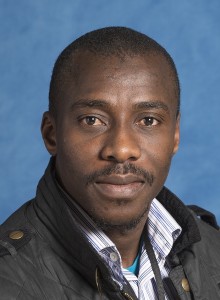
Monsuru Adepeju is a PhD student at the Civil, Environmental and Geomatic Engineering Department of UCL. He got his MSc in GIS in the same Department, from which he graduated with Distinction in 2012. With a background in Surveying and Geomatic Engineering, he participated in a number of large scale GIS projects including the Plateau State GIS (Nigeria) and the Lagos State Enterprise GIS (Nigeria) projects. Monsuru’s research interests are Spatiotemporal data modelling, Crime Pattern Analysis, and Location & Network analysis. He is currently working on the Space-Time Modelling of Crime Patterns in Central London as part of UCL Crime, Policing, and Citizenship Project sponsored by the EPSRC, UK.
Huanfa Chen
PhD Student
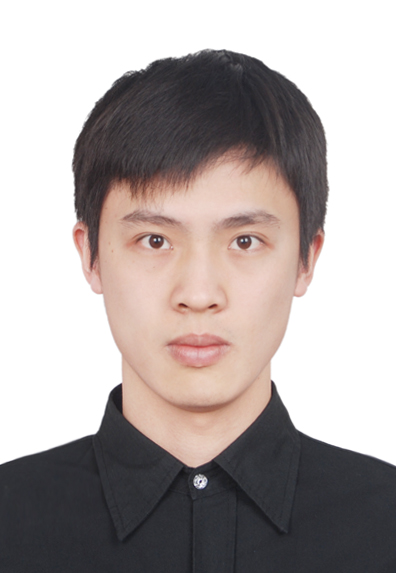
Huanfa Chen is currently a first year Ph.D. student at SpaceTimeLab. He comes from Guandong, China, and studied Cartography and Geographical Information Systems at Peking University, China (MSc, 2014). His research interests include agent-based simulation, spatio-temporal data mining and their application in social sciences. Currently he works on the Crime, Policing and Citizenship project (CPC), focusing on design and simulation of efficient and practical patrol policy.
Kira Kowalska
PhD Student
Kira’s background is in applied mathematics and computing. She completed her undergraduate degree (MEng) in Engineering Mathematics at the University of Bristol in 2013 with a dissertation in spatial pattern analysis and geodemographics. Throughout her undergraduate degree, Kira was involved in a few research projects both at her university and as an intern at BAE Systems Advanced Technology Centre, where she developed machine learning and network analysis techniques. Following her graduation, Kira has joined UCL’s SECReT Doctoral Training Centre in Crime and Security Sciences. Her current research interests include spatio-temporal pattern analysis, spatio-temporal demographics, machine learning and network analysis. She is also very interested in complexity sciences and agent based approaches to modelling interactions between humans and environment, especially in the urban context.
Juntao Lai
PhD Student
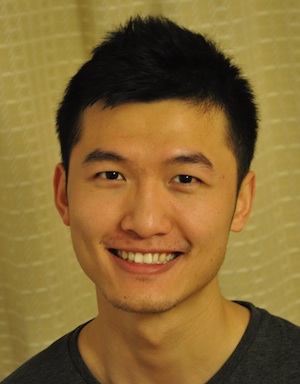
Juntao Lai is a Ph.D. student in the SpaceTimeLab. He did his undergraduate study in Remote Sensing at Wuhan University, China. He joined the lab after finished his MSc Geospatial Analysis study at Geography Department, UCL in October 2014. His research interests include social media data analytics, sentiment analysis, and spatial temporal data mining. He is currently investigating the public satisfaction towards police and how media influence in it by using social media data (twitter).
Jianan Shen
PhD Student
 Jianan Shen is a PhD student in SpaceTimeLab and funded by China Scholarship Council (CSC). He grew up in Beijing, China and studied Information Engineering in National University of Defence Technology in China (BEng, 2013). He is now working on the Crime, Policing and Citizenship Project sponsored by the EPSRC, UK. His research interests now include movement pattern analysis and trajectory analysis of movement data with Machine Learning approaches.
Dawn Williams
PhD Student

Dawn Williams grew up in St Augustine, Trinidad and Tobago. She studied Geomatics (BSc, 2009) at the Faculty of Geomatics Engineering and Land Management at the University of the West Indies followed by Geographic Information Science (MSc, 2011) at UCL. She is a first year PhD student and will focus on modelling the public’s perception of the police and fear of crime through space and time using machine learning techniques. Her research interests include spatio-temporal data mining, machine learning, visualization, big data analysis, planning and sustainable development. Her studies are generously supported by the Commonwealth Commission.