|
CDB Seminars Thursday 23 May at 1pm __________________________ Thursday 30 May at 1pm
|
Dr Gyorgy Szabadkai
|
Senior
Lecturer Telephone: |
| Research |
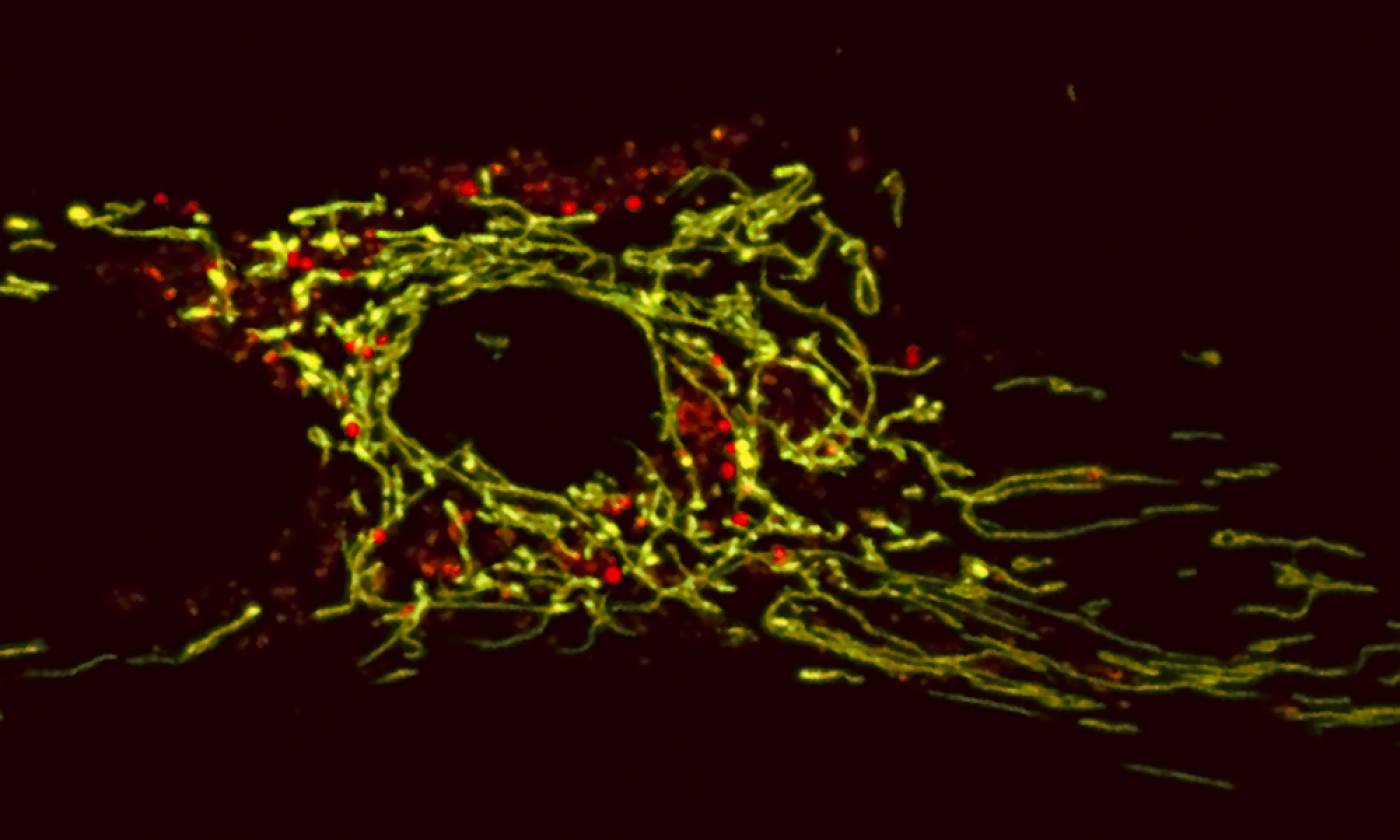
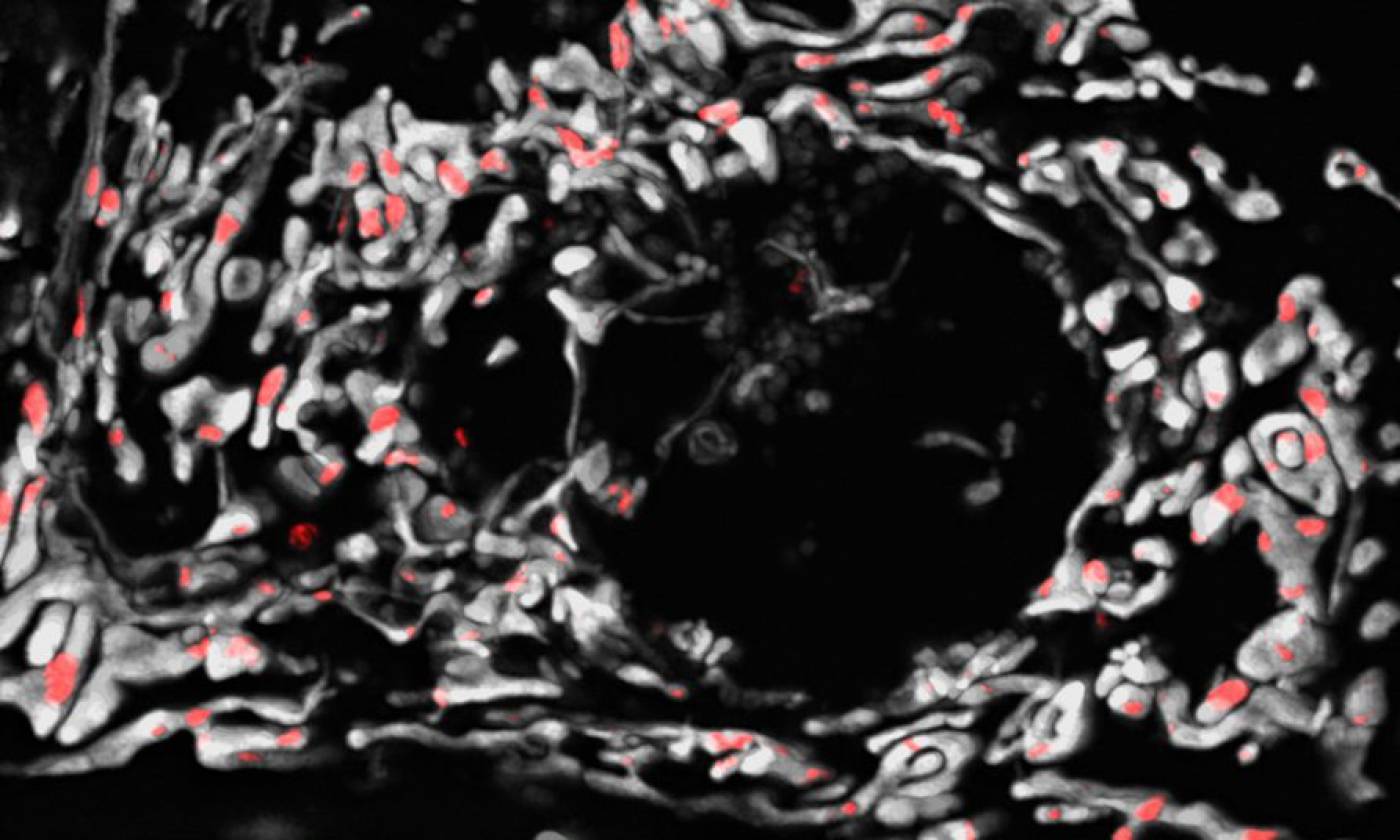
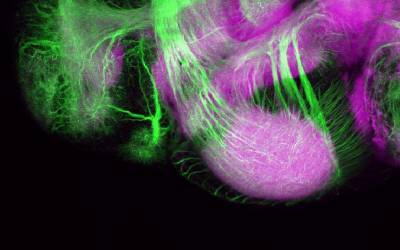
The endoplasmic reticulum (ER) and mitochondria form aligned organelle networks and communicate through molecular contacts. Our main goals are to disclose the molecular basis of this communication and to identify cellular signaling pathways which target it under cellular stress conditions. In particular, our research is mostly focused on ER-mitochondrial signaling under ER (protein unfolding), metabolic (nutrient deprivation) and oxidative stress conditions, controlling both cellular adaptation and death. We use biochemical, molecular biology and in vivo imaging tools to explore these mechanisms in cancer (hepatocellular carcinomas, chemoresistant lung cancer) and neurodegenerative disease (Parkinson’s) in collaboration with the Institute of Hepatology, Institute of Neurology, the UCL Cancer Institute and the Mitochondrial Biology Group of the UCL.
|
| Figure 1 – Structural view of the endoplasmic reticulum-mitochondrial interactions. The figure shows the intertwined ER and mitochondrial networks of a HeLa cell, transiently transfected with ER targeted mRFP1 and mitochondrially targeted GFP. Images were obtained by digital microscopy, 3D deconvolution and reconstruction. The left panel shows the original images of one focal plane, overlaid on the middle panel (ER – red; mitochondria – green). The right panels show 3D surface rendered images using the same colour code. The top right panel shows the interconnected network, rendered transparent on the right middle panel. The bottom right panel shows the mitochondrial network with the surface co-localizing with the ER (shown in red). Modified from G. Szabadkai and R. Rizzuto. Chaperones as Parts of Organelle Networks. In: Molecular Aspects of the Stress Response: Chaperones, Membranes and Networks, Landes Bioscience, 2006. |
|
| Figure 2. The Ca2+ and ATP cycle between the ER and mitochondria (left) and their interactions with the local chaperone network. For details see: Szabadkai G, Duchen MR.Mitochondria: the hub of cellular Ca2+ signaling. Physiology (Bethesda) 2008, 23:84-94 |
|
| Figure 3. Schematic outline of our research –Stress conditions, accompanying several pathologies like neurodegenerative diseases, diabetes and cancer induce adaptive responses in both the mitochondrial and ER networks. This includes an increased turnover of organelle biogenesis and degradation (autophagy). If adaptation fails, cells utilize different pathways to die. ER-mitochondrial crosstalk determine both adaptive and death responses and thus will be a target of cellular stress signaling pathways.. |
Lab Members
Aleck Jones, 3 year MRC PhD student - aleck.jones@ucl.ac.uk
Supervised on a
collaborative project with Linda Greensmith (Institute of Neurology)
Karli Montague, 4 year Wellcome Trust PhD student k.montague@ucl.ac.uk
Selected Publications
Vicencio JM, Ortiz C, Criollo A, Jones AW, Kepp O, Galluzzi L, Joza N, Vitale
I, Morselli E, Tailler M, Castedo M, Maiuri MC, Molgó J, Szabadkai G, Lavandero
S, Kroemer G. (2009)
The inositol 1,4,5-trisphosphate receptor regulates
autophagy through its interaction with Beclin 1. Cell Death Differ.
Epub
ahead of print
link
Saotome
M, Safiulina D, Szabadkai G, Das S, Fransson A, Aspenstrom P, Rizzuto R,
Hajnóczky G. (2008)
Bidirectional Ca2+-dependent control of mitochondrial
dynamics by the Miro GTPase.
Proc Natl Acad Sci U S A. 2008 Dec
30;105(52):20728-33
link
Chami M,
Oulès B, Szabadkai G, Tacine R, Rizzuto R, Paterlini-Bréchot P. (2008)
Role
of SERCA1 truncated isoform in the proapoptotic calcium transfer from ER to
mitochondria during ER stress.
Mol Cell. 2008 Dec 5;32(5):641-51.
link
Tasdemir
E, Maiuri MC, Galluzzi L, Vitale I, Djavaheri-Mergny M, D'Amelio M, Criollo A,
Morselli E, Zhu C, Harper F, Nannmark U, Samara C, Pinton P, Vicencio JM,
Carnuccio R, Moll UM, Madeo F, Paterlini-Brechot P, Rizzuto R, Szabadkai G,
Pierron G, Blomgren K, Tavernarakis N, Codogno P, Cecconi F, Kroemer G.
(2008)
Regulation of autophagy by cytoplasmic p53.
Nat Cell Biol. 2008
Jun;10(6):676-87
link
Tufi
R, Panaretakis T, Bianchi K, Criollo A, Fazi B, Di Sano F, Tesniere A, Kepp O,
Paterlini-Brechot P, Zitvogel L, Piacentini M, Szabadkai G, Kroemer G.
(2007)
Reduction of endoplasmic reticulum Ca(2+) levels favors plasma
membrane surface exposure of calreticulin.
Cell Death Differ. 2007
[Epub]
link
Criollo
A, Maiuri MC, Tasdemir E, Vitale I, Fiebig AA, Andrews D, Molgó J, Díaz J,
Lavandero S, Harper F, Pierron G, di Stefano D, Rizzuto R, Szabadkai G, Kroemer
G. (2007)
Regulation of autophagy by the inositol trisphosphate
receptor.
Cell Death Differ. 2007;14(5):1029-39
link
Høyer-Hansen
M, Bastholm L, Szyniarowski P, Campanella M, Szabadkai G, Farkas T, Bianchi K,
Fehrenbacher N, Elling F, Rizzuto R, Mathiasen IS, Jäättelä M (2007)
Control
of macroautophagy by calcium, calmodulin-dependent kinase kinase-beta, and
Bcl-2.
Mol Cell. 2007;25(2):193-205
link
Dell'agnello
C, Leo S, Agostino A, Szabadkai G, Tiveron C, Zulian A, Prelle A,Roubertoux P,
Rizzuto R, Zeviani M. (2007)
Increased longevity and refractoriness to
Ca(2+)-dependent neurodegeneration in Surf1 knockout mice.
Hum Mol Genet.
2007 16(4):431-44
link
Szabadkai
G, Rizzuto R. (2007)
Chaperones as parts of organelle networks.
Adv Exp
Med Biol. 2007;594:64-77
link
Szabadkai
G, Bianchi K, Várnai P, De Stefani D, Wieckowski MR, Cavagna D, Nagy AI, Balla
T, Rizzuto R (2006)
Chaperone-mediated coupling of endoplasmic reticulum and
mitochondrial Ca2+ channels.
J Cell Biol. 2006; 175(6):901-11
link
Szabadkai
G, Simoni AM, Bianchi K, De Stefani D, Leo S, Wieckowski MR, Rizzuto R.
(2006)
Mitochondrial dynamics and Ca2+ signaling.
Biochim Biophys Acta.
2006 1763(5-6):442-9
link
Bianchi
K, Vandecasteele G, Carli C, Romagnoli A, Szabadkai G, Rizzuto R.
(2006)
Regulation of Ca2+ signalling and Ca2+-mediated cell death by the
transcriptional coactivator PGC-1alpha.
Cell Death Differ.
2006;13(4):586-96
link
Chami
M, Prandini A, Campanella M, Pinton P, Szabadkai G, Reed JC, Rizzuto R.
(2004)
Bcl-2 and Bax exert opposing effects on Ca2+signaling, which do not
depend on their putative pore-forming region.
J Biol Chem.
2004;279(52):54581-9
link
Szabadkai
G, Simoni AM, Chami M, Wieckowski MR, Youle RJ, Rizzuto R.
(2004)
Drp-1-dependent division of the mitochondrial network blocks
intraorganellar Ca2+ waves and protects against Ca2+-mediated apoptosis.
Mol
Cell. 2004;16(1):59-68
link
Szabadkai
G, Rizzuto R. (2004)
Participation of endoplasmic reticulum and mitochondrial
calcium handling in apoptosis: more than just neighborhood?
FEBS Lett.
2004;567(1):111-5
link
Szabadkai
G, Simoni AM, Rizzuto R (2003)
Mitochondrial Ca2+ uptake requires sustained
Ca2+ release from the endoplasmic reticulum.
J Biol Chem.
2003;278(17):15153-61
link
Rapizzi
E, Pinton P, Szabadkai G, Wieckowski MR, Vandecasteele G, Baird G, Tuft RA,
Fogarty KE, Rizzuto R. (2002)
Recombinant expression of the voltage-dependent
anion channel enhances the transfer of Ca2+ microdomains to mitochondria.
J
Cell Biol. 2002;159(4):613-24
link
Szabadkai
G, Pitter JG, Spät A. (2001)
Cytoplasmic Ca2+ at low submicromolar
concentration stimulates mitochondrial metabolism in rat luteal
cells.
Pflugers Arch. 2001;441(5):678-85
link
Page last modified on 25 may 10 13:42 by Glenda Young