
UCL Logo Navigate back to homepage

Main navigation

  • Home
  • Study

    Study

    • Study at UCL
    • Prospective students
    • Current students
    • Accommodation
    • Careers
    • Doctoral School
    • Immigration and visas
    • Student finances
    • Support and wellbeing
  • Research

    Research

    • Research at UCL
    • Engage with us
    • Explore our Research
    • Initiatives and networks
    • Research news
  • Engage

    Engage

    • Engage with UCL
    • Alumni
    • Business partnerships and collaboration
    • Global engagement
    • News and Media relations
    • Policy and political engagement
    • Schools and priority groups
    • Give to UCL
  • About

    About

    • About UCL
    • Who we are
    • Faculties
    • Governance
    • President and Provost
    • Strategy
    • UCL's Bicentenary
  • UCL Logo Active parent page: UCL Faculty of Laws
    • About us
    • Study
    • Short Courses
    • Active parent page: Research
    • People
    • Alumni
    • News
    • Events

Reintegrating FARC's female combatants post-conflict

Reintegrating FARC's Female Combatants: The Challenges of Addressing Gender Binaries in Transitional Justice
ALEISHA EBRAHIMI-TSAMIS

Breadcrumb trail

  • Faculty of Laws

Faculty menu

  • Current page: Publications
    • Policy Briefs

Breadcrumb trail

  • Faculty of Laws
  • Research
  • Reintegrating FARC's female combatants post-conflict

Publication details

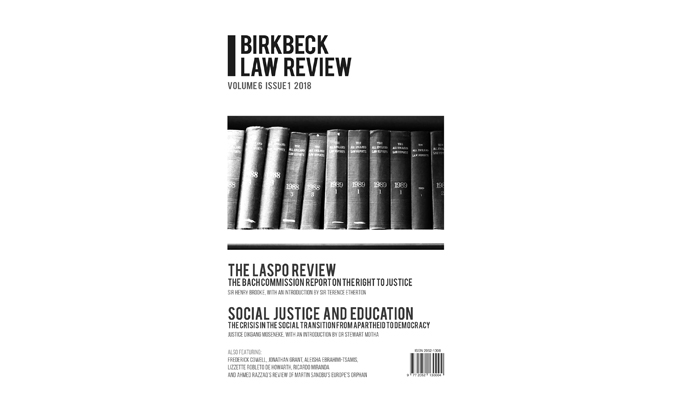
Ebrahimi-Tsamis, Aleisha. (2018) ‘Reintegrating FARC’s Female Combatants: The Challenges of Addressing Gender Binaries in Transitional Justice’, Birkbeck Law Review, 6(1), pp. 79-109, available: http://www.bbklr.org/6-1-5.html

Abstract

The female combatants of the Revolutionary Armed Forces of Colombia/Fuerzas Armadas Revolucionarias de Colombia (FARC) face significant and gender-specific obstacles in returning to civilian life now that FARC has formally ended their existence as an armed group. This article argues that the financial incentives, physical protection and sense of equality offered by FARC posed a strong lure to females who were otherwise at a natural disadvantage within Colombian society. Whilst considering female victims of Human Rights violations, deeper consideration is given to the symbiotic and conflicting duality of a female who may fulfil the roles of both victim and abuser, and the inability of present Transitional Justice mechanisms to approach and adequately address such a dyad.

Photo credit: Birkbeck Law Review, CC BY-NC-ND 3.0

UCL footer

Visit

  • Bloomsbury Theatre and Studio
  • Library, Museums and Collections
  • UCL Maps
  • UCL Shop
  • Contact UCL

Students

  • Accommodation
  • Current Students
  • Moodle
  • Students' Union

Staff

  • Inside UCL
  • Staff Intranet
  • Work at UCL
  • Human Resources
UCL Logo

University College London

Gower Street, London, WC1E 6BT

Telephone: +44 (0) 20 7679 2000

UCL social media menu

  • Link to Instagram
  • Link to LinkedIn
  • Link to Youtube
  • Link to TikTok
  • Link to Facebook
  • Link to Bluesky
  • Link to Threads
  • Link to Soundcloud
Here, it can happen.
Back to top

Essential

  • Disclaimer
  • Freedom of Information
  • Accessibility
  • Cookies
  • Privacy
  • Slavery statement
  • Log in

© 2026 UCL