 Close
Close


Virginia Mantouvalou contributes written evidence to Modern Slavery Bill
21 October 2014
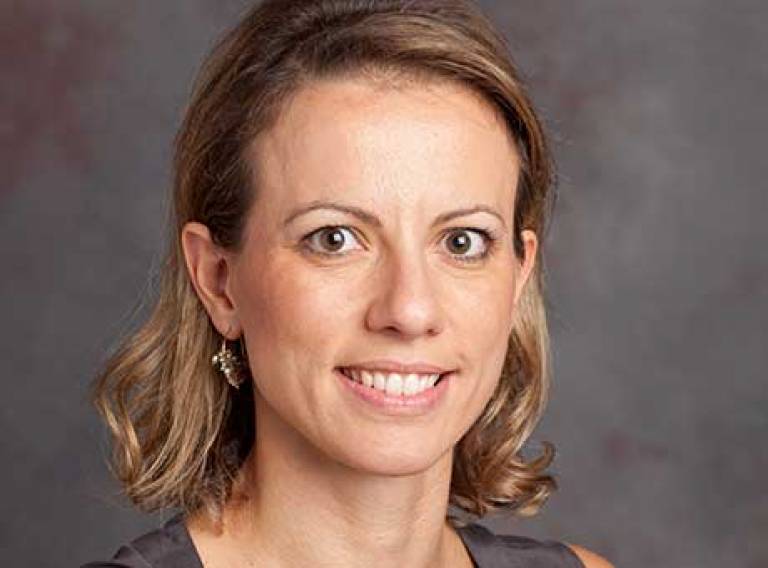
Dr Virginia Mantouvalou, Reader in Human Rights and Labour Law, and Co-Director of the UCL Institute for Human Rights, has given written evidence to the Parliamentary Public Bill Committee on the Modern Slavery Bill.
In her evidence, Dr Mantouvalou describes preliminary findings from a current research project, highlighting severe shortcomings in the 2012 Overseas Domestic Worker (ODW) visa regime, and calls for it to be revised.
As part of the ongoing project, Dr Mantouvalou has conducted interviews with a number of migrant domestic workers who have arrived in the UK under the 2012 ODW visa. In spite of the difficulty in accessing this often transient, vulnerable, and isolated group, she has been able to explore in depth the personal experiences of these workers, revealing a range of troubling experiences, from key safeguards not being implemented, poor living and working conditions, to harassment, threats and abuse.
In the evidence published this week, Dr Mantouvalou said: “The working and living conditions of the interviewees prior to arrival in the UK are extremely poor, according to the findings of my research. Some salaries are as low as £50 per month, and most range between £100-250 per month. For almost all interviewees, no pay increase took place while in the UK, even if the employers said that this would happen.
“In fact, many of those interviewed were not paid at all while in the UK. Most interviewees work very long hours, between 12 and 18 hours a day, and have no day off. Most of them do not have their own room, but share a room with the children of the family. These workers are used to extremely low labour standards and the absence of labour rights in the country of origin (which is well-documented). As a result these workers do not question the continuation of this situation while in the UK.”
The 2012 ODW visa regime has been heavily criticised by a number of human rights and labour rights NGOs, as well as in the Report of the Joint Committee on the Draft Modern Slavery Bill, to which Dr Mantouvalou also gave oral evidence in January 2014.
Concluding her evidence, Dr Mantouvalou described her findings as exposing “some deeply troubling patterns” that characterise the living and working conditions of 2012 ODW visa workers.
“This evidence suggests that, in light of the commitment of the Government to tackle Modern Slavery, there is a pressing need to return to the pre-2012 ODW visa regime, which was able to provide better protection to this highly vulnerable group of workers, or at the least, to have certain safeguards in place.”
Read Dr Mantouvalou’s written evidence to the Public Bill Committee.
Watch Dr Mantouvalou’s contribution to the Joint Committee on the Draft Modern Slavery Bill on Parliament TV (evidence begins at 14:56 and video starts at 15:12).