UCL logo
skip to navigation. skip to content.

DEPARTMENT OF PHYSICS AND ASTRONOMY

FACULTY OF MATHEMATICAL AND PHYSICAL SCIENCES
UCL Home
  • Physics and Astronomy
  • Home Page Images Gallery
  • Home
  • Prospective Students
  • Current Students
  • Research
  • Science for the Public
  • Alumni
  • Vacancies
  • News & Events
  • contact
  • Physics and Astronomy Home
A A A

Home Page Images Gallery

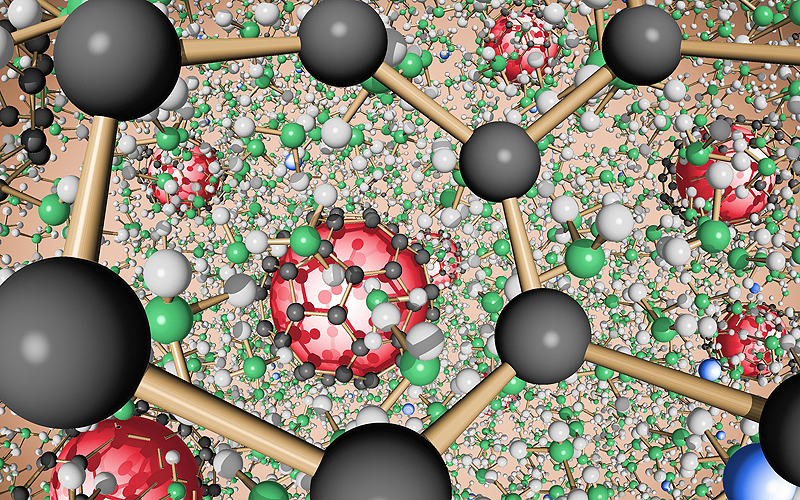
  • Carbon BuckyBalls in a Solution of Liquid Ammonia
    Using neutron scattering at the Rutherford Appleton Laboratory, near Oxford, Dr Chris Howard and Prof. Neal Skipper (UCL) obtained the first understanding of how C60 dissolves, by creating around itself a very strong spherical shell of solvent molecules.. View full-size photo here.
    Carbon BuckyBalls in a Solution of Liquid Ammonia
  • ULO captures the eruption of a new supernova Messier 51
    View full-size photo here.
    ULO captures the eruption of a new supernova Messier 51
  • Herschel Detects a Massive Dust Reservoir in Supernova 1987A
    ESA’s Herschel Space Observatory is helping unravel the mystery of the origin of cosmic dust. Thanks to the resolution and sensitivity of Herschel, astronomers have been able to detect cosmic dust from a supernova, adding weight to the theory that these cosmic fireworks are responsible for its creation. To read the full press release see http://www.ucl.ac.uk/phys/news/physics-news-publications/mb_07_11. View full-size photo here.
    Herschel Detects a Massive Dust Reservoir in Supernova 1987A
  • The Microwave Sky as Mapped by the Planck Satellite
    This is the first full-sky image from Europe's Planck telescope. Launched into space in May 2009, the telescope will survey the "oldest light" in the cosmos. Image courtesy of: ESA/ LFI & HFI Consortia. View full-size photo here.
    The Microwave Sky as Mapped by the Planck Satellite
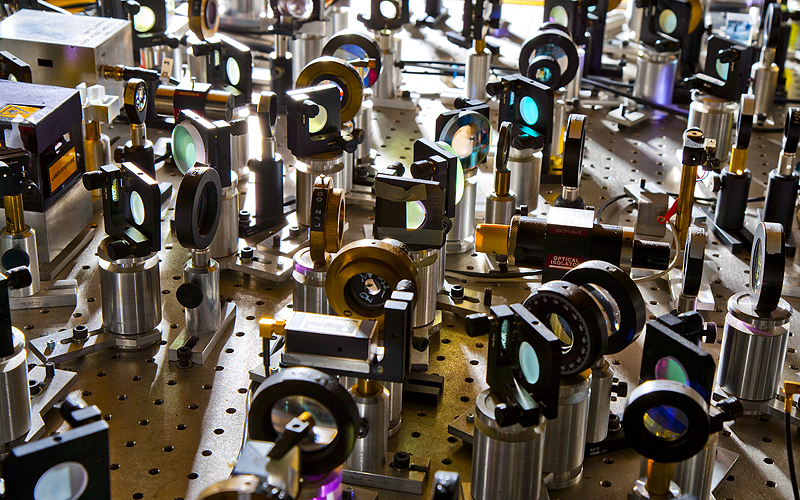
  • Cavity Cooling of Cesium Atoms
    Portion of the experimental set-up at UCL required for the laser cooling of atoms inside an optical resonator. Photograph taken by UCL Media Services. View full-size photo here.
    Cavity Cooling of Cesium Atoms
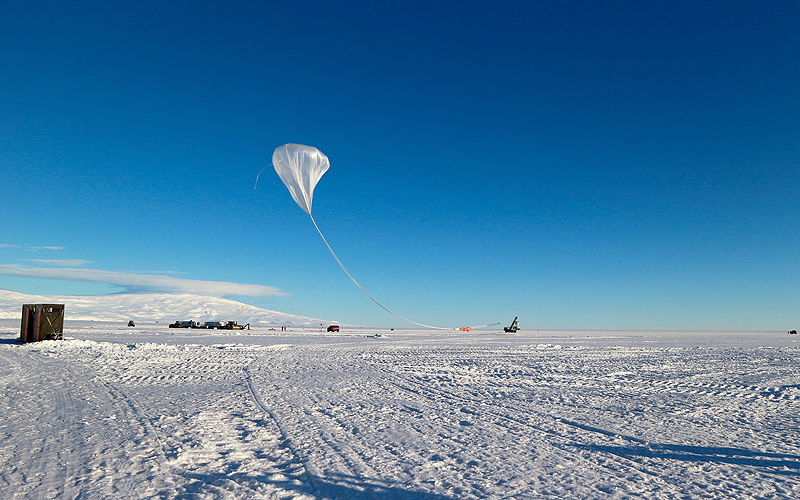
  • Observations of high energy neutrinos
    The ANITA balloon experiment is seeking to detect the radio signal from the interaction of ultra high energy cosmic ray neutrinos with the ice of Antarctica. The UCL High Energy Physics group is the only UK institute in the ANITA collaboration. Photograph by Mike Smith (Columbia Scientific Ballooning Facility). Photograph by Mike Smith (Columbia Scientific Ballooning Facility).. View full-size photo here.
    Observations of high energy neutrinos

  • Contact Information
  • Find Us
  • About Us
  • Student Area
  • Staff Area
 
  • Disclaimer
  • Freedom of Information
  • Accessibility
  • Privacy
  • Cookies
  • Advanced Search
  • Contact Us
University College London - Department of Physics & Astronomy - Gower Street - London - WC1E 6BT Tel: +44 (0)20 7679 7155

© UCL 1999–

Search by Google edit page