A A A

Staff

Imaging, probing & manipulation, from molecules to cells


Dr Angus Bain
Bain Angus
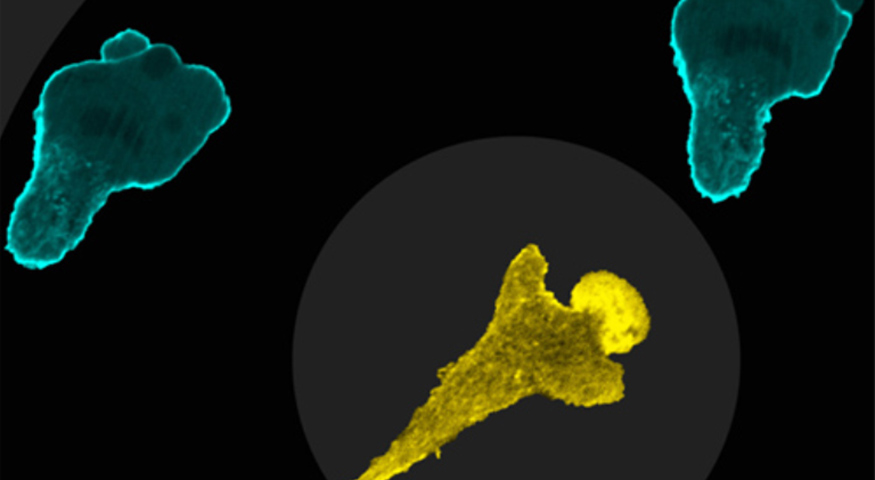
Picosecond and femtosecond lasers to study single and multi-photon induced fluorescence as a means of investigating molecular probe dynamics in materials (liquid crystals) and biological systems. Novel microscopy techniques (STED microscopy) for biological imaging.
Prof. John Finney
Finney, John
Disordered condensed matter, with particular stress on aqueous systems and the role of water in biological and other processes. Present (neutron and x-ray) structural work focusses on (a) high pressure ices and (b) aqueous solutions of molecules of chemical and biological importance, while (c) the relationship between the dynamics and activity of enzymes is being pursued using neutrons and other techniques.
Dr Bart Hoogenboom
Hoogenboom, Bart
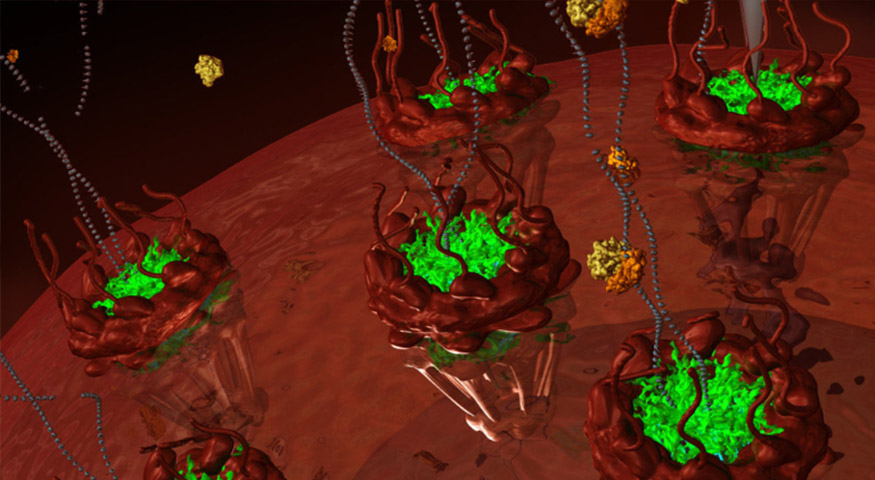
Development and application of scanning probe techniques to visualise biomolecules under near-physiological conditions and to determine their physics properties at nanometre resolution. Current biological research focusses on channel proteins, DNA, and structure and nuclear pore complexes, as well as simple model systems for biosensing.
Dr Phil Jones
Jones, Phil
Applications of optical trapping (optical tweezers) to biological systems, including force measurement and imaging by photonic force microscopy.  Novel microscopy techniques (STED microscopy) for biologcal imaging.
Prof. Ian Robinson
Robinson, Ian
Development and application of X-ray techniques for the structural characterisation of biological molecules (e.g., collagen).
Prof. Neal Skipper
Skipper, Neal
Understanding and controlling the way in which organic molecules diffuse through nanometer scale pores via a combination of neutron scattering and computer modelling to study the diffusion of simple organic molecules, such as methanol, phenol and glycol, are able to diffuse through porous media, under sub-surface conditions.


Materials & magnetism for biosensing and therapy


Prof. Quentin Pankhurst
Pankhurst, Quentin
Bio- and nanomagnetism aimed at making practical advances in the use of magnetic nanoparticles in healthcare. These include a medical tool for breast cancer staging; a molecular imaging microscope for living cells; and the development of multi-functional nanoparticles for therapy and diagnostics.
Dr Nguyen TK Thanh
Thanh, Nguyen
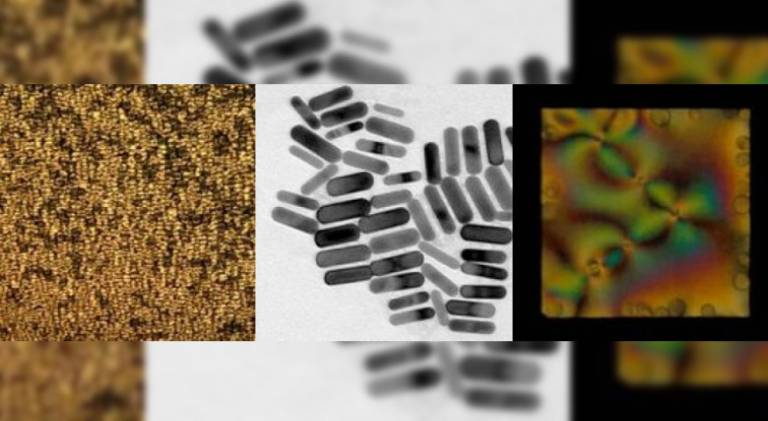
Synthesis and Biofunctionalisation of nanoparticles for biomedical application such as in-vivo imaging and treatment of cancers. She is keen to collaborate with cell-biologists, biochemists and microbiologists especially in the area of infectious diseases


Theory/Modelling

Dr Dorothy Duffy
Duffy, Dorothy
Modelling of organic/inorganic interfaces, modelling crystal growth and inhibition, bioorganisation and gold nanoparticles for therapy.
Prof. Ian Ford
Ford, Ian
Theoretical description – based on statistical mechanics – of the cohesion of biological molecules that consist of multiple strands (e.g., DNA, collagen). Our particular interest is to seek evidence, from the shape of experimental force-displacement curves, of the pattern of breakage of the bonds between the extracted strand and the bundle.
Dr Alexandra Olaya-Castro
Olaya-Castro, Alexandra

In plants, algae and some bacteria the first step in photosynthesis is carried put by specialized pigment-protein antennae that absorb sunlight and, with near-unit efficiency, transfer the associated photo-excitation to reaction centres where chemical energy conversion begins. Understanding the design principles of this highly efficient light-to-charge conversion process could help us to create artificial systems that would use solar light as efficient, sustainable and carbon-neutral source of energy. In this endeavor, recent experimental studies are suggesting that quantum-coherent transfer of photo-excitation could be an important element in the light-harvesting function. Our research team focuses on three challenging questions concerning how coherent effects could be exploited in natural and artificial light-harvesting systems:

(i) What are unique signatures of non-trivial quantum effects (coherence and correlations) affecting energy transfer on time scales of functional relevance?

(ii) Could quantum-coherent transfer help robustness under variations of external conditions such as changes in light intensity?

(iii) How can these non-trivial quantum effects be controlled in natural and synthetic systems?

From a fundamental viewpoint our research can help elucidating the biological relevance of quantum coherent dynamics. From a practical perspective it can shed light onto phenomena that can be integrated in the design of next-generation of energy technologies.

 Dr. Jochen Blumberger

Blumberger
Development and application of computational methods for simulation of (i) electron transfer and transport in proteins involving the calculation of redox potentials, reorganization free energy and electronic coupling, and (ii) gas diffusion in proteins, with particular focus on hydrogen converting enzymes (hydrogenases).