Jonathan G. Underwood: Research interests
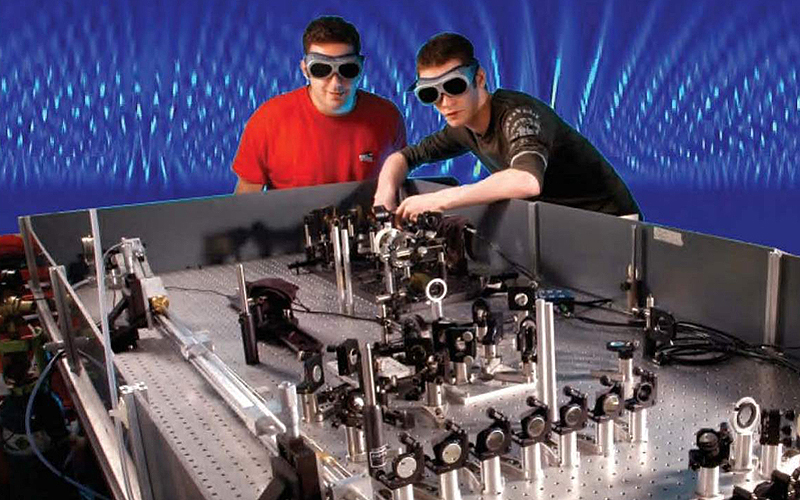
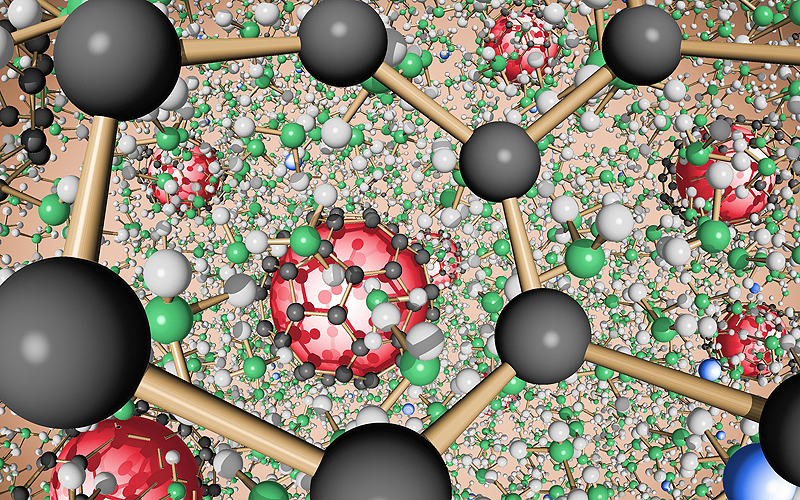
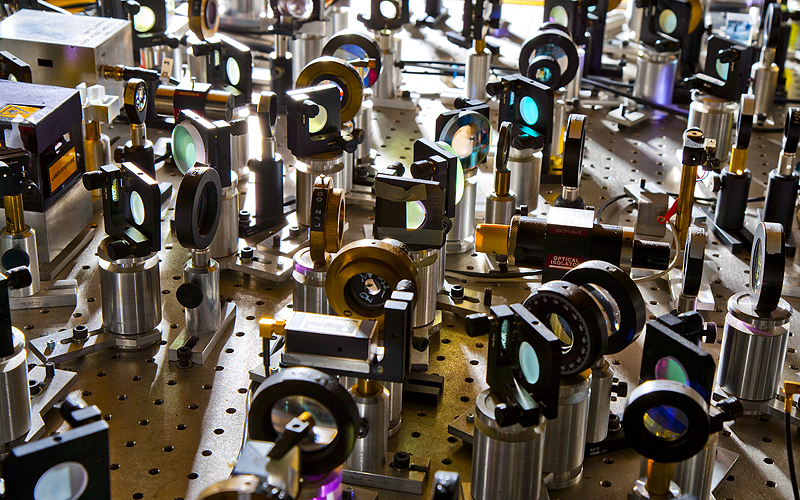
The central theme of my research is using femtosecond laser techniques for the study and control of molecular dynamics. In particular, I am interested in how charge and energy flow around the molecular framework after photon excitation, and how the nuclear and electronic structure of the molecule evolves. Developing ultrafast techniques to study and control such processes provides important insight into chemical functionality.
Time-resolved photoelectron spectroscopy

By virtue of its sensitivity to both electronic and nuclear configuration, femtosecond pump-probe time-resolved photoelectron spectroscopy is a powerful probe of excited state photophysics, allowing electronic and nuclear motions to be probed simultaneously. While a substantial amount of information is available from the evolution of photoelectron energy spectrum in such experiments, significantly more information regarding the evolution of the molecular electronic symmetry is available from the photoelectron angular distribution (PAD). Time resolved photoelectron imaging (TRPEI), where the electron energy and ejection angle are measured simultaneously, is therefore an ideal technique for studying excited state dynamics. A main theme of my research involves using this technique to probe molecular processes in excited electronic states, which involves both theoretical and experimental work. Ongoing work aims at combining molecular axis alignment (see below) with TRPEI.
For more information about this work, please see our recent publications in this area:
- A. Stolow and J. G. Underwood, "Time resolved photoelectron spectroscopy of non-adiabatic dynamics in polyatomic molecules", to appear in Volume 139 of Advances in Chemical Physics.
- O. Geßner, A. M. D. Lee, J. P. Shaffer, H. Reisler, S. V. Levchenko, A. I. Krylov, J. G. Underwood, H. Shi, A. L. L. East, D. M. Wardlaw, E. t. H. Chrysostom, C. C. Hayden and A. Stolow, Femtosecond Multidimensional Imaging of a Molecular Dissociation, Science 311, 219 (2006). [link]
Molecular axis alignment

Studies of gas phase
molecules are usually carried out with randomly oriented gas samples,
and as a result, measurements generally suffer a loss of information
due to the averaging of the experimental signal over the orientational
distribution of the sample. It is highly desirable to develop methods
for avoiding this orientational averaging. Using strong non-resonant
laser fields to control molecular rotation resulting in high degrees of
molecular axis alignment in the ground electronic state has become well
established in the past decade and offers a route to defining the
direction of molecules in a gas sample. By using laser pulses with
durations shorter than molecular rotation, it becomes possible to
create molecular axis alignment after the laser pulse. This allows
experiments to be carried out on field-free aligned molecules which
would be otherwise perturbed by the aligning laser field. Our recent
work has demonstrated the possibility of creating field-free alignment
of all 3 axes of a molecule, and our future work will seek to extend
the degree of alignment we can obtain, and also to apply the technique
to larger molecular systems.
For more information about this work, please see our recent publications in this area:
- K. F. Lee, D. M. Villeneuve, P. B. Corkum, A. Stolow and J. G. Underwood, "Field-free Three Dimensional Alignment of Polyatomic Molecules", Physical Review Letters 97, 173001 (2006).
- B. J. Sussman, J. G. Underwood, R. Lausten, M. Yu. Ivanov and A. Stolow, "Quantum control via the dynamic Stark effect: Application to switched rotational wave packets and molecular axis alignment", Physical Review A 73, 053403 (2006).
- J. G. Underwood, B. J. Sussman and A. Stolow, "Approaches to field-free three dimensional molecular axis alignment", Physical Review Letters 94, 143002 (2005)
- J. G. Underwood, M. Spanner, M. Yu. Ivanov, J. Mottershead, B. J. Sussman and A. Stolow, "Switched Wavepackets: A Route to Non-perturbative Quantum Control", Physical Review Letters 90, 223001 (2003).
High-order harmonic generation

At the
molecular level, chemical properties are determined by the behavior
of the outermost (valence) electrons. The ability to observe the
dynamics of these outermost electrons will provide new insight into
molecular functionality. Whereas techniques such as X-ray and
electron diffraction reveal detail about the distribution of all of
the electrons in the molecule, including the chemically irrelevant
inner electrons, in recent years it has become possible to observe
the outermost electrons exclusively by exploiting high intensity
laser fields. When a molecule interacts with the strong electric
field associated with femtosecond laser pulses, one of these
outermost electrons may be removed from the molecule and subsequently
driven back to recollide with the molecule at high energy. When this
happens, a very high energy photon may be emitted in a process
referred to as high-order harmonic generation. By measuring the
dependence of the yield of these high energy photons upon the angle
between the molecule and the laser field, it is possible to recover
information about the shape of the molecular orbital which the
electron occupies prior to being removed. In recent experiments at
the Astra laser facility at the Rutherford Appleton Laboratory we have examined precisely this dependence
for hydrocarbon molecules such as acetylene, ethylene and allene, and
found that this approach is able to reveal detail about the shape of the outermost
electronic orbital.
For more information about this work, please see our recent publications in this area:
- R. Torres, N. Kajumba, J. G. Underwood, J. S. Robinson, S. Baker, J. W. G. Tisch, R. de Nalda, W. A. Bryan, R. Velotta, C. Altucci, I. C. E Turcu, J. P. Marangos, "Probing Orbital Structure of Polyatomic Molecules by High-Order Harmonic Generation", Physical Review Letters 98, 203007 (2007).