
A A A
Prospectus

UCL Medical School News

NSS results 2013 - UCLMS top in London!

May 29, 2013 13:03PM

UCL remains London’s top ranked medical school for 4 years running!

Read more...

UCLMS Medical Education Conference - Transitions in Medical Education

May 07, 2013 09:15AM

Booking has now opened for our third Medical Education Conference on the 12th June 2013!

Read more...

UCLMS Seminar: 'Practicing professionalism in an age of digital social networking': exploring the digital divide

Mar 22, 2013 12:18PM

Dr Scott Rice – Practicing professionalism in an age of digital social networking:  exploring the digital divide

Read more...

UCL Medical School Hubs

Mar 22, 2013 12:17PM

We’re very pleased to announce that the first stage of a major estates upgrade for UCL Medical School is now underway.   The upgrade is designed to develop Student HUBS and enhanced teaching space at each of our 3 main campuses.   Plans and progress will be published on the UCLMS website as the projects develop at each site.

Read more...

NHS Change Day: do something better together

Feb 15, 2013 16:54PM

NHS Change Day will take place on 13.03.13.  It will be one day during which the collective energy, creativity and ideas of thousands of NHS staff, and those who support the NHS, in all areas of work and right across the country, will demonstrate how one simple action or new idea can make a difference and improve care for patients, their families and their carers. The team behind NHS Change Day are asking people to make pledges of an action or idea.  You can see our pledge on the NHS Change Day pledge wall .

Read more...

MBBS Programme Information

The goal of the MBBS programme at UCL is to produce The UCL Doctor: a highly competent and scientifically literate clinician, equipped to practise patient-centred medicine in a constantly changing modern world, with a foundation in the basic medical and social sciences.

This vision is underpinned by the values of scholarship, rigour and professionalism. The focus is on the development of the student as a scientifically informed, socially responsible professional who, in turn, can serve the health needs of individuals and communities.

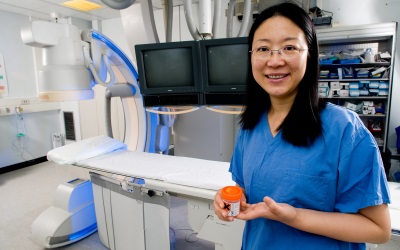
MBBS students

The delivery of the programme is co-ordinated by the Medical School, an interdisciplinary group who focus on the needs of today’s medical students and the requirements of tomorrow’s doctors in the changing healthcare environment.

Core medical education is provided at UCL and three central clinical campuses. The Bloomsbury campus has as its main clinical facilities University College Hospital (UCH). The sixteen-storey UCH provides excellent healthcare facilities, as well as being a centre of international importance for clinical teaching and research. The Royal Free campus in Hampstead is the site of the Royal Free Hospital. The Whittington campus in Archway is the site of the newly refurbished Whittington Hospital, set to become one of the country’s first Integrated Care Organisations.

MBBS students

Clinical teaching also takes place in many other prestigious Foundation Trusts, Associated University Hospitals, District General Hospitals, and in a range of general practice and community settings.

Students who enter the Medical School will enjoy the considerable advantages of being members of a worldclass medical institution, with many opportunities for exciting specialist clinical attachments and Special Study.


Outcome of the course

The MBBS programme at UCL is an integrated course. A curriculum map is provided for staff and students to identify how each of the course outcomes are achieved. Further details of how learning in the vertical modules of the programme is addressed.

At the end of the undergraduate course you will receive your MBBS degree, which is a primary medical qualification (PMQ). Holding a PMQ entitles you to provisional registration with the General Medical Council, subject only to its acceptance that there are no Fitness to Practise concerns that need consideration. Provisionally registered doctors can only practise in approved Foundation Year 1 posts: the law does not allow provisionally registered doctors to undertake any other type of work.

To obtain a Foundation Year 1 post you will need to apply during the final year of your undergraduate course through the UK Foundation Programme Office selection scheme, which allocates these posts to graduates on a competitive basis. So far, all suitably qualified UK graduates have found a place on the Foundation Year 1 programme, but this cannot be guaranteed, for instance if there were to be an increased number of competitive applications from non-UK graduates.

Successful completion of the Foundation Year 1 programme is normally achieved within 12 months and is marked by the award of a Certificate of Experience. You will then be eligible to apply for full registration with the General Medical Council. You need full registration with a licence to practise for unsupervised medical practice in the NHS or private practice in the UK.

Although this information is currently correct, students need to be aware that regulations in this area may change from time to time.

Page last modified on 20 nov 12 11:09