Prof Susan Collins
Professor of Fine Art
Head of Department
Slade School of Fine Art University College LondonGower Street London WC1E 6BT
susan.collins@ucl.ac.uk +44 (0)20 7679 7040 : extn 37041 www.susan-collins.net
Biography
Born in London I received my BA (hons) Fine Art from the Slade School in 1987 and studied at the School of the Art Institute of Chicago as a Fulbright Scholar in the early 1990's. I was appointed to set up Electronic Media at the Slade in 1995, founding the UCL Slade Centre for Electronic Media in Fine Art in the same year.
I was Head of the Undergraduate Fine Art Media area from 2005-10 and Director of Undergraduate Studies from 2009-10. Since 2010 I have been Head of Department and Director of the School.
Research Summary
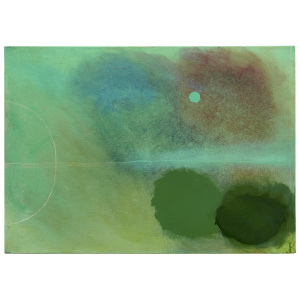
still from Glenlandia 2005-7
The work since 2001 has developed the 'remote' aspects first explored in In Conversation through a series of works exploring transmission, networking and time as primary materials including Transporting Skies which transported sky (and other phenomena) live between Newlyn Art Gallery, Penzance in Cornwall and Site Gallery Sheffield in Yorkshire; Fenlandia and Glenlandia - live year long pixel by pixel internet transmissions from remote landscapes; The Spectrascope, an ongoing live pixel by pixel transmission from a haunted house; and Seascape a solo show for the De La Warr Pavilion which simultaneously recorded a panoramic series of Seascapes pixel by pixel over the course of a year from the South East Coast of England. Other work since 2001 includes the BAFTA nominated Tate in Space commissioned for Tate Online, and Love Brid, an animated short film commissioned by Animate Projects.

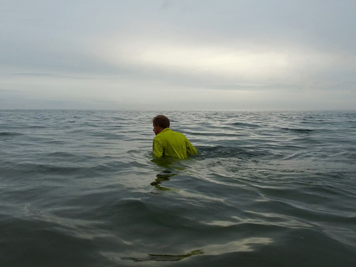
Still from Seascape 2009
The work is exhibited nationally and internationally with recent group exhibitions in the UK, Canada, Denmark, The Netherlands, Germany, Switzerland, Bulgaria, Tasmania, U.S.A, Mexico, Turkey and Thailand. Public commissions include a wildlife surveillance system for Sarah Wigglesworth Architects’s RIBA award winning Classroom of the Future and Underglow, a network of illuminated drains for the Corporation of London.
Exhibitions
Inter Sections: Science in Contemporary Art
2012David Lopatie Conference Centre, Weizmann Institute of Science, Rehovot, Israel
Digital Print
This exhibition at the David Lopatie Conference Centre at the Weizmann Institute of Science explores the meeting points between science and art. Curated by Cathy Wills 60 works by 34 artists from around the world have been included; each investigates various aspects of science, theory and technology: genetics, alternative energy, research into the nature of the universe and more. The artists: Roger Ackling, Maya Attoun, Edward Burtynsky, Daniel Canogar, Susan Collins, Mat Collishaw, Susan Derges, Jacqueline Donachie, Garry Fabian Millar, Spencer Finch, Jem Finer, Peter Fraser, Ori Gersht, Scarlett Hooft-Graafland, Barnaby Hosking, Walter Hugo, Luke Jerram, Eduardo Kac, Lilliane Lijn, Alastair Mackie, Edgar Martins, Anne-Mie Melis, Vincent Mock, David Rickard, Michal Rovner, Karen Russo, Tomer Sapir, Tomas Saraceno, Conrad Shawcross, Suzanne Treister, Troika, Alison Turnbull, Clara Ursitti, Jorinde Voigt and Douglas White.
Seascape
2012Osterwalder's Art Office
Archival Digital Prints
A solo show of prints from the Seascape archive are showing in Hamburg at Osterwalder’s Art Office
Welcome to the Treasuredome
2012ICCI 360, Weymouth, UK
Digital Animation
Love Brid has been included in ‘Welcome to the Treasuredome’, an Artists’ moving image festival at ICCI 360 curated by Stuart Moore and Kayla Parker on behalf of ICCI (Innovation for the Creative and Cultural Industries) with Plymouth University; part of Maritime Mix – London 2012 Cultural Olympiad by the Sea programme, Weymouth.
Medieval Harewood
2012All Saints Church, Harewood Estate, Leeds
Video Projection Installation
Excavation (part I), installed in All Saints Church, is a film sequence, projected on to the floor, showing an archaeologist’s hand gouging earth with a trowel during the excavation of Gawthorpe Hall the original Medieval manor house at Harewood. This work was commissioned by Harewood House and made in response to the Medieval Harewood season and exhibition. A second work also called Excavation (part 2) is a short moving image photographic ‘portrait’ exploring Medieval Harewood through its landscape.
Move on Up
2012Canary Wharf Station, London
Digital Animation
Love Brid has been included in an Animate Projects programme of films, Move on Up, screening at Canary Wharf Station from June to August 2012. The Move on Up programme is a selection from the Animate Collection of dynamic, exciting, uplifting, provocative and beautiful films made by animation artists in the UK over last 20 years. Artists include Run Wrake, Stuart Hilton, Susan Collins, Andrew Kötting and Semiconductor.
Born in 1987: The Animated GIF
2012The Photographers Gallery
Digital Animated Gif
An Animated GIF from the opening sequence of Love Brid was screened on ‘The Wall’ as part of its inaugural programme at The Photographers’ Gallery. ‘The Wall’ is a flat screen video wall hosting the Gallery’s digital programme. ‘Born in 1987: The Animated GIF’, is its first exhibition. The gallery invited contributions from a range of practitioners resulting in over 40 animated GIFs which were joined later in the exhibition by contributions from members of the public.
Found Footage: Whitechapel
2011Idea Store Whitechapel, 321 Whitechapel Road, London E1 1BU
‘Found Footage: Whitechapel’ is the latest in a series of animated works constructed entirely from still digital photographs, which play on the relationship between the still and moving image. The others in the series include ‘Love Brid’ (2009), a short film commissioned by Animate Projects, and ‘Found Footage: Bangkok’ for an exhibition at BU Gallery, Bangkok, Thailand (2010). For ‘Found Footage: Whitechapel’, Susan Collins photographed over 10,000 images around Shoreditch, Whitechapel and Stepney over a few days in July 2011. The title refers to the ‘found’ subjects which Collins came across, framed and captured with her camera.
Transitio_MX 04: Collateral Affections
2011Los Estudios Churubusco, Centro Nacional de las Artes,Av. Río Churubusco No. 79, Col. Country Club, Coyoacán, México D.F.
Collateral Affections is the theme for the 4th edition of this International New Media Art and Video Festival which included this large scale exhibition.
Uncontainable: Broken Stillness
2011Sirket-i Hayriye Sanat Galerisi Karakoy ve Eminonu Iskelesi Ust Kati Caferağa Mh. 34710 Kadıköy/Istanbul, Turkey
The subtle, beautiful and hypnotic works in Broken Stillness use digital practices to examine the border where well-established forms of image-making, especially painting and photography, meet the possibilities offered by new technologies. Through animation, motion capture, modelling software and other processes the artists generate unexpected interpretations of landscape and portraiture traditions. Slowly moving and shifting, their works reveal the constructed nature of images, highlighting our expectations about both static pictures and the hyper-speed of the digital environment. The exhibited works display the materiality of the digital or photographic image while challenging images that are frequently regarded as ‘true’ representations. Uncontainable: Broken Stillness is an exhibition supported as part of ISEA 2011 Istanbul and is also part of the Official Parallel Program of the 12th Istanbul Biennial.
Songs of The Sea
2011National Glass Centre, Liberty Way, Sunderland, SR6 0GL
Through artists’ work, archive ships’ logs and sound recordings, the exhibition explores the sea as a metaphor for storytelling. Other artists include Laura Belem and Richard Marquis.
Time Landscapes
2011Electronic Village Galleries - various venues
Time Landscapes is an exhibition of online work curated by Beryl Graham for Electronic Village Galleries: New media is often assumed to be the antithesis of all that is rural or natural – a quick and shallow ‘virtual reality’ for city slickers, which doesn’t even approach feeling the sea spray on your face, or just ‘being there’. Yet, there many layers of artificiality and man-made intervention lurking in the landscape – is that coastline restricted by the military? Is that woodland ancient semi-natural, or carefully sculpted for clients owning a country estate? Are those seaside watercolours and those photographs of farmhouse Bed and Breakfasts carefully editing out any sign of modern functionality, such as the electricity pylons? When it comes to art, new media artists still have a strong interest in landscape, and are able to use the characteristics of new media to reveal different layers of reality. This includes those layers which are not visible to the naked eye, and might be expressed as data – for example layers of numbers concerning invisible pollution, appearing as the glitches in landscape images. The connected nature and global reach of the internet also enables the artists here to play with time and space: Pollution is monitored live in real time; from a village in Cornwall, you can see the temperatures in all corners of the globe, right at that moment. Being ‘live on the internet’ does not of course always mean huge speed: these Harewood landscapes are drawn more slowly than a watercolour, and the contemplation of Pico Mirador national park unfolds to the leisurely pace of webcam refresh rates. Take a seat at a screen, and contemplate the sublime mass of data that is the internet … Electronic Village Galleries is a pilot project developed by Kate Southworth for distributed local and village sites in rural Cornwall.
Broken Stillness
2011Salisbury Arts Centre, Bedwin Street, Salisbury, SP1 3UT
The subtle, beautiful and hypnotic works in Broken Stillness use digital practices to examine the border where well-established forms of image-making, especially painting and photography, meet the possibilities offered by new technologies. Through animation, motion capture, modelling software and other processes the artists generate unexpected interpretations of landscape and portraiture traditions. Slowly moving and shifting, their works reveal the constructed nature of images, highlighting our expectations about both static pictures and the hyper-speed of the digital environment. The exhibited works display the materiality of the digital or photographic image while challenging images that are frequently regarded as ‘true’ representations.
Several Interruptions: 15 Years of the Slade Centre for Electronic Media in Fine Art
2011North Lodge, Gower Street, UCL
Seven, sequential solo presentations to celebrate 15 years of the Slade Centre for Electronic Media in Fine Art in 2011. Exhibited: 'Each Long Second' 2006, A0 photocopies, tape. Dimensions: 880 X 850 cms.
Under The Same Sky
2010Bangkok University Gallery, Rangsit Campus
Digital Prints, Video, Photography
A two person exhibition of work coming out of Tuksina Piptkul’s residency in the UK and Susan Collins’s residency in Thailand as ASEM DUO Thailand 2010 exchange fellows. Both artists work with similar subjects: landscape, sky, sea from very different perspectives. ‘Under the Same Sky’ takes its inspiration from the landscape, cityscape, sky and sea of Thailand and England and creatively explores these two different approaches, processes, artists and places.
Twenty One
2010Harewood House, Leeds, LS17 9LG
In 1989 the Terrace Gallery was established at Harewood House, the first dedicated contemporary art space in the setting of a country house. To celebrate its 21st anniversary Harewood have invited 21 artists who have exhibited there to respond to the collections, throwing new light on objects, themes and locations selected by them across the House and Gardens. Artists are: Norman Ackroyd, Sutapa Biswas, Sonia Boyce, Jason Brooks, Thomas A. Clark, Maurice Cockrill, Susan Collins, Kate Davis, Mark Fairnington, Leo Fitzmaurice, Laura Ford, David Hockney, Sophie Lascelles, Sea Hyun Lee, Neeta Madahar, Ian McKeever, Peter Mitchell, Eleanor Moreton, Paul Rooney, Mark Wallinger, Simon Warner
Common Links
2010New Greenham Arts, 113 Lindenmuth Way, New Greenham Park, Newbury Berks RG19 6HN
Common Links, an exhibition organised as part of the 10th Anniversary of the re-opening of Greenham Common since its military occupation during the cold war period. The exhibition includes work that spans a ten year period from 2000 to 2010 and contains work by artists who have been inspired by Greenham Common and/or its history. It includes a print from the version of Fenlandia where a webcam was placed on Venture West, the former Greenham Common Command Centre sited at New Greenham Park.
Printmaking: A Contemporary Perspective
2010Black Dog Space, 10a Acton Street, London WC1X 9NG
An exhibition to celebrate the release of Printmaking: A Contemporary Perspective, by Paul Coldwell and published by Black Dog Publishing. The work exhibited represnted some of the diverse and complex techniques explored in the book, from linocut, to screenprinting, etching and the latest digital printmaking technologies. Artists: Norman Ackroyd, Christiane Baumgartner, Paul Coldwell, Susan Collins, Michael Craig-Martin, Robin Duttson, Richard Hamilton, Andrzej Jackowski, Julian Opie, Antoni Tapies, Joe Tilson, Rachel Whiteread and Katsutoshi Yuasa.
Animate TV
2009Tate Modern
An eclectic selection of films commissioned and produced by Animate Projects over the past year presented in a 60 minute screening in the Starr Auditorium at Tate Modern.
Channel
2009Millais Gallery Offsite Projects
SHIFT 2009, Electronic Arts Festival
2009SHIFT Festival, Exhibition Hall, Dreispitzhalle Basel/Münchenstein
The Exhibition at Shift 09 presents artistic projects that address in various ways the nexus and interface of magic and technology: the ghosts that manifest as flaws in technical equipment and other facets of the spectrum of extrasensory perception; modern-day magic wands, tricks and tricksters; programme codes as incantation and centuries-old rituals in the media age.
Multiplicity – From Faim de siècle to Polymorchive
2009Osterwalder´s Art Office
Landscape 2.0
2009Edith Russ House for Media Art, Oldenberg and Kunstverein Springhornhof, Neuenkirchen
KURS:SØEN
2009Vestsjællands Kunstmuseum
Town and Country
2009Project Space Leeds
Town and Country is a collaboration between Project Space Leeds and Harewood House Trust exploring issues around the urban and the rural based on the relationship between the two sites and notions of migration. A group show of 6 artists, Susan Collins’ contribution, Harewood, shows images of Harewood’s ‘Capability’ Brown landscape filmed on a webcam over the course of a year. The live footage shown at PSL plays on parallels between the mechanically composed digital image and the formally constructed landscape.
Komm, wir gehen in den Wald!
2009Westwerk
Seascape
2009De La Warr Pavilion, Marina, Bexhill on Sea, East Sussex TN40 1DP
Susan Collins and Tim Head: Slow Fields
2008Osterwalders Art Office, Isestrasse 37, D-20144 Hamburg Germany
Through their parallel working practices Tim Head and Susan Collins explore the properties of digital media in distinct and inventive ways. Susan Collins' recent work employs transmission, networking and time as primary materials creating digital representations of landscape where each pixel represents a unit of time. Tim Head bypasses image as representation by using solely the prime physical elements of the medium to form the work. For Tim Head, the elusive and contrary nature of the digital medium and its unsettled relationship with both ourselves and with the physical world forms the basis for recent work. Computer programs are written to generate unique events in ‘real time’ on screens, projections and inkjet prints that focus on the intrinsic properties of these digital media. The programs operate at the primary scale of the medium’s smallest visual element (the pixel or inkjet dot) by treating each element as a separate individual entity. The medium is no longer transparent but opaque. Susan Collins' gradually unfolding, classically romantic landscape images are harvested and archived over the course of the year. They encode the landscape over time, with different tonal horizontal bands recording fluctuations in light and movement throughout the day and with broad bands of black depicting night-time. Stray pixels appear in the image where the moon passes through or a bird, person, car or other unidentifiable object passes in front of the webcam as the pixel is captured. The work is intended to be slow, a reflection on the ever increasing speeds we demand from the internet. Poised between the still and the moving image, the lens and the pixel, the prints explore how images can be coded and decoded using both light and time as building blocks for the work. Slow Fields is the first time these two bodies of work will be shown together.
Travelogue
2008One in The Other
artists include Anna Barham, Susan Collins, Nadine Feinson, Joan Key, Charlotte Moth Curated by Sotiris Kyriacou
Work and Play
2008Terrace Gallery, Harewood House, Leeds
The exhibition Work & Play explores Harewood House and its estate in the wider landscape. Prints from Susan Collins' new Harewood series will be on display alongside other images of Harewood including watercolours, architectural plans, historic maps and photographs from the 18th, 19th and 20th centuries.
Bow Quarter Art Annual
2008261 Manhattan Buildings, Bow Quarter, Fairfield Road, London, E3 2UQ
Multiplicities
2007ARC Projects
The Nature of Systems (screening)
2007BFI Southbank
Technological systems create, fragment and transform landscapes: a long video monitor stream, digitally mutated coastlines and strange urban microclimates introduce fascinating artificial worlds, blurring the boundaries between natural and constructed landscapes. Starting with documentation of Chris Meigh-Andrews’ video installation Stream Line and passing through a variety of spellbinding single-screen film and video environments, the programme finishes with a presentation of Susan Collins’ internet transmitted, real-time reconstruction of Loch Faskally in Perthshire, Glenlandia.
Video Vortex
2007Montevideo/The Netherlands Media Art Institute
WEBSCAPE - Art in The Virtual Landscape
2007VESTSJÆLLANDS KUNSTMUSEUM, SORØ, Denmark
Outlook Express(ed)
2007Oakville Galleries
Place Memory (screening), Site 07 festival
2007Stroud Valleys Artspace
Committed To Print
2007Royal West of England Academy, Bristol
Exhibition of Contemporary Printmaking showcasing recent innovative developments and international collaborations. Presented by the Centre for Fine Print Research at the University of the West of England at the Royal West of England Academy, Bristol. The Centre for Fine Print Research (CFPR) at UWE is a fine art based facility dedicated to the research of a broad range of print issues that emerged with the invention of photography in the nineteenth century, and continue to the present. This exhibition features prints and print-related artefacts resulting from some of the Centre’s many research projects. It includes artworks that explore the possibilities of several almost forgotten high quality nineteenth century printing processes through to the latest cutting- edge digital printing techniques. One of the over-arching themes of much of its research involves the integration of the best of the old with the advances of the present to facilitate new and increasingly comprehensive means of expression for artists. As well as work exploring the possibilities of combining digital imaging techniques with rare old processes such as collotype, printed enamels and an obscure photo ceramic printing technique, the exhibition aims to reveal the potential of some of the newer imaging technologies that have recently emerged. Through its research activities, the Centre has attracted collaborative ventures with a number of internationally important artists. One such artist, Richard Hamilton (the founding father of the British Pop art movement), produced a major work ‘The Typo Topography of Marcel Duchamp’s Large Glass' in collaboration with the Centre in 2003. Besides work from its diverse projects and collaborations, this exhibition features prints commissioned by the CFPR from five artists especially for this show. Working in conjunction with researchers from the Centre, the five artists: Susan Collins, Charlotte Hodes, Paul Hodgson and Neeta Madahar and Jo Lansley - selected for their innovative work with new forms of digital imaging - all produced a series of ambitious prints that, along with the other pieces in the exhibition, reveal some of the exciting new horizons in print currently being explored by contemporary artists.
Digital Aesthetic 2
2007Harris Museum and Art Gallery, Preston and PR1 Gallery, Preston
The Digital Aesthetic 2 exhibition highlighted work by a number of regional, national and international artists that use different approaches to working with the digital. Artwork on display varied from specially commissioned site specific light boxes by Bill Seaman, web based interactives by Thomson and Craighead and boredomresearch, installations by Vince Briffa and Stefan Gec, projections by Gary Hill and Robert Cahen and prints by eBoy, Susan Collins and Jane Prophet. The Digital Aesthetic 2 was a joint initiative between the Harris Museum and Art Gallery, Preston and the Electronic & Digital Art Unit at the University of Central Lancashire
Extraordinary Experiences: A Retrospective of British Media Art
2006Kunsthaus, Dresden
First commissioned for Haunted Media at Site Gallery Sheffield (2004) this work features a live transmission from a haunted house. In this version a webcam at South Hill Park, Berkshire (a haunted manor house) is harvesting images a pixel a second and transmitting these live to the internet and to a large projection which is updated live and continuously throughout the exhibition. The projection is accompanied by an audio 'fear frequency’. This is a frequency of 19hz just below the range of hearing (infrasound), which has been found to be present at sites of apparently haunted locations and linked to distorted vision (including spectral images), discomfort, and 'irrational' fear. The work is also available online with images saved at two hour intervals and displayed as an ongoing archive (continuing until March 2007).
Fenlandia
2006Babylon Gallery, Waterside, Ely, Cambridgeshire
Solo show featuring prints from the Fenlandia archive For 12 months from May 2004, a webcam was placed on the roof of the Anchor Inn, a 17th century coaching inn in the heart of rural Cambridgeshire, overlooking the Great Ouse and the New Bedford River at nearby Sutton Gault, part of the area known as ‘silicon fen’ where technology is literally embedded in the flat horizons of the reclaimed landscape of canals, sluices, dykes and ditches. The webcam was programmed to record images a pixel a second, so that a whole image would be made up of individual pixels collected over 21.33 hours. Each image was collected from top to bottom and left to right in horizontal bands continuously. The result is a series of gradually unfolding, classically romantic landscape images harvested and archived over the course of the year. This exhibition marks the first showing of a selection of large and small format archival digital inkjet prints from the original Fenlandia archive. The work is intended to be slow; a reflection on the ever-increasing speeds we demand from the Internet. It encodes the landscape over time, with different tonal horizontal bands recording fluctuations in light and movement throughout the day and with broad bands of black depicting night-times. Stray pixels appear in the image where a bird, person, car or other unidentifiable object may have passed in front of the webcam as the pixel was captured. Time becomes intrinsic to the work as the previous 76800 seconds or 21.33 hours - just under a day - is displayed pixel by pixel within a continuously updating time-lapse film caught in a single frame. Poised between the still and the moving image, the lens and the pixel, the work explores how images can be coded and decoded using both light and time as building blocks for the work. For this exhibition, two webcams have been located at Babylon Gallery looking out across the riverside and recording images a pixel a second. One set of images harvested in Ely will build a website archive, while another set will be fed live to a large screen in the gallery offering visitors a different perspective on this apparently familiar scene.
REMOTE
2006Plimsoll Gallery Centre for the Arts, Hunter Street, Hobart, Tasmania
From September 2005, a webcam has been transmitting images of Loch Faskally, Perthshire, Scotland from the FRS Research laboratory, Faskally. This webcam is harvesting images pixel by pixel, second by second and day by day over the course of the year. Each image is collected from top to bottom and left to right in horizontal bands continuously, marking visible fluctuations in light and movement throughout the day and being archived at two hour intervals. A selection of these images are displayed and updated regularly in the archive section of this website and a live realtime version of the work can be viewed full screen and projected for gallery installation. glenlandia is a companion work to Susan Collins' Fenlandia, a series of ‘pixel landscapes’ exploring the relationship between landscape and technology over time
Timeless: time, landscape and new media
2006Harbourfront Centre, Toronto
From September 2005, a webcam has been transmitting images of Loch Faskally, Perthshire, Scotland from the FRS Research laboratory, Faskally. This webcam is harvesting images pixel by pixel, second by second and day by day over the course of the year. Each image is collected from top to bottom and left to right in horizontal bands continuously, marking visible fluctuations in light and movement throughout the day and being archived at two hour intervals. A selection of these images are displayed and updated regularly in the archive section of this website and a live realtime version of the work can be viewed full screen and projected for gallery installation. glenlandia is a companion work to Susan Collins' Fenlandia, a series of ‘pixel landscapes’ exploring the relationship between landscape and technology over time
FRAMED
2006Slade Research Centre, Woburn Square
Framed was a performance event/showcase which took place in the new Slade Research Centre space in Woburn Square at the end of March 2006 to coincide with the NODE.London season for media arts and also to mark the 10th anniversary of the Slade Centre for Electronic Media. From works exploring transmission, networking and time to palm pilot drawings, sound performances as well as experimental works developed in collaboration with UCL's Immersive VR Laboratory exploring physiological input devices, this event was intended to provide a snapshot of the broad range of interests, exploration and investigations in this area. Artists included: Lanfranco Aceti; Tom Badley; Alex Baker; Dale Berning; Ben Barwise; Ramona Behravan; Rebecca Birch; Martin John Callanan; Ana Cavic; Georgia Chatzivasileaiadi; Susan Collins; Phil Coy; Amy Cunningham; Dream Products Co; Simon Elliston; Anita Wernstrom and Jennie Fagerstrom; Simon Faithfull; Brett Foreman; Judith Goddard; Florencia Guillen; Tim Head; Louisa Clarke and Jaye Ho; Nick Hornby; Will Hurt; Alex Impey; Janice Kerbel; Richard Lockett; Brighid Lowe; Sunee Markosov; Viveka Marksjo; Vaishali Pathak and Katie Miller; Suzi Webster and Katie Paterson; Salomon Rogberg; Jack Southern; Naoko Takahashi; Thomson and Craighead; Timo Vaittinen; Jon Velardi; William West; Patrick White; Eli Zafran
Christmas
2005con|temporary gallery, Berlin
Blur of The Otherworldly: Contemporary Art, Technology, and the Paranormal
2005Center for Art and Visual Culture, University of Maryland, Baltimore, USA
StoryRooms
2005Museum of Science and Industry in Manchester
Glenlandia
2005Threshold Artspace, Horsecross, Perth, Scotland
A companion work to Fenlandia (see previous), this is the exhibition version of Glenlandia (as per Glenlandia artwork entry). A webcam has been sited at the FRS (Fisheries Research Services) Freshwater laboratory which is situated on the bank of Loch Faskally, Pitlochry, Perthshire, Scotland. The webcam harvests images pixel by pixel over the course of 12 months. Each image collected from top to bottom and left to right in horizontal bands continuously, recording fluctuations in light and movement throughout the day. It is set to record at a range of rates over the course of the year. For instance when set to record a pixel every second, the whole image is made up of individual pixels collected over approximately 21 hours and 20 minutes. In thsi exhibition version Glenlandia was displayed as a full screen live updating landscape on a screen in the Threshold artspace at Horsecross for 12 months as well as being available online.
Rhizome Artbase 101
2005New Museum of Contemporary Art, New York
Data Agency
2005http gallery, London
Haunted Media
2004Site Gallery, Sheffield
Microwave International Media Art Festival 2004
2004City Hall, Hong Kong
Festival @rt outsiders 2003 Space Art
2003Maison Europ‚ene de la Photographie, Paris, France
Transporting Skies
2002Newyln Art Gallery, Penzance
Transporting skies, people, and landscape between Penzance and Sheffield, the work drew from both landscape and trompe l'oeil traditions in painting to create works which unfolded in real time, concertinaing space, time and location through a sequence of networked installations. One of the works used cameras and projections to draw visitors into the work, transmitting them via the internet in real time to the remote gallery space. Visitors to Site Gallery, Sheffield found themselves beamed to Newlyn Art Gallery, Penzance, and vice versa. The work made it possible for visitors to both galleries to become active participants in the realisation of the work, embodied as live performers within it, effectively existing in two places at once. A second work exchanged an urban Sheffield landscape with a Penzance seascape, each pixel recording a different moment in time throughout the duration of the show.
Transporting Skies
2002Site Gallery, Sheffield
Transporting skies, people, and landscape between Penzance and Sheffield, the work drew from both landscape and trompe l'oeil traditions in painting to create works which unfolded in real time, concertinaing space, time and location through a sequence of networked installations. One of the works used cameras and projections to draw visitors into the work, transmitting them via the internet in real time to the remote gallery space. Visitors to Site Gallery, Sheffield found themselves beamed to Newlyn Art Gallery, Penzance, and vice versa. The work made it possible for visitors to both galleries to become active participants in the realisation of the work, embodied as live performers within it, effectively existing in two places at once. A second work exchanged an urban Sheffield landscape with a Penzance seascape, each pixel recording a different moment in time throughout the duration of the show.
The Digital Aesthetic
2001Harris Museum and Art Gallery and The University of Central Lanc
In Conversation
2001British Council, Berlin, Germany and www.inconversation.com
In Conversation
2000Chapter Arts, Cardiff
Home 1
19981A Flodden Road, London.
Encoded Identities
1998Gallery Otso, Espoo, Finland and Internet
Travelogue
1998The Travelling Gallery, Scotland.
Suspect Devices
1998London Electronic Arts Gallery.
Avatar
1998De Oude Kerk, Amsterdam and Internet
Awash
1998Canary Wharf, London
Commission. Temporary Projection For Launch At Canary Wharf, London.
Awash was a temporary site specific installation at Mackenzie Walk, Canary Wharf London commissioned as part of a programme of works called Launch curated by Richard Milner. It took the form of an intervention, incorporating a series of sounds and a video projection onto water.
In Conversation
1997Fabrica Gallery Brighton and WWW
Suspect Devices
1997Laing Art Gallery, Newcastle
Imaginary Places
1997Ikon Gallery Touring Show, Midlands.
Ex Machina
1996Zone Gallery
An exhibition of Japanese and British Digital Interactive Art. Artists: Susan Collins; Digital Therapy Institute; Teiji Furuhashi; Jane Propher; Paul Sermon; Yoshinori Tsuda
Triplicate
1996Tate St Ives
Exhibition across three venues on the South coast. Artists: Katherine Clarke, Susan Collins, Anne Eggebert, John Kippin, Ed Stewart, Jo Stockham
Triplicate
1996Towner Art Gallery, Eastbourne
Exhibition across three venues on the South coast. Artists: Katherine Clarke, Susan Collins, Anne Eggebert, John Kippin, Ed Stewart, Jo Stockham
Objekt:Video
1996Landesmuseum, Linz, Austria
Large international survey show of artists working with video 'objects' and installations.
Triplicate
1996Southampton City Art Gallery
Exhibition across three venues on the South coast. Artists: Katherine Clarke, Susan Collins, Anne Eggebert, John Kippin, Ed Stewart, Jo Stockham
Command, Shift, CTRL: Sexuality, Fear and Desire in the Digitized World
1996NAME Gallery, Chicago
Artists included: Susan Collins, Nigel Jamieson, Monique Genton and Andrea Polli.
Every Dog Has Its Day
1995Warrington Museum and Art Gallery
Solo exhibition as part of Videopositive 1995, commissioned by the Foundation for Art and Creative Technology, Liverpool
V-topia: visions of a virtual world
1994Tramway, Glasgow
An international show of works using electronic media. Artists including: Susan Collins, Clive Gillman, Grahame Weinbren, Lynne Hershman Leeson, Graham Ellard and Stephen Johnstone
On Location
1994Wood Street Liverpool, Commissioned by Bluecoat Gallery
'Litter', a site specific animated video projection was installed in Wood Street Liverpool, commissioned by the Bluecoat Gallery, Liverpool as part of this exhibition of site specific works
Handle With Care
1993Museum of Science and Industry, Manchester
Large scale solo interative installation commissioned for the opening of the 1830 Warehouse, Museum of Science and Industry in Manchester
Introductory Exchanges
1993Woolwich Foot Tunnel, London
A site specific interactive audio and video public installation for the Woolwich Foot Tunnel, commissioned by Camerawork Gallery for the River Crossings Festival
eBC1
Screening Of Videowork At Institute Of Contemporary Art, London And On WWW.single screen video included as part of 'TV' webcast, Institute of Contemporary Art, London
Chaser
Public CommissionOne of a series of contemporary artworks and illuminations commissioned for the GLOW ‘07 festival Newcastle Gateshead. Chaser transforms the top windows of the Tyne Bridge Tower in Gateshead into a rapidly moving light circuit of intense colour. Visible across the river Tyne in Newcastle, Gateshead and beyond, the animation will continually ‘chase’ around the building as the colours gradually shift over time. Tuesday 4 – Monday 17 December 2007
Snowdomia
Digital AnimationA fast paced looping animation of snowdome images downloaded from the internet. The work was made to be shown on a 50 metre square LED screen which was commissioned by sLab as part of "SHINE" Winter Festival. Sunderland Museum and Winter Gardens, Sunderland from Thursday 7 December - 31 December 2006
Underglow
Public Site Specific InstallationOne of 4 works commissioned by the Corporation as part of their new 'Light Up Queen Street" annual programme of winter commissions. Underglow has illuminated a number of the network of drains and gullies which service the streets. Lights have been installed within 16 separate gullies (drains) in the vicinity of Guildhall Yard, King Street and Queen Street. The lights are hidden within the drains and some are programmed to very slowly change colour. This work was produced in cooperation with the Corporation of London's electrical contractors and drain engineers and is set to come on with the street lights.
Publications
Moby Dick Big Read
One of my Seascape images will be accompanying a chapter of Moby Dick as part of the Moby Dick Big Read A cast of 270 people including Tilda Swinton, Simon Callow, Sir David Attenborough, Stephen Fry, Benedict Cumberbatch, as well as community leaders and young people, have created an incredible digital version of Herman Melville’s prophetic masterpiece, which was first published in 1851. Accompanying each chapter are artworks from artists including Anish Kapoor, Gary Hill, Susan Hiller, Matthew Barney, Mark Wallinger, Gavin Turk et al The project is being co-curated by Dr Philip Hoare, artist in residence at Plymouth University’s Marine Institute, and Angela Cockayne from Bath Spa University, and is hosted by Peninsula Arts at Plymouth University.
Excavation
Excavation is a moving image photographic portrait of Medieval Harewood. Made in response to the ongoing archaeological excavation of Harewood's original Medieval Manor House, Gawthorpe Hall, the work records imagery from the present with roots in the Medieval - from the herds of deer still gracing the land to the landscape of rolling hillocks formed centuries ago through medieval farming techniques. This work is the latest in a series of animated works constructed entirely through still photographs.
Unfolding Time: Landscapes, Seascapes and the Aesthetics of Transmission
From spring 2008 until summer 2009 network cameras were installed at five locations along the South East Coast of England from Margate to Gosport. Each camera looked out over the English Channel, framing the horizon and forming part of a panoramic series. Transmitting and archiving in real time, each Seascape image was constructed pixel by pixel in horizontal bands continuously from top to bottom and left to right of the image. Each complete image was collected over just under seven hours, recording the fluctuations in light and movement, time and tide throughout day and night. Seascape (2008-9) built upon previous works Fenlandia (2004-5) and Glenlandia (2005-7) which explored the relationship between landscape and technological innovation in the areas known as Silicon Fen and Silicon Glen through a series of gradually unfolding, classically romantic landscape images which were harvested and archived over a number of years. Seascape extended the investigation to a less obviously picturesque, more abstracted depiction of time and tide. This essay reflects on all three works, Fenlandia, Glenlandia and Seascape. It explores issues raised by the works including the relationship between landscape and time; abstraction and representation; the aesthetics of transmission, and the moment of ‘right now’ in the work.
Love Brid
Love Brid is an animated postcard, a loving tribute to the timeless charms of the seaside, and a colourful rollercoaster ride through the coastal town of Bridlington (Brid) in North Yorkshire and its many unique attractions recorded on location over a few days in August 2009. Love Brid is 3 mins 20 seconds long and has been made with a view to an online context and is intended to be browsed interactively as a series of stills, or digital flipbook, as well as be seen as a linear animated film. It can be view it on the Animate Projects website or downloaded from itunes Love Brid is one of three short films commissioned by Animate Projects as part of CABE's Sea Change initiative.
Seascape, Susan Collins
Charting the span of Susan Collins' Seascape from its earliest online manifestations to its gallery exhibition at the De La Warr Pavilion in Bexhill, this publication offers an overview of this innovative project which uses digital technology to bring a new element to a longstanding pictorial tradition reflecting man's enduring relationship to the sea. Featuring essays by art historian Nicholas Alfrey and new media theorist Sean Cubitt, alongside a wealth of images and other background information, the book sets out to capture the many different facets of this extensive investigation, highlighting the sheer volume of material that has been generated over the course of its development.
Keynote Lecture: “Framing the digital: Materialising New Media", Critical Perspective - British Art Production
The Sergio Motta Institute hosted the International Art and Technology Forum-Critical Perspectives on Art and Technology on November 3rd and 4th 2009 at the Brazilian British Center, in São Paulo, Brazil. Keynote speakers were: Gerfried Stocker (Ars Electronica, Austria), Giselle Beiguelman (Sergio Motta Award, Brasil), Jorge La Ferla (Universidad de Buenos Aires, Argentina), Susan Collins (Slade School, University College London, Great-Britain) and Yukiko Shikata (NTT InterCommunication Center, Japan). Critical Perspective - British Art Production Framing the digital: Materialising New Media Susan Collins – Abstract August 2009 This presentation will introduce a range of works from artists working in Britain today who are specifically translating or materialising digital works for a gallery or physical situation. Framed against the backdrop of the current gallery, institutional and funding context in the UK, it will look at both emerging and established artists as well as some who do not consider themselves to be working primarily within the digital domain. The presentation will include documentation of Thomson & Craighead’s “Beacon”, a work which translates google searches in real time onto a mechanical railway flap sign; Phil Coy’s 1:1 manifestation of pixels from satellite photographs of Central Park in New York; Simon Faithfull’s palm pilot drawings transposed onto paving stones; Katie Paterson’s live transmission of the sound of a glacier melting; Jack Strange’s motorized paper “Spinning Beach Ball of Death”; Jane Prophet’s works transforming fractal plant and tree forms into sculpture; Tim Head’s work with screen, print and projection exploring the elusive material substance of the digital medium, and a week of pixel-by-pixel Seascape webcam footage revealed through a 10.5 metre long print (Susan Collins). Collins will also discuss her Slade Centre for Electronic Media curatorial project “Framed” (2006) which included work by 40 emerging and established artists and set out a philosophy for bringing a wide range of new media practices out of the screen and into material space to be considered critically alongside more mainstream visual art production.
Pixel Landscapes and Grey Ecologies: In Conversation - Susan Collins and Sean Cubitt
With her webcam series Glenlandia and Fenlandia, artist Susan Collins could be ascribed with creating the beginnings of a pixelated landscape tradition. Collins talks with new media theorist Sean Cubitt about the digital domain's relation with the natural world through the remote frame of these works.
Espaces Néomédiatiques: Interview with Susan Collins
Interview between Susan Collins and curator/writer Sarah Cook discussing the background to and issues emerging from Susan Collins' Seascape series
Music for The Williamson Tunnels
A 2 CD collection of the sounds of dripping water in a numbered edition of 1000. The colelction includes sounds form a wide range of artists working with audio including Scanner, Jem Finer and Kaffe Mathews. My contribution was based on the audio I made for my publicly sited interactive installation Introductory Exchanges which was installed in the Woolwich Foot Tunnel in 1993.
Harewood
From June 2008 until November 2009 a webcam was installed overlooking Harewood House’s classical ‘Capability’ Brown landscape. It transmitted and recorded images at the rate of a pixel a second so that a whole image represented the previous 21.33 hours. Each image was collected from top to bottom and left to right in horizontal bands continuously. As well as creating a perpetually updating 'live' image onscreen, Harewood saved an image every few minutes, translating into an accumulating archive, with each image - or still - forming a complete work in itself. Harewood forms part of an ongoing and innovative series of constructed landscapes employing transmission, networking and time as primary materials. Two earlier works, Fenlandia (2004-5) and Glenlandia (2005-7) addressed the relationship between man made landscape and technological innovation in the areas known as Silicon Fen and Silicon Glen respectively. Harewood looked more explicitly at the notion of a constructed landscape in relation to the picturesque. The gardens at Harewood House were designed by Capability Brown to achieve a specific aesthetic goal in relation to landscape painting. Harewood was commissioned by Harewood House, Leeds. It exists online as a website; as a live screen based installation, and as a series of archival digital inkjet prints.
Keynote Speaker
6th & 7th of September, 2007
Keynote Speaker: Pixel Landscapes and the Aesthetics of Transmission
June 20–22, 2007 Abstract: Poised between the still and the moving image, the lens and the pixel, recent networked projects including Fenlandia, Glenlandia and The Spectrascope explore how images can be coded and decoded using both light and time. This presentation will explore issues raised by the work including the relationship between landscape, technology and time; abstraction in relation to representation, and reflects on what it means materially to record a digital image and transmit it across space and time.
Fabrica
A book celebrating the first 10 years of Fabrica Gallery in Brighton.
From Fenlandia to Glenlandia: pixel landscapes and remote transmission
For 12 months from May 2004, a webcam was placed on the roof of the Anchor Inn, a 17th century coaching inn in the heart of rural England, part of an area known as Silicon Fen overlooking the Great Ouse and the New Bedford River at Sutton Gault in Cambridgeshire, an area where technology is literally embedded in the flat horizons of a reclaimed landscape of canals, sluices, dykes and ditches. The webcam was programmed to record images a pixel a second, so that a whole image would be made up of individual pixels collected over 21.33 hours. Each image was collected from top to bottom and left to right in horizontal bands continuously. The result is a series of gradually unfolding, classically romantic landscape images harvested and archived over the course of the year. The work is intended to be slow, a reflection on the ever increasing speeds we demand from the internet. It encodes the landscape over time, with different tonal horizontal bands recording fluctuations in light and movement throughout the day and with broad bands of black depicting nighttime. Stray pixels appear in the image where a bird, person, car or other unidentifiable object may have passed in front of the webcam as the pixel was captured. Time becomes intrinsic to the work as the previous 76800 seconds or 21.33 hours - just under a day - is displayed pixel by pixel within a continuously updating time lapse film caught in a single frame Poised between the still and the moving image, the lens and the pixel, the work explores how images can be coded and decoded using both light and time as building blocks for the work. This presentation will centre on two works, Fenlandia (as described above) and Glenlandia, a work made for its Scottish equivalent, ‘Silicon Glen’. It will explore issues raised by the works including the relationship between landscape, technology and time; remote transmission and distribution; the balance of abstraction to representation; and the moment of ‘right now’.
The Actual and the Imagined
"Conversation with Susan Collins". Interview with Carlo Zanni
Case Study "In Conversation' - public participation:Susan Collins
The chapter is a case study of the artwork 'In Conversation' exploring the role of the public in the enactment of the work. The chapter is mainly an interview between Susan Collins (the artist/author of the work) and Peter Ride (co-author of the book)
Investigating aspects of presence through responsive 3d audio environments
This chapter consists of a project report and diary documenting a collaborative (susan Collins with Paul Gillieron Acoustics) 3d audio research project into responsive systems and 3d audio streaming media. The research was funded by both ITEM and the AHRC.
StoryRooms
Created for the exhibition StoryRooms that took place in the historical setting of the 1830 Warehouse at the Museum of Science and Industry in Manchester, England (11 October, 2005 – 15 January, 2006), the DVD includes an illustrated essay booklet, an installation soundtrack by Vini Reilly, and a 35 minute film that captures the unique atmosphere of the event and its audience involvement while reflecting the installations through interviews with their creators. The DVD features documentation of the exhibition as well as separate chapters for each artist including the interviews. Artists included were: Susan Collins UK; Paul DeMarinis USA; Ken Goldberg USA; Paul Sermon UK; Alexei Shulgin/Electroboutique, Russia; Cornelia Sollfrank, Germany; Tan Weck Weng, Malaysia/Australia; Andrea Zapp, Germany/UK.
The Actual and The Imagined
25th May 2005
Tate in Space
17th February 2005 at Centre Pompidou, Paris
Electronic Media at the Slade
6 May 2005
The Spectrascope
This is a new version of a work first commissioned in 2004 for the Haunted Media exhibition in Site Gallery Sheffield. This version has been commissioned by Andrea Zapp for the StoryRooms exhibition at the Museum of Science and Industry in Manchester (see separate exhibition entry). A webcam has been sited at South Hill Park, Bracknell, Berkshire (an apparently haunted venue). The webcam harvests images pixel by pixel over the course of the year. Each image collected from top to bottom and left to right in vertical bands continuously, recording fluctuations in light and movement throughout the day. It is set to record a pixel every second, so that the whole image is made up of individual pixels collected over approximately 21 hours and 20 minutes. The Spectrascope is being displayed as a full screen live updating projection on a 2.5m screen in the Museum of Science and Industry Manchester and in an exhibition in Baltimore (see exhibitions entries) and is also available online as a distributable (live) artwork. The gallery version of the work also incoporates the Fear Frequency, a 19 hz frequency present in the space. Images are saved at two hour intervals with a selection displayed in an archive on the website, which is added to as the year progresses.
Classroom of The Future
The commission was to create an interactive visual arts element into the Classroom of the Future - a new science classroom for Mossbrook Special Primary School in Sheffield - in collaboration with the architect of the new school building, Sarah Wigglesworth and in consultation with the school. There are three main elements, each of which are integrated into the infrastructure of the classroom. 1. wildlife surveillance system: a range of cameras allowing the children to observe the wildlife surrounding the new building from inside the classroom. Two large (40") LCD screens - one built into the floor and one embedded in the wall - can play back images live from a range of cameras placed in various locations around (and under) the classroom and wildlife lake. Part of the classroom floor is made of glass so that the children can also see what is happening directly under the classroom at any time and there is also a remote control boat with two wireless cameras onboard (one above and one below water) which can capture images from the lake and send them back wirelessly in realtime to the classroom. 2. A camera obscura was built into the classroom 3. An interactive sound installation was embedded into the ballpool (recreational) area providing a library of audio responses that can be built up as a changing library over time. (this included workshops with school pupils to create the first sounds for the piece).
Glenlandia
A companion work to Fenlandia (see previous), a webcam has been sited at the FRS (Fisheries Research Services) Freshwater laboratory which is situated on the bank of Loch Faskally. The webcam harvests images pixel by pixel over the course of the year. Each image collected from top to bottom and left to right in horizontal bands continuously, recording fluctuations in light and movement throughout the day. It is set to record at a range of rates over the course of the year. For instance when set to record a pixel every second, the whole image is made up of individual pixels collected over approximately 21 hours and 20 minutes. Glenlandia is being displayed as a full screen live updating landscape on a screen in the Threshold artspace at Horsecross (see separate exhibition entry) and is also available online as a distributable (live) artwork. Images are saved at two hour intervals with a selection displayed in an archive on the website, which is added to as the year progresses.
The Actual and the Imagined
The Future of it All
Pixelscape for Glastonbury Tor
Artists Perspective on the Preservation of Born Digital Artworks
The Spectrascope
Fenlandia
Pixelscape
Inhabited Text
Tate in Space
Tate in Space is an online commission for Tate. It was active from July 2002 until September 2003 and remains online in archive form on the Tate website. It is an artwork which proposes a 'development programme' for a Tate in Space and takes the form of an intervention on the main Tate Website. The site explores ways in which Tate in Space might extend visitor experience and engage new audiences. It is an arena for debate and reflection on the nature of art in space, raising questions about cultural and institutional ambition and the very human desires to observe and communicate.
Holy Mackerel
Smoked Salmon (short story)
Inhabited Content: An exploration into the role of the viewer through the realisation of In Conversation and other works.
A series of site and situation specific artworks made since 1993 which use electronic media are examined with particular reference to the role of the viewer in the choreography, realisation and interpretation of the work. The artworks are examined both in terms of their relative progression and in particular in relation to a series of research questions. The artworks discussed include works made for a range of locations, all of which have specific viewer expectations attached to them. This includes work located entirely in public spaces (Woolwich Foot Tunnel 1993 and Pedestrian Gestures 1994); works made for the Gallery context (AudioZone 1994, Touched 1996); In Conversation 1997/8 which existed both in public (physical) and public (online) space, and Cruisin' 1999 which exists entirely online. In the first part of the thesis each artwork becomes a case study in pursuit of these questions, with both documentary and anecdotal observation and evidence. The second part of the thesis consists of an excerpt of writing from a self generating (programmed) dialogue, which I have called Inhabited Text, a writing structure developed in order to contextualise and write about the work in a form intended to reflect the nature of the work itself, Inhabited Text seeks to examine and question the recording of encounters with interactive works, through its own dialogic structure, and also through an online version to encourage its own encounters.
Viewfinder
An interface based on the original popular 3d Viewmaster, two 'Viewfinders' were located in Minehead, West Somerset. One was placed inside an arcade machine in the Queens Amusement Arcade; the second on the platform of the West Somerset Railway Station. 'Visitors to Minehead who looked through the Viewfinders' eyepieces were able to view a range of time based alternative tourist attractions in 3d video (stereo) - 'scenic views' - filmed in and around Minehead and West Somerset.
Watermark
Cruisin'
Tumblong
In Conversation
Catalogue/Monograph published to coincide with the exhibition In Conversation that took place at Fabrica Gallery,Brighton 14 November to 13 December 1997
Kissing
Overnight broadcast of 3d audio (binaural) experience. Listeners were required to tune in and wear headsets in order to get a virtual 3d audio experience (of being kissed) on Valentines night 2005. The work was prerecorded to CD using binaural audio techniques and the broadcast randomplayed the CD throughout the night both on the fm (london wide) radio frequency and simultaneously streamed online.
Out of Darkness, Light as Public Art
“Out of Darkness, Light as Public Art” was a panel discussion which explored the use of light based art projects as a sustainable approach to permanent and ephemeral urban artworks. Session Chair: Vivien Lovell, Founder, Modus Operandi Art Consultants Panelists: Susan Collins, Artist/ Reader in Fine Art, Slade School of Fine Art, University College London Peter Fink, Artist Bill FitzGibbons, Artist/ Executive Director, Blue Star Contemporary Art Center
Pedestrian Gestures
Paragon Station, Hull & tour, commissioned by Hull Time Based Arts/Arts Council Film and Video. A series of three computer animated, interactive videoprojection and sound installations in various locations within Hull’s Paragon Station. Pedestrian Gestures is based on interpersonal communications in public spaces (and the lack of it), with installed responsive images and sounds seeking to question and explore aspects of our often unconscious daily exchanges with both strangers and our surroundings. This piece has also been shown at The Junction, Cambridge; Victoria Station, Manchester; Nottingham Train Station and various sites in Linz, Austria as part of Objekt:Video. Pedestrian Gestures was originally commissioned by Hull Time Based Arts/Arts Council Film and Video for the Root ‘94 Festival in Hull.
Lunch Break for Field Broadcast
Lunch Break was transmitted as a 3d Audio live performance as part of Field Broadcast. Field Broadcast was a platform that enabled artists to stream new work live from a remote location- a broadcast that was literally from a field to your computer via a desktop application, live. All works, whether video, animation, performance, sculpture or live data were created in the field with no editing or post-production. Each broadcast was viewed by a dispersed international audience, at office desks, in cafes, on trains and at kitchen tables. www.fieldbroadcast.org