 Close
Close


People
Faculty leadership team
Interim Dean of the Faculty
Professor Jacqui Glass
j.glass@ucl.ac.uk
View Professor Glass' profile
EA to the Dean
Tracey Cresswell
DeanPA.Bartlett@ucl.ac.uk
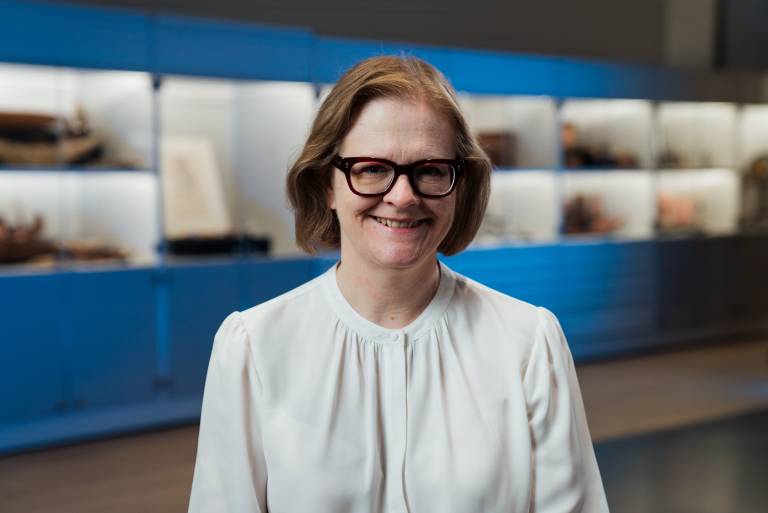
Vice-Dean Education
Professor Iain Borden
i.borden@ucl.ac.uk
Vice-Dean Equality, Diversity and Inclusion
Sara Shafiei
s.shafiei@ucl.ac.uk
Vice-Dean Public and City Engagement
Professor Ben Campkin
b.campkin@ucl.ac.uk
Vice-Dean Innovation and Enterprise
Professor D'Maris Coffman
d.coffman@ucl.ac.uk
Vice-Dean International
Professor Barbara Lipietz
b.lipietz@ucl.ac.uk
Faculty Lead for Health
Dr Grant Mills
g.mills@ucl.ac.uk
Faculty Lead for Public Policy
Dr Saffron Woodcraft
saffron.woodcraft@ucl.ac.uk
Faculty Lead for Impact
Dr Gemma Moore
gemma.moore@ucl.ac.uk
Faculty Lead for Climate Action
Dr Nick Hughes
nicholas.hughes@ucl.ac.uk
Faculty Lead for UCL East
Dr Leah Lovett
l.lovett@ucl.ac.uk
Chair in Built Environment Foresight
Professor Tim Broyd
tim.broyd@ucl.ac.uk
Faculty Tutor
Professor Aeli Roberts
a.roberts@ucl.ac.uk
Faculty MRes Tutor
Dr Kayvan Karimi
k.karimi@ucl.ac.uk
Faculty Graduate Tutor PhD Students
Professor Paul Dodds
p.dodds@ucl.ac.uk
Faculty Graduate Tutor (Taught Postgraduate Students)
Peter McLennan
p.mclennan@ucl.ac.uk
Faculty Office staff
The Bartlett Faculty Office, 169 Euston Road, London NW1 2AE
- Operations
Director of Operations
Sian Lunt
sian.lunt@ucl.ac.uk
+44 (020) 3108 9426 (internal 59426)Finance Officer
Samina Miah (parental leave)
samina.miah@ucl.ac.uk
+44 (0)20 7331 5218 (internal 05218)Jay Mutsuddi (parental leave cover)
j.mutsuddi@ucl.ac.uk
+44 (0)20 3987 2346Here East Manager
Lauren Gillett
UCL at Here East
8-9 East Bay Lane, Queen Elizabeth Olympic Park, London E15 2GW
l.gillett@ucl.ac.ukEA to the Dean and Faculty Office Manager
Tracey Cresswell
DeanPA.Bartlett@ucl.ac.uk
+44 (0)20 3108 9139 (internal 59139)Faculty Operations Officer – Sustainability
Leda Parker
l.parker@ucl.ac.uk
+44 (0)20 3108 9139 (internal 59139)Safety and Facilities Officer
Jennifer Griffin-Walters
j.griffin-walters@ucl.ac.uk
+44 (0)20 3108 8555 (internal 58555)Faculty Equality, Diversity and Inclusion Manager
Sarah Rolph
s.rolph@ucl.ac.uk
+44 (0)20 3549 5099 (internal 65099)Faculty Operations Manager
Helen Crane
h.crane@ucl.ac.uk
+44 (0) 203 108 8290 (58290)Faculty Estates and Infrastructure Manager
Kevin Jones
k.jones@ucl.ac.uk
+44 (0)20 3108 9143 (internal 59143)Senior HR Officer
Tunay Mustafa
t.mustafa@ucl.ac.ukUCL East Project Manager
Martina Bertazzon
m.bertazzon@ucl.ac.uk
+44 (0)20 7679 7768 (internal 33768)
- Education & Student Experience
Director of Education & Student Experience
Dr Annabel Brown
annabel.brown@ucl.ac.uk
+44 (0)20 3108 9002 (internal 59002)Faculty Education Manager
Dr Steve Ridge
steve.ridge@ucl.ac.uk
+44 (0)20 3108 9854 (internal 59854)Student Experience Manager
Tom McMahon
t.mcmahon@ucl.ac.ukDoctoral Programmes Lead
Leanne Taylor
leanne.taylor@ucl.ac.uk
+44 (0)20 3108 6686 (internal 56686)Learning Technology Lead
Robbie Macaulay
robbie.macaulay@ucl.ac.ukStudent Advisor (Postgraduate)
Kristina Labanauskaite
k.labanauskaite@ucl.ac.ukStudent Advisor (Undergraduate)
Amalia Mihailescu
amalia.mihailescu@ucl.ac.uk
+44 (0)20 3108 8928 (internal 58928)Student Advisor (Undergraduate)
Pani Fanai-Danesh
p.fanai-danesh@ucl.ac.ukFaculty Education Officer
Mariam Abdi (on maternity leave)
mariam.abdi@ucl.ac.ukJoanes Beitia (maternity cover)
j.beitia@ucl.ac.uk- Marketing and Communications
Head of Marketing and Communications
Liz Griffith
l.griffith@ucl.ac.ukSenior Marketing Manager (BSA, BSSC, CASA, UL)
Hannah Maguire (on maternity leave)
h-maguire@ucl.ac.ukJoe McGrath (maternity cover)
joseph.mcgrath@ucl.ac.ukMarketing Manager (BSA, BSSC, CASA, UL)
Stephanie Nicola-Miller
s.nicola-miller@ucl.ac.ukMarketing Officer (BSA, BSSC, CASA, UL)
Van Anh Dang
v.dang@ucl.ac.ukOutreach Manager (BSA, BSSC, CASA, UL)
Kemi Hassan (on secondment)
oluwakemi.hassan@ucl.ac.ukDesart Ismaili (secondment cover)
desart.ismaili.18@ucl.ac.ukSenior Marketing Manager (BSEER, BSP, DPU, IIPP, IGP)
Maija Powell
maija.powell@ucl.ac.ukMarketing Manager (BSEER, BSP, DPU, IIPP, IGP)
Dana Sousa-Limbu
dana.sousa-limbu@ucl.ac.ukMarketing Officer (BSEER, BSP, DPU, IIPP, IGP)
Sonia Gammerman
sonia.gammerman@ucl.ac.ukSenior Communications Manager (Faculty, BSSC, BSP, DPU)
Chizoba Onyiuke
c.onyiuke@ucl.ac.ukCommunications Manager (Faculty, BSSC, BSP, DPU)
Sarah Flynn
sarah.flynn@ucl.ac.ukCommunications Officer (Faculty, BSSC, BSP, DPU)
Dorcas Sebiotimo
d.sebiotimo@ucl.ac.ukGraphic Designer
Ottavia Pasta
o.pasta@ucl.ac.ukEvents Officer (Faculty, BSSC, BSP, DPU)
Malorie Bantala
m.bantala@ucl.ac.ukSenior Communications Manager (BSEER, IGP, IIPP)
Vicki Howard
victoria.howard@ucl.ac.ukCommunications Manager (BSEER, IGP, IIPP)
Vicky Bowman
v.bowman@ucl.ac.ukCommunications Officer (BSEER, IGP, IIPP)
Cian O'Neill
cian.o'neill@ucl.ac.ukEvents Officer (BSEER, IGP, IIPP)
Velvet Young
velvet.young.13@ucl.ac.ukSenior Communications and Publications Manager (BSA, UL, CASA)
Srijana Gurung
srijana.gurung@ucl.ac.ukCommunications Manager (BSA, UL, CASA)
Yossie Olaleye
y.olaleye@ucl.ac.ukCommunications Officer (BSA, UL, CASA)
Gen Williams
g-williams@ucl.ac.ukEvents Officer (BSA, UL, CASA)
Abi Luter
a.luter@ucl.ac.uk- Research, Impact, Policy, and Engagement
Faculty Research and Enterprise Manager
Ella Sivyer
e.sivyer@ucl.ac.uk
+44 (0)20 3108 9033 (internal 59033)Research and Impact Data Analyst
Dr Paul Goodship
p.goodship@ucl.ac.ukFaculty Impact Manager
Tadhg Caffrey (on secondment)
t.caffrey@ucl.ac.ukJulie Hipperson (secondment cover)
j.hipperson@ucl.ac.ukSenior Research Fellow in Equality, Diversity and Inclusion within the Built Environment
Dr Lo Marshall
lo.marshall@ucl.ac.ukSenior Research Fellow in Equality, Diversity and Inclusion within the Built Environment
- IT
For Information on how to get help, how to guides and support for central IT services across UCL please refer to ISD Help and Support
Head of Faculty IT
Bhavesh Varsani
The Bartlett, UCL Faculty of the Built Environment
22 Gordon Street, London WC1H 0QB
b.varsani@ucl.ac.ukIT and AV Support Officer
Vijay Devineni
The Bartlett, UCL Faculty of the Built Environment
22 Gordon Street, London WC1H 0QB
v.devineni@ucl.ac.uk
+44 (0)203 108 7922 (internal 57922)Service Manager
Joe Elwood
The Bartlett, UCL Faculty of the Built Environment
22 Gordon Street, London WC1H 0QB
j.elwood@ucl.ac.uk
+44 (0)203 108 6383 (internal 56383)
Bartlett school and institute contacts
Please visit our school and institute websites to find academic and professional services staff contact details.
Learn more about The Bartlett's 13 multidisciplinary schools and institutes.
Discover more from The Bartlett
Our regular podcast series asks the big question: how can we build better? Hosted by Dean of The Bartlett, Professor Christoph Lindner.
Building Better

The Bartlett News
Sign up for The Bartlett News to discover the latest news, media, events, publications and more happening at The Bartlett.