 Close
Close


€4 million funding awarded to medical accelerators network
30 October 2015
Cancer is a major health problem and it is the main cause of death between the ages of 45-65. Although significant progress has been made in the use of particle beams for cancer treatment, extensive research is still needed to maximise healthcare benefits.
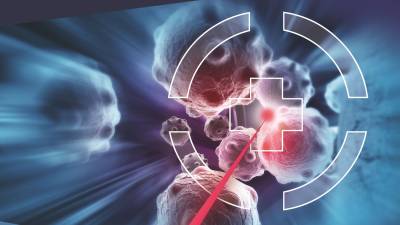
Improving ion beam therapy for enhanced cancer treatment is the goal of a new European research and training network that will focus on the Optimisation of Medical Accelerators (OMA).
The OMA project joins 24 institutions from all across Europe and will be coordinated by the Cockcroft Institute in the UK during its 4 year duration. The consortium has been awarded almost 4 M€ by the European Commission to train 15 Early Stage Researchers and carry out a cutting edge R&D program into treatment facility design, numerical simulations for the development of advanced therapies, and novel imaging techniques.
Prof. Carsten P. Welsch, Head of the Liverpool Accelerator Physics Group, initiated and will coordinate the network. He said: "The field of particle therapy has steadily developed over the last 6 decades, first in physics laboratories, and starting in the late 90's in dedicated clinical installations. By March 2013 about 110,000 people had received treatment with particle beams, the vast majority having been treated with protons and around 15,000 patients with heavier ions such as helium, carbon, neon, and argon."
"OMA will push the limits in treatment facility design, imaging techniques and treatment optimisation through advanced numerical studies. A network of European universities, research centres, clinical facilities and industry partners with outstanding expertise in this area will jointly develop advanced schemes to assure the best possible cancer care for patients."
Competition for receiving such funding is extremely high with average success rates of the order of only 5%. Moreover, OMA is the first and only EU network that has ever received a final evaluation mark of 100%, amongst thousands of proposals that have been submitted to date.
Prof. Welsch adds: "I am absolutely delighted about this fantastic result. In close collaboration with our project partners we will provide a broad and interdisciplinary training program to our Fellows to develop them into outstanding researchers. We will also organise many events for the wider research community to stimulate knowledge exchange and generate a lasting impact."
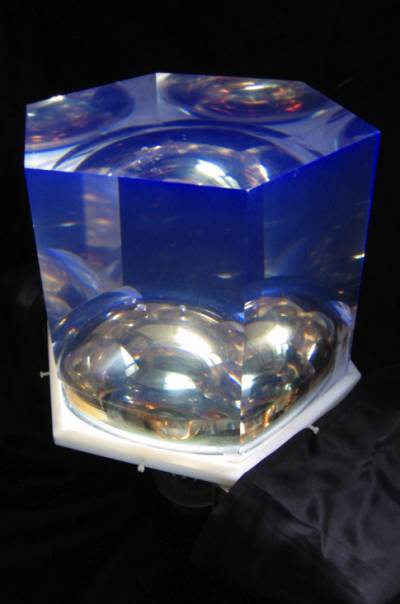
As part of OMA, UCL is developing novel detector technology to make faster, more accurate measurements of particle therapy beams. This work is being led by Dr. Simon Jolly of the High Energy Physics Group. Dr. Jolly is delighted to be a part of this coordinated research effort: "The OMA network will help to coordinate research efforts across Europe, linking a number of different strands all connected to particle therapy. The fact that so many world-leading institutions are brought together through this network is extremely significant, not only enabling more cohesive research collaborations but also allowing interaction across the various disciplines that are required for delivering ever better particle therapy treatment. I am very excited to be a part of this important and valuable research effort."
The focus of the UCL group is to improve the measurement of the energy of particle therapy beams, primarily for proton therapy. UCL led a calorimeter development programme for the SuperNEMO high energy physics experiment that will attempt to make measurements from neutrino less double beta decays. This experiment requires extremely accurate measurements of high energy electrons with nanosecond timing resolution. Preliminary tests at the Clatterbridge Cancer Centre with the 60 MeV proton beam used for ocular proton therapy demonstrated how well this detector technology performs in clinical settings. Work will continue to develop a system that will allow much faster Quality Assurance (QA) measurements of clinical proton beams that could enable a tenfold decrease in the time taken for daily QA. Such a system could also provide the basis for a novel proton CT system that would allow more accurate images to be taken of a patient before treatment, improving the accuracy of the treatment and reducing the likelihood of side effects.
The project is currently recruiting for its Fellowship positions that will be based at institutions across Europe. Outstanding researchers from around the world are invited to submit their application by 28th February 2016.
Further information
This project has received funding from the European Union's Horizon 2020 research and innovation programme under the Marie Skłodowska-Curie grant agreement No. 675265.
Open Days
The Faculty participates in a number of open days throughout the academic year, including the UCL Undergraduate Open Days and the UCL Graduate Open Day.

Friends of Out@UCL
Professor Ivan Parkin - Dean, UCL Faculty of Mathematical and Physical Sciences
"I fully support the aims of the Friends of Out@UCL campaign. I have personal experience of the need for such a campaign and the difficulties that the LGBTQ+ community face." Read more...
Snapshots from Space History
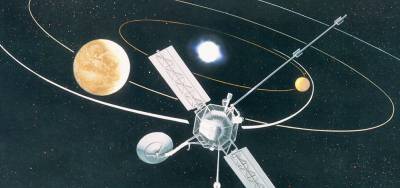
Online exhibition of historic space photos from the faculty's planetary science archives.