 Close
Close


UCL researchers recognised in Leverhulme prizes
10 November 2014
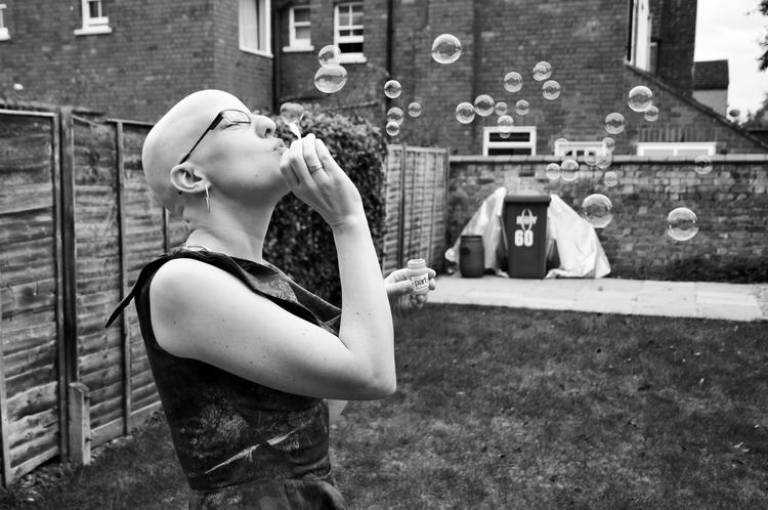
Three UCL researchers have been recognised in this year's Philip Leverhulme Prizes. These awards recognise the achievement of researchers who have already achieved international success in the early stages of their careers. Prizewinners get £100,000 to spend on their research.
UCL's winners are Dr Sarah Zerbes (UCL Mathematics) and Dr Alexandros Beskos (UCL Statistical Science), both within the Faculty of Mathematical & Physical Sciences, as well as Dr Ewa Paluch (UCL Life Sciences), who collaborates with the faculty through UCL's Institute for the Physics of Living Systems.
Dr Zerbes said:
My husband David Loeffler (Warwick) and I were jointly awarded a Leverhulme prize for our work in algebraic number theory. Number theory is one of the oldest branch of mathematics, but also one of the richest and most active areas of current research. Number theorists are interested in properties of the integers (whole numbers, as opposed to fractions or irrational numbers), such as factorizing numbers into primes, or finding solutions to equations where the unknowns are whole numbers.
Our work is closely related to one of the most important unsolved problems in pure mathematics, the Birch and Swinnerton-Dyer conjecture, which concerns a special class of equations called "elliptic curves". This conjecture predicts that the existence of solutions to such equations is closely related to the behaviour of certain complex-analytic functions called "L-functions". We have constructed an example of a sophisticated tool called an Euler system, which allows us to relate the L-function back to the arithmetic of the underlying elliptic curve, bringing new cases of the BSD conjecture within reach.
David and I are very happy that our research has been recognised in this way, and we looking forward to making further progress on these fascinating and fundamental questions. We are particularly happy to have received the prize jointly, as we have been working together for many years, and we received the new about the prize just in time for our first wedding anniversary! We are planning to spend the prize money on funding a joint postdoctoral position to work together with us on the construction of new Euler systems.
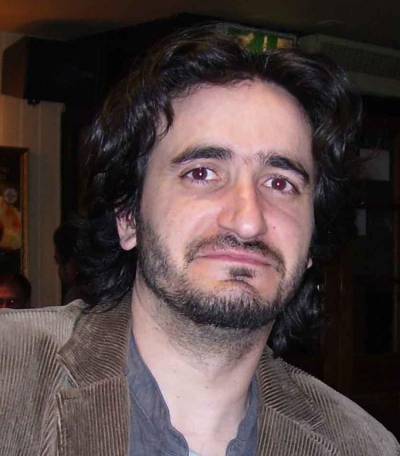
Dr Beskos said:
Many statistical models used in diverse scientific fields involve high-dimensional parameters, learning of which guides decision-making. Such problems are naturally cast in a Bayesian framework whereby resolving them corresponds to probing posterior distributions, combining mathematical models with observations.
My recent investigations can be framed within this field (related with important applications in inverse problems, filtering and econometrics) whereby standard computational methods are considered ineffective but recent developments have shown great promise for carefully designed algorithms. I have used methodological advances in computational statistics and produced new algorithms to achieve accurate principled (likelihood-based) parameter estimation in the designated directions.
The prize will allow me to extend collaboration and interaction with experts in the field of computational statistics and filtering in the UK and abroad, appoint a post-doctoral researcher, greatly facilitating the development of the required methodology, and participate in important international conferences to keep up with the developments in the field.
I am extremely pleased (of course) I was awarded the prize, as it provides me with a reassurance that my contributions are appreciated in the field.
The prize will allow me to further
develop research ideas and contribute in the area of computational statistics.
Notes
Information on Dr Paluch's research is on the Institute for the Physics of Living Systems website
The Leverhulme Trust was established by the Will of William Hesketh Lever, the founder of Lever Brothers. Since 1925 the Trust has provided grants and scholarships for research and education. Today, it is one of the largest all-subject providers of research funding in the UK, distributing over £60m a year. For more information about the Trust, please visit www.leverhulme.ac.uk
Open Days
The Faculty participates in a number of open days throughout the academic year, including the UCL Undergraduate Open Days and the UCL Graduate Open Day.

Friends of Out@UCL
Professor Ivan Parkin -
Dean, UCL Faculty of Mathematical and Physical Sciences
"I fully support the aims of the Friends of Out@UCL campaign. I have
personal experience of the need for such a campaign and the
difficulties that the LGBTQ+ community face." Read more...
Snapshots from Space History
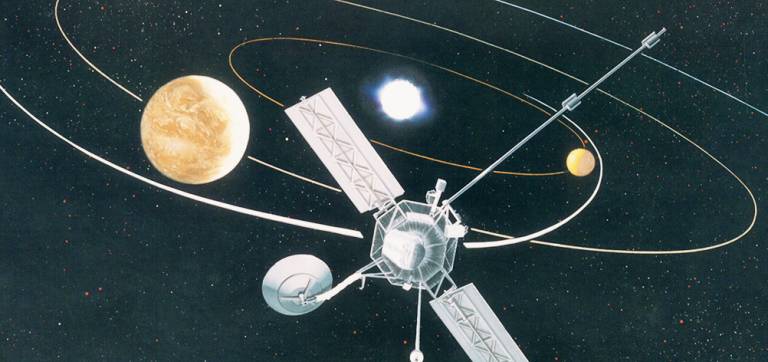
Online exhibition of historic space photos from the faculty's planetary science archives.