 Close
Close


Ask our STEM Ambassadors: Focus on Meena Parameshwaran
28 February 2018
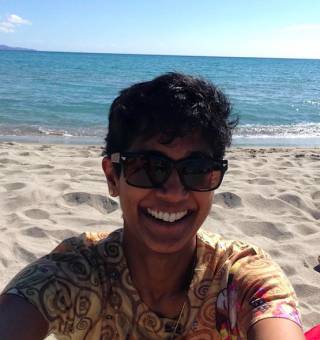
How would you describe your area of study or work?
I’m an MSc student in computational statistics and machine learning. I am learning how to use statistical and computational techniques to help classify and predict all sorts of outcomes using all sorts of data. From Alexa answering your questions, to Spotify making you a playlist, to autonomous vehicles one day hitting our road, machine learning is everywhere these days. It’s an exciting and cutting-edge area of study!
How did you decide to study in your chosen field?
I love to answer complex questions and believe that using data to help do this helps us find the best solution to a problem. I also really enjoy programming and mathematics. The best thing about machine learning is that it combines technical skills with creativity and problem solving.
What attracted you to participate in outreach and engagement activities?
I used to be a school teacher and have always enjoyed working with children. I want to inspire young people to become engineers and help find solutions to our most pressing problems.
What are the best things about being a STEM Ambassador?
Being a STEM Ambassador is something I’ve very proud of. The best thing for me is taking time out each week to work with young people and help improve their lives. I’ve already learnt a lot from my students too, so it works both ways.
What type of activities or programmes have you led / run as a STEM Ambassador?
I am currently a UCL Engineering tutor, helping out by tutoring maths to secondary school pupils, face-to-face, one-to-one in London schools, which is great because it allows me to work closely with students, helping them progress, and getting to know them too. I’m looking forward to helping out on the UCL smart cubes (internet of things) workshops too.
What are the benefits of volunteering as a STEM Ambassador?
There are many, many benefits of volunteering as a STEM Ambassador. As an older student, volunteering helps me connect with younger students, share advice, and work together on solving problems. It’s important to me to contribute to society and try and make the world a better place – I think volunteering with young people is a really good way to do this. I benefited a lot from people working with me when I was a teenager, and now it’s my turn to repay the favour.
What was the reaction of the young people you worked with?
The young people I’ve worked with so far are amazing, inspiring, hilarious, and wonderful people. I am so impressed with their determination to succeed, their positive attitudes, and their hard work. I feel very positive about the world when I see the next generation coming up, and all that they will achieve.
What advice would you give young people wanting to study or work in STEM-related fields?
I would definitely encourage any young person who wants to study or work in a STEM-related field to absolutely go for. There are so many different things you can do in STEM, you’ll never be bored, you’ll always be challenged, and you’ll really make a difference. You might find it tough at times, but my advice would be to work hard and keep going, because it will be worth it in the end when you’re doing something you really love.