A A A

Astrophysics Group News

Dr Stephen Feeney

RAS Michael Penston Thesis Prize for 2012: Runner-up prize awarded to Dr Stephen Feeney

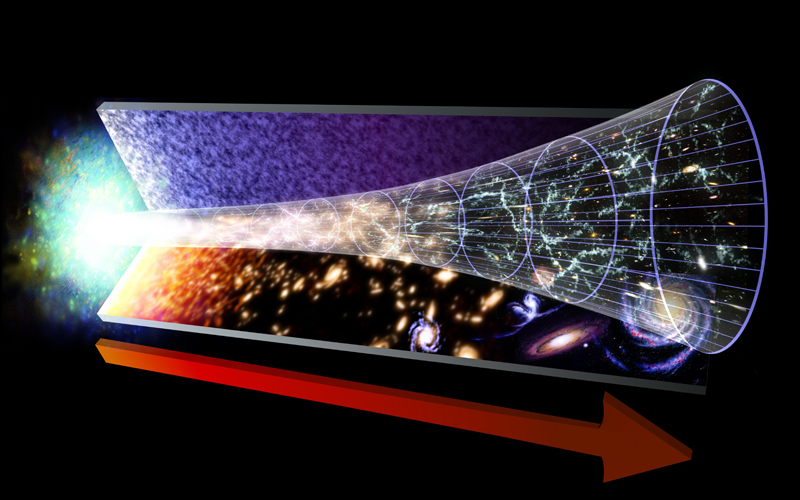
Dr Stephen Feeney has been awarded the runner-up prize for the Michael Penston Thesis Prize 2012. This Royal Astronomical Society (RAS) prize is awarded to the best doctoral thesis in Astronomy and Astrophysics; Stephen's thesis was entitled ‘Novel Algorithms for Early Universe Cosmology'. More...

Dr Nick Achilleos

ESA selects instruments to be flown on its icy moons mission

 The JUpiter ICy moons Explorer mission (JUICE) will study Jupiter and its large, ice/ocean-bearing moons. JUICE is planned to launch in 2022 and arrive in 2030. Dr Nick Achilleos (Astrophysics) is part of the J-MAG Consortium, an international team of investigators who have successfully proposed one of the 11 scientific experiments to be flown on board this mission. More...

An annotated version of Herschel's view of Betelgeuse. Image credit: ESA/Herschel/PACS/MESS.

Betelgeuse braces for a collision

However you pronounce its name*, the star Betelgeuse is hard to miss on a clear winter's night. Representing the top left shoulder of Orion the Hunter it blazes a bright red colour. At over 600 light years away Betelgeuse is not particularly close, but it shines 100,000 times as brightly as our Sun.  More...

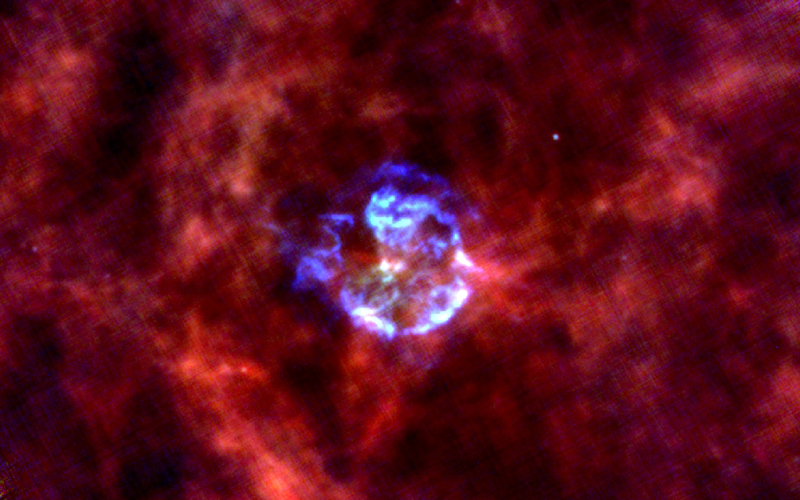
The Crab Nebula as seen in visible (left), showing the glow from hot gas, and far-infrared (right) showing hot (blue/green) and cool (yellow/orange) dust shining in the remnant. Image credit: ESA/Herschel/SPIRE/PACS/MESS (Far-IR); NASA/ESA/STScI (Visible)

Dust Factory in the Crab Nebula revealed by the Herschel Space Observatory

Herschel has produced an intricate view of the remains of a star that died in a stellar explosion a millennium ago. It has provided further proof that the interstellar dust which lies throughout our Galaxy is created when massive stars reach the end of their lives. More...

The Mind of the Universe

This is an outreach programme developed under a Science in Society Fellowship granted to Dr Francisco Diego by the Science and Technology Facilities Council (STFC).

It consists of a series of public/school lectures and teacher workshops/resource packs embracing topics like the origin and development of the Universe, the mystery behind the nature of the dark Universe, the formation of stars and planets, space exploration and the possibility of alien life.

Mind of the Universe Lecture by Francisco Diego
Francisco Diego delivers his Mind of the Universe lecture about Galileo, Darwin and life in the Universe to a packed audience on board the Queen Mary 2.

The Mind of the Universe programme has important links to educational organizations like the British Science Association, Institute of Physics, the Royal Institution, the Royal Astronomical Society and the Association for Science Education.

Over the last couple of years the project has received a positive response from the public, with audiences of over 15,000 and comments like the one below:

"Your talk was a great success across the age range, from Year 9 pupils all the way up to staff. The level of sophistication engaged a wide audience, from young pupils to whom it was all pretty new, through to Year 13 pupils who study the Expanding Universe as part of their A2 course. It provided the start of lively discussion with my top Year 9 set and questions about University Astrophysics courses from a couple of Year 12s - definitely a positive result. Can I finally say how impressed we were with your ability to communicate your passion for the topic, while at the same time making such a complex subject accessible - a rare skill indeed!"

For more information, please visit www.ucl.ac.uk/themindoftheuniverse

Page last modified on 16 jul 10 13:44 by Fabrizio Sidoli