Department of Spanish and Latin American Studies
Contact Details
Ms Clare Szembek
(Departmental Co-ordinator)
tel 020 7679 3109;
internal extension X33109;
email c.szembek@ucl.ac.uk
Dr Humberto Núñez-Faraco
(Head of Department)
tel: 020 7679 4332;
internal extension X34332;
email: h.faraco@ucl.ac.uk
News & Forthcoming Events
- International Conference - The Future of Hispanism
- London World Film Festival 2013
- Translating 'Live' Poetry
- Gained in Translation
- Dr Deborah Martin will introduce El último verano de la boyita at ISA's 'Staging the Future: Argentine Films in Dialogue' Series
- Graduate student, Kathleen Sparks awarded grant
- Alcalá Galiano Lecture
- LECTURE: Benigno Trigo (Vanderbilt University), 6 June 2012 at 11am
- Vacancy in the department
- Dr Claire Lindsay awarded a Dorot Foundation Research Fellowship
- Professor Stephen Hart's Documentary Summer School in Cuba
- Dr Jo Evans will introduce Mexican film, Miss Bala, at the Cineschool festival 2012
- Vacancy in the department
- Dr Jo Evans will discuss Pan's Labyrinth at the European Institute Film Day
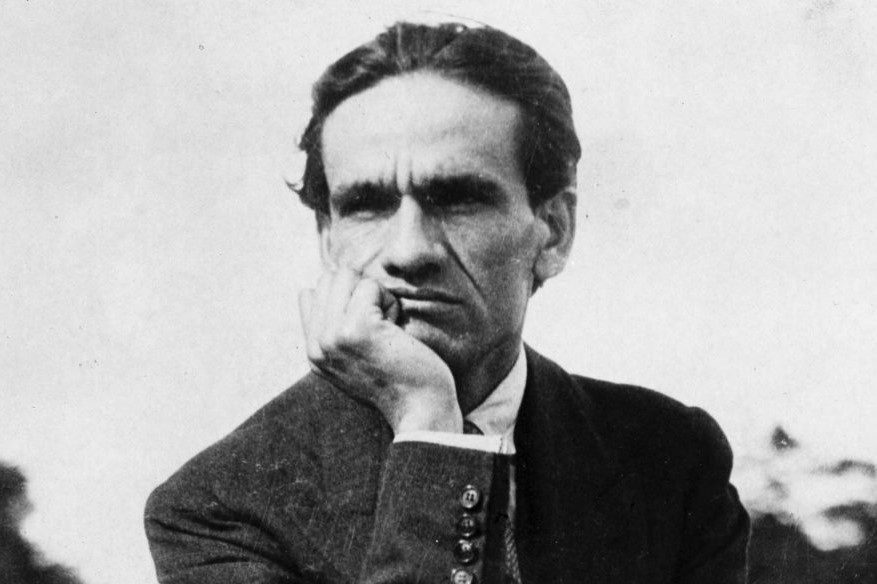
- César Vallejo conference. 16-17 March 2012
- Final year student, Roberta Radu's prize-winning article
- Dept of Spanish and Latin American Studies, UCL nominated for award
- Final year student Roberta Radu shortlisted in Guardian competition
- Award for Dr. Maria del Pilar Blanco
- Alcala Galiano Memorial Lecture
- Alumni Events
Spanish Film from the 1990s: New Ways of Seeing
Course Code: SPAN4302
Course unit value: 1cu, 15 ECTS
Tierra (Julio Medem, 1005)
Tutor: Dr Jo Evans
Description:
Since the early 1990s, a new generation of Spanish directors including Julio Medem, Icíar Bollaín, Isabel Coixet and Álex de la Iglesia has joined Pedro Almodóvar in the international limelight. The names of Bollaín and Coixet have been linked to a so-called ‘boom’ in number of women directors. The effects of globalisation and transnationalism are illustrated in the rise in international co-productions (Amenábar’s The Others/Los otros and Coixet’s My Life Without Me/Mi vida sin mí, and Map of the Sound of Tokyo). Almodóvar has continued to revisit and renovate melodrama and film noir (from Tacones lejanos to Abrazos rotos), while elsewhere other forms of Hollywood genre film-making have been subjected to the blacky humorous influence of Spanish esperpento (Bajo Ulloa, Madre muerta, Amenábar, Tesis, and de la Iglesia, El día de la bestia). At the same time, other directors have focused on social realism and changing attitudes to the role and representation of the family, gender, sexuality, and Spanish ‘national’ identity (Zambrano, Solas, Balletbò-Coll, Costa brava, Bollaín, Flores de otro mundo and Te doy mis ojos).
This course examines industrial, thematic, and formal developments in Spanish film-making since the early 1990s with reference to theories of representation and the gaze, and to fiction and documentary film-making. Lectures will be given during the first half of each term and there will be seminar discussion during the second half.
Assessment: two assessed 2,500 essays (50%) and one unseen three-hour examination (50%).
Tutor: Dr Jo Evans
Preparatory reading:
- Cine español, tendencias (ICAA) http://www.mcu.es/publicaciones/docs/EvolucCineEsp1996-2003.pdf
- Santaolalla, I. 2005. Los “Otros”: etnicidad y "raza" en el cine español contemporáneo (Saragossa & Madrid: Prensas Universitarias de Zaragoza & Ocho y Medio)
- Stone, Rob. 2002. Spanish Cinema (Harlow: Pearson)
- Triana-Toribio, Nuria. 2002. Spanish National Cinema (London & New York: Routledge)
Films:
Term 1
- Tacones lejanos (Almodóvar, 1991)
- Alas de mariposa (Bajo Ulloa, 1991)
- El sol del membrillo (Erice, 1993)
- La madre muerta (Bajo Ulloa, 1993)
- El día de la bestia (de la Iglesia, 1995)
- Tierra (Medem, 1995)
- Tesis (Amenábar, 1996)
- ¡Hola! ¿Estás sola? (Bollaín, 1995)
- Costa brava (Family Album) (Balletbò-Coll, 1995)
- Los amantes de Círculo Polar (Medem, 1998)
Term 2
- Todo sobre mi madre (Almodóvar, 1999)
- Solas (Zambrano, 1999)
- Flores de otro mundo (Bollaín, 1999)
- The Others/ Los otros (Amenábar, 2001)
- 800 Balas (de la Iglesia, 2002)
- My Life Without Me/ Mi vida sin mí (Coixet, 2003)
- Te doy mis ojos (Bollaín, 2003)
- ¡Hay motivo! (33 directors, 2004)
- El cielo gira (Álvarez, 2004)
- Aguaviva (Pujol, 2005)