 Close
Close


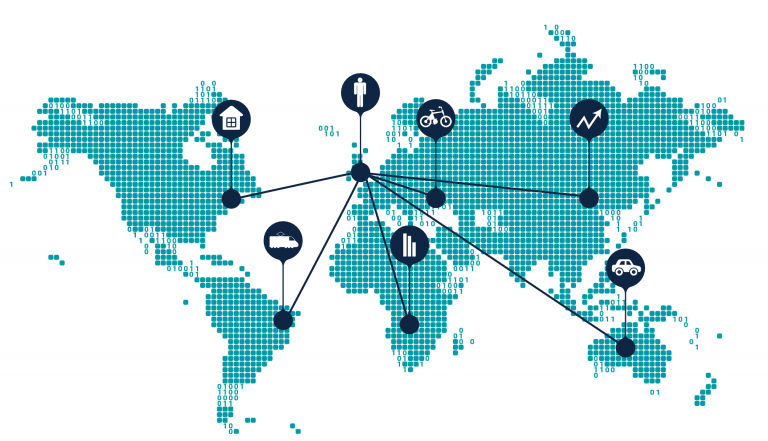
SpaceTimeLab’s mission is to generate actionable insights from geo-located and time-stamped data for government, business and society.
 About
About
Working with the private and public sectors, SpaceTimeLab uses integrated space-time thinking and a multi-disciplinary approach to develop theories, algorithms and platforms to gain insight from geo-located and time-stamped data, in order to engineer solutions to improve the mobility, security, health and resilience of urban living.
Find out more about our news, research topics and data sources by looking at our Linkedin and leaflets:

Please note, links on this page may direct to external sites.
Publications
Find out more publications here.
Research
SpaceTimeLab has a varied portfolio of research that spans the following five key research themes:
- Public Health
This is the largest and most comprehensive community cohort study of COVID-19 in the U.K., with a team of multi-disciplinary researchers from across ten UCL Departments and Clinicians from University College London (UCLH) and Royal Free Hospitals. Our part in this study is to study people's movement during this pandemic. The findings will facilitate decision making.
- Policy of non-pharmaceutical interventions (containing the virus via tiers system and lockdowns)
- The economic and social impact of extra cycling lanes setting up in London by TfL during the pandemic
- The impact of public transport for virus transmission
- Transport and Mobility
The transportation system is the lifeblood of the city. At SpaceTimeLab, we work to ensure the health of the city by improving the mobility of its citizens and the function of its transportation system. SpaceTimeLab is working on a number of projects (e.g. STANDARD) using large, spatio-temporal transportation datasets to categorise, cluster and profile people and places.
Examples of our work include:
- Prediction, simulation and visualisation of urban traffic flows
- Identifying flexible travellers and groups using smart card data
- Modelling the impact of engineering work and incidents on London tube lines
- Developing mobility solutions for cyclists using cycle hire and tracking app data
- Detecting hybrid travel modes from sparse GPS data
- Security and Policing
The safety and security of the public relies on police agencies maximising their use of the diverse geo-temporal data sources available to them. Collaborating with the Metropolitan Police Service, the Crime, Policing and Citizenship (CPC) project analyses and models the relationship between police activities, crime and public attitudes towards policing. CPC focuses on:
- Street network-based crime prediction
- Police patrol behavioural analysis
- Optimal patrol routing in real-time
- Agent-based simulation for strategic planning
- Spatio-temporal analysis of public confidence
- Supply and demand of police patrol coverage
- Business Intelligence
Many facets of business and commerce can be rationalised and improved through an understanding of the spatio-temporal patterns underlying consumer behaviour (e.g. CDRC). Examples include:
- Insurance fraud
- Footfall and catchment area estimation
- Consumer profiling
- Fleet and logistic management
- Environmental Resilience
Advancing knowledge and understanding of natural hazards and developing novel risk assessment methods is a core part of the SpaceTimeLab research agenda. Recent work includes:
- Hazard susceptibility mapping
- Hazard risk assessment
- Flood forecasting
- Forest fire prediction
SpaceTimeLab is one of 11 partners in INFRARISK, a European Commission project that aims to test the resilience of critical infrastructure networks to a variety of natural hazards.
Partnerships
We have been working with many industrial companies and organisations. Our current research projects are supported by the following organisations:

Teaching
SpaceTimeLab welcomes applications from prospective PhD students from both the UK and overseas. Before applying, please look at our publications to ensure that your research interests match those of the lab. For more information on the requirements and application process, please check the CEGE postgraduate research page and the UCL Doctoral School page.
SpaceTimeLab also has strong links to the following taught MSc programmes:
For more details, please visit: https://www.ucl.ac.uk/civil-environmental-geomatic-engineering/research-...