A A A
soc-cog-image.jpg


Start date:
September 2012, September 2013

Content

The MSc in Social Cognition focuses on how individuals construe the social world and the processes that underlie social judgment and behaviour. It provides an understanding of how the human cognitive and neural systems have evolved to sustain social coordination and adaptation to the environment. Key topics include: social perception, motivation, attitudes, embodiment, social judgment and decision making, and social neuroscience. The programme draws on the research of outstanding academic staff working in the areas of social psychology, neuroscience, and cognitive psychology to provide unique, cutting-edge perspectives on humans as social beings. 

 Social cognition is a rapidly developing domain with implications for most areas of psychology (e.g., clinical psychology, cross-cultural psychology, health psychology, consumer psychology, educational psychology, organizational psychology, political psychology etc.). This degree programme integrates cutting-edge knowledge from social psychology, cognitive psychology, and social neuroscience to develop an understanding of social judgment and behaviour. 

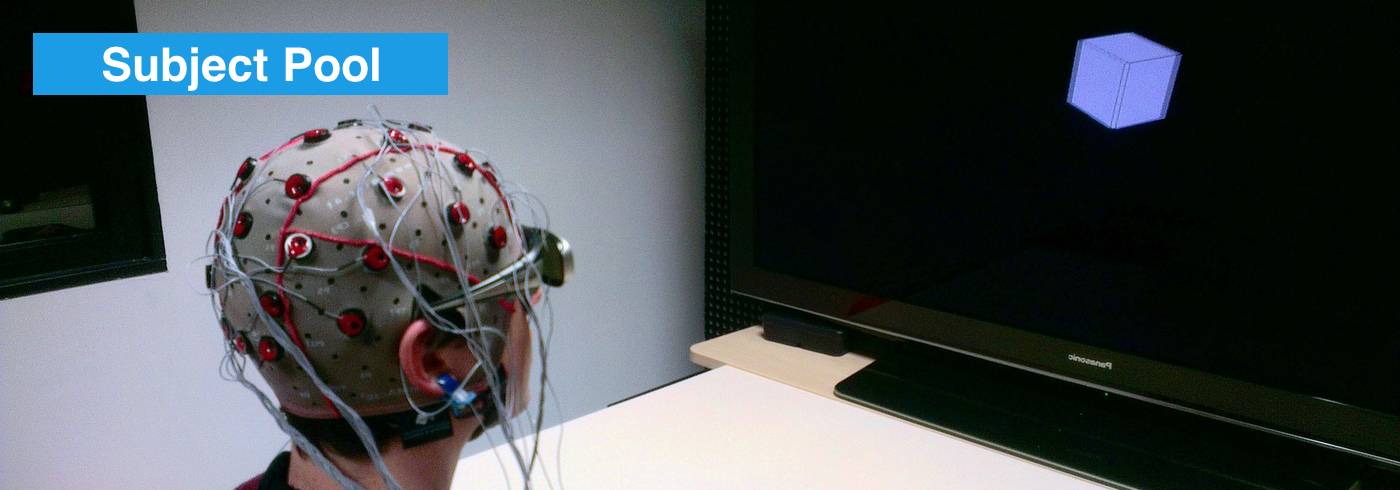
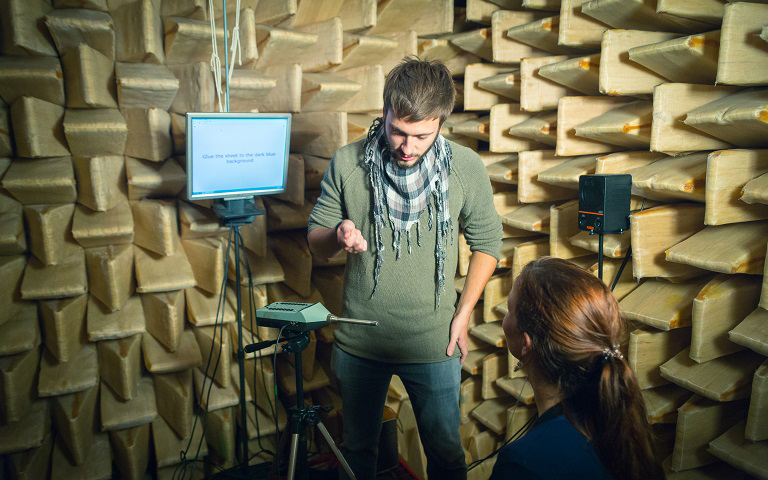
The division of psychology has advanced technology for the study of socio-cognitive processes, including fMRI, eye-, speech- and motion-tracking equipment for dyadic and group settings, as well as a 360o video camera.

Structure

The course is made up of eight taught modules and a research project. There are 1800 learning hours in total, with 450 contact hours. There are six core modules. In addition, you will complete two specialist optional modules selected by students from a wide list of options. The options and research project will allow students tailor the programme with an emphasis in basic and applied social cognition, social judgment and decision making or social neuroscience.  In addition, they will be able to profit from UCL’s and London’s vibrant research environment in decision-making, cognition and neuroscience, with regular scientific meetings that attract leading international experts. 

The programme has the following obligatory components:

CORE MODULES:

Code
Title
 Value       Examination      
PSYCGS01
Understanding Individuals and Groups  15 2 pieces of coursework
PSYCGS02
Social Cognition, Affect, and Motivation  15 2 pieces of coursework
PSYCGS03
Current Issues in Attitude Research  15 2 pieces of coursework
PSYCGS04
Social Neuroscience  15 2 pieces of coursework
PSYCGD03
Judgment and Decision Making  15 1 seen essay
PSYCGR01 Research Statistics  15 tbc
PSYCGS99 Dissertation  60 8-10,000 words

In addition, students register for two optional modules (each worth 15 credits) in consultation with the programme director chosen from the following:

OPTIONAL MODULES:

Code Title  Value Examination
PSYCGD04  Knowledge, Learning, & Inference 15
 1  seen essay
PSYCGD02 Principles of Cognition 15
 1  seen essay
PSYCG201 Applied Decision-making 15
 1  seen essay
PSYCG207  Human Learning and Memory 15
 1  seen essay
PSYCG102 Social Psychology 15
 1  seen essay
PSYCG104 Psychology and Education
 15   1  seen essay
PSYCG109 The Psychology of Health
 15   1  seen essay
PSYCG209 Cognitive Neuroscience  15   1  seen essay
PSYCGC11 Methods in Cognitive Neuroscience II: Neuroimaging  15  2 pieces of coursework
PSYCGC08  Current issues in cognitive neuroscience II: Elaborative and adaptive processes  15  tbc
PSYCGC09 Current Issues in Cognitive Neuroscience III: Translational Research
 15  1 seen essay
PSYCG108 Organisational Psychology  15   1 seen essay
PSYCGB02 Talent Management
 15  1 seen essay details to follow
PSYCGB01 Consulting Psychology  15  1 seen essay details to follow
PSYCGB03  Business Psychology Seminars      
 15  1 seen essay details to follow
PSYCGD05

 Programming for Cognitive Science
 15  Design a programme


Time table

TBC

Staff

Programme Director and and module convenor (Social Cognition; Affect and Motivation)  Ana Guinote 

Module Convenor (Understanding Individuals and Groups, and Current Issues in Attitudes and Research) Ruud Custers

Module Convenor (Social Neuroscience) Daniel Richardson

Module convenor (Statistics) Maarten Speekenbrink

Course Administrator Pia Horbacki.

Application

Funding

UCL Scholarships

For further information on UCL Scholarships, please visit:  Scholarships

Application

Entry Requirements

Eligibility: Applicants for this UCL graduate programme are normally expected to hold at least a 2.1 in a UK undergraduate degree (or equivalent overseas qualification) in a relevant subject such as psychology, sociology, marketing/communication. We also look to see whether students have some understanding of quantitative research methods.
We may also consider students from other disciplines where additional relevant experience or qualifications will also taken into account when considering these applications.
Overseas applicants also need to provide evidence of proficiency in English (we require a 'good' level).

Deadline for Applications

The course is now full. Any further successful applications that we receive will be placed on a waiting list.

Students who are predicted to achieve a First Class honours degree are encouraged to apply

The official application deadline for entry this September is 2nd August 2013.
Early applications are usually encouraged from students wishing to take a one-year (full-time) or two-year (part-time) in this Masters programme as places become limited several months before the deadline.
Please note that applications can take up to 3 weeks before they are received by the Course Administrator so please allow sufficient time for your application to be received by the Course Administrator before the deadline. 

Application Process

Applications must be submitted on the standard UCL Graduate Application Form with all the required documentation. In exceptional circumstances, late applications may be considered. You can either  Apply-On-Line (this is preferred) or send in a hard copy. The hard copy must have all required documentation and sent directly to:

Admissions
UCL Registry
University College London
Gower Street
London
WC1E 6BT
United Kingdom

Careers

Students on this programme will acquire skills and knowledge relevant  to careers in marketing, consumer behaviour, political behaviour, leadership, and intergroup conflict. It should also appeal to students who have an interest in pursuing research in social cognition, social neuroscience, or social psychology. 

Social cognition is the field in social psychology that has the biggest impact on other areas of psychology, such as clinical psychology, cross-cultural psychology, health psychology, consumer psychology, educational psychology, organizational psychology, political psychology. Social cognition has developed measures and expertise now widely used to estimate people’s attitudes, self-esteem, prejudice level, or to reduce discrimination. Social neuroscience is one of the fastest growing areas in psychology.

Students on this programme will acquire skills and knowledge relevant  to careers in marketing, consumer behaviour, political behaviour, leadership, and intergroup conflict. It should also appeal to students who have an interest in pursuing research in social cognition, social neuroscience, or social psychology.  Social cognition is the field in social psychology that has the biggest impact on other areas of psychology, such as clinical psychology, cross-cultural psychology, health psychology, consumer psychology, educational psychology, organizational psychology, political psychology. Social cognition has developed measures and expertise now widely used to estimate people’s attitudes, self-esteem, prejudice level, or to reduce discrimination. Social neuroscience is one of the fastest growing areas in psychology.

Contact

If you would like any further information on the programme, you can contact any of the following people:

Programme Director: email: Ana Guinote phone: (+44 20) 7679 5378 

 Programme Lecturer: email: Ruud Custers phone: (+44 20) 7679 5353

Course Administrator: email: Pia Horbacki phone: (+44 20) 7679 5335 

For information about specific course content it is recommended that you contact Ana Guinote. For advice on the application process, please contact Pia Horbacki

FAQs


What are the fees this year for full-time and part-time studying? 

For information on fees, please visit: All Course fees

What are the term time dates?  

For further information on term dates please visit: Term Dates Main teaching is the the 1st and 2nd term. During the 3rd term there is no teaching as this period is for development on the research project as well as other coursework submissions.  

Information on Scholarships/funding:

Unfortunately there is very littleon offer interms of funding for this course. For information, please visit: Scholarships/Funding

Are there any prerequisites to enable entry to this course? 

No. There are no prerequisites. We do however, make aware that the Statistics module is set at an advanced level and advise that those without any statistical experience may find this difficult.  Pre-course reading is encouraged: Charles M. Judd, Gary H. McClelland, and Carey S. Ryan,  "Data Analysis: A Model Comparison Approach" (2 edition), Routledge, 2008. (for further information, please visit: Data Analysis This book covers almost all the module content for 2011-12 and is the recommended book. Alternatively you can also refer to 'Discovering Statistics with SPSS' by Andy Field 

Is there any recommended reading?

For further Information, please visit: Recommended Reading

Part-Time studying - How would this work?

For further information, please visit: Part-Time Studying

What do our students say?

Amanda "The teaching methods of the staff go beyond exam and assessment preparation. Their enthusiasm as they deliver lecture content instills the value of learning as an end in itself. I admire the multidimensional structure of the course as I continue to develop a dearth of skills which can be applied within the field of psychology and across a number of career paths. The departmental staff are extremely supportive and they have created a highly engaging learning environment.”

Zahra “For me the Social Cognition master was the first window into understanding the social brain in an appropriate way. It helped me to develop my ideas as a prospective social neuroscientist. It made my dreams to come true. This master provided me with the basic knowledge of social psychology as well as the neuroscience.”

What other Master's programmes, Research programmes or Professional Doctorates are available within the Division of Psychology and Language Sciences?

For further information, please visit? MastersMSc/PhD or Professional Doctorates

Can you offer any advice on student accommodation? 

Accommodation is dealt with by UCL Residencies. For further information and contacts, please visit: Accommodation

Back to FAQs

Recommended Reading

MSc in Social Cognition: Research and Applications - Key readings

Books:

Forgas, J.P. (Ed.) (2006). Affect, cognition and social behaviour. New York: Psychology Press

Harmon-Jones, E. & Winkielman, P. (2007). Social Neuroscience. Integrating biological and psychological explanations of social behavior. Guilford Press. New York

Maio, G. R., & Haddock, G. G. (2010).  The Psychology of Attitudes and Attitude Change.  London, UK: Sage.

Moskowitz, G.B. Social Cognition: Understanding Self and Others. NY, NY: The Guilford Press, 2005.

Vohs, Kathleen D. & Roy F. Baumeister (2010), Handbook of Self-Regulation: Research, Theory, and Applications (2nd edition). New York, NY: Guilford. [if this book is not out, check first edition by Baumeister & Vohs]

Articles:

Alicke, M., & Sedikides, C. (2009). Self-enhancement and self-protection: What they are and what they do. European Review of Social Psychology, 20, 1–48.

Balcetis, E., & Dunning, D. (2006). See what you want to see: Motivational influences on visual perception. Journal of Personality and Social Psychology, 91, 612-625

Baumeister, R.F., & Leary, M.R. (1995). The need to belong: Desire for interpersonal attachments as a fundamental human motivation. Psychological Bulletin, 117, 497-529.

Baumeister, R.F., Bratslavsky, E., Muraven, M., & Tice, D.M. (1998). Ego depletion: Is the active self a limited resource? Journal of Personality and Social Psychology, 74, 1252-1265.

Brass, M., Ruby, P. & Spengler, S. (2009). Inhibition of imitative behaviour and social cognition. Philosophical Transactions of the Royal Society, B, 364, 2359-2367.

Carver, C. S. (2006). Approach, avoidance, and the self-regulation of affect and action. Motivation and Emotion, 30, 105-110.  

Cialdini, R. B. (1995). Principles and techniques of social influence. In A. Tesser (Ed.), Advanced social psychology (pp. 257-281). Mahwah, NJ: Erlbaum

Devine, P. G. (1989). Stereotypes and prejudice: Their automatic and control components. Journal of Personality and Social Psychology, 56, 5-18.

Devine, P. G., & Sharp, L. B. (2009). Automatic and controlled processes in stereotyping and prejudice. In T. Nelson (Ed.), Handbook of prejudice,stereotyping, and iscrimination (pp.61-82). New York: Psychology Press.

DeWall, C. N., Maner, J. K., & Rouby, D. A. (2009). Social exclusion and early-stage interpersonal perception: Selective attention to signs of acceptance. Journal of Personality and Social Psychology, 96, 729-741.

Dovidio, J. F., Kawakami, K., & Gaertner, S. L. (2002). Implicit and explicit prejudice and interracial interaction. Journal of Personality and Social Psychology, 82, 62-68.

Gable, P. A., & Harmon-Jones, E. (2008). Approach-motivated positive affect reduces breadth of attention. Psychological Science, 19, 476-482.

Gawronski, B., & Bodenhausen, G. V. (2006). Associative and propositional processes in evaluation: An integrative review of implicit and explicit attitude change. Psychological Bulletin, 132, 692-731.

Greenwald, A. G., McGhee, D. E., & Schwartz, J. K. L. (1998). Measuring individual differences in implicit cognition: The Implicit Association Test. Journal of Personality and Social Psychology, 74, 1464-1480.

Guinote,A., Judd,C.M., Brauer,M. (2002). Effects of power on perceived and objective group variability: Evidence that more powerful groups are more variable. Journal of Personality and Social Psychology 82, 708-721

Maio, G. R., & Haddock, G. (2007). Attitude change. In A. W. Kruglanski & E. T. Higgins (Eds.), Social psychology: Handbook of basic principles (2nd Edition, pp. 565-586). New York: Guilford.

Markus, H.R., & Kunda, Z. (1986). Stability and malleability of the self-concept. Journal of Personality and Social Psychology, 51, 858-866.

Mussweiler, T. (2003). Comparison processes in social judgment: Mechanisms and consequences. Psychological Review, 110, 472–489.

Rizzolatti, Giacomo; Craighero, Laila (2004). The mirror-neuron system. Annual Review of Neuroscience, 27, 169–192.

Rydell, R. J., & McConnell, A. R. (2006). Understanding implicit and explicit attitude change: A systems of reasoning analysis. Journal ofPersonality and Social Psychology, 91, 995-1008.

Schwarz, N. (1999). Self-reports: How the questions shape the answers.American Psychologist, 54, 93- 105.

Schwarz, N., & Bohner, G. (2001). The construction of attitudes. In A. Tesser & N. Schwarz (Eds.), Blackwell handbook of social psychology: Intrapersonal processes (pp. 436-457). Oxford, UK: Blackwell.

Schwarz, N., & Clore, G.L. (2003). Mood as information: 20 years later. Psychological Inquiry,14, 296-303.

Smith, E. R., & DeCoster, J. (2000). Dual process models in social and cognitive psychology: Conceptual integration and links to underlying memory systems. Personality and Social Psychology Review, 4 108-131.

Winkielman, P., & Cacioppo, J.T. (2001). Mind at ease puts a smile on the face: Psychophysiological evidence that processing facilitation leads to positive affect. Journal of Personality and SocialPsychology, 81, 989–1000.

Zajonc, R.B. (2001). Mere exposure: A gateway to the subliminal. Current Directions in Psychological Science, 10, 224–228.

Research Statistics:

Charles M. Judd, Gary H. McClelland, and Carey S. Ryan,  "Data Analysis: A Model Comparison Approach" (2 edition), Routledge, 2008. (seehttp://www.dataanalysisbook.com/)

Methods:

Reis, H., & Judd, C.M. (Eds.). (2000). Handbook of research methods in social and personality psychology. New York, NY: Cambridge University Press.

On-line overviews of methods (for non-psychology students)

http://www.csulb.edu/~msaintg/ppa696/696menu.htm#PPA%20696

http://gsociology.icaap.org/methods/books.htm

http://www.socialresearchmethods.net/kb/index.htm

Back to FAQs

Part-Time Studying

Part Time Studying

Back to FAQ's
Part-time students will take two years to complete this degree by attending one day a week. You will be expected to devote extra time for private study and you will also have to attend lectures for your optional module which may fall on a different day than your assigned day of study. The Introductory lectures will be held on Mondays, so first year students should arrange to be in College on this day. The project work should be spread out over the two years and students are strongly encouraged to make substantial inroads in to it in their first year.  Please ensure that you have (a minimum of) one day per week off work for the whole year and not just during term time.
 Part-time students can sometimes find the start of the course overwhelming, and feel that they are missing out by not attending the other modules, or because they do not have as much time as other students for reading or attending optional departmental seminars.  Try not to let this worry you too much.  You will soon find that there are some advantages to doing the course in two years (e.g. project is more spread out), and you will go in to your second year with the confidence of knowing that you have far more background knowledge than your newly-arrived full time peers.
What part-time students will complete over the two years:
First Year:
* Term 1: ONE core module: Stats (all day Monday).
* Term 2: TWO core modules: Judgement and Decision Making and Social Neuroscience (all day Wednesday) and ONE optional module. You can choose a module that starts in Term 1 in which case you don’t have to do any in Term 2.
* Term 3: Main Research Project (to be completed by end of second year).
By the end of Year 1 you will have completed: 3 core modules and 1 optional module.
Second Year:
* Term 1: TWO core modules: Understanding Individuals and Groups and Social Cognition; Affect and Motivation (all day on Wednesday).
* Term 2: ONE core module: Current Issues in Attitudes and Research (all day Monday), and ONE optional module. You can choose a module that starts in Term 1 in which case you don’t have to do any in Term 2.
* Term 3: Work on main project due end of August.
By the end of Year 2 you will have completed an additional 3 core modules and 1 optional module.
Back to FAQ's

Page last modified on 30 mar 12 16:02 by Carolyne S Megan