In Focus
Upcoming Events
Seminar Series: 15 May 2013 at 16.00
Syntax Reading Group: 22 May 2013 at 15.30
ACTL Summerschool June 24 - 28 2013
Why Study here?
I chose London, not only due to the fact that it is a very cosmopolitan city, but also for its well known reputation in this area: More>>
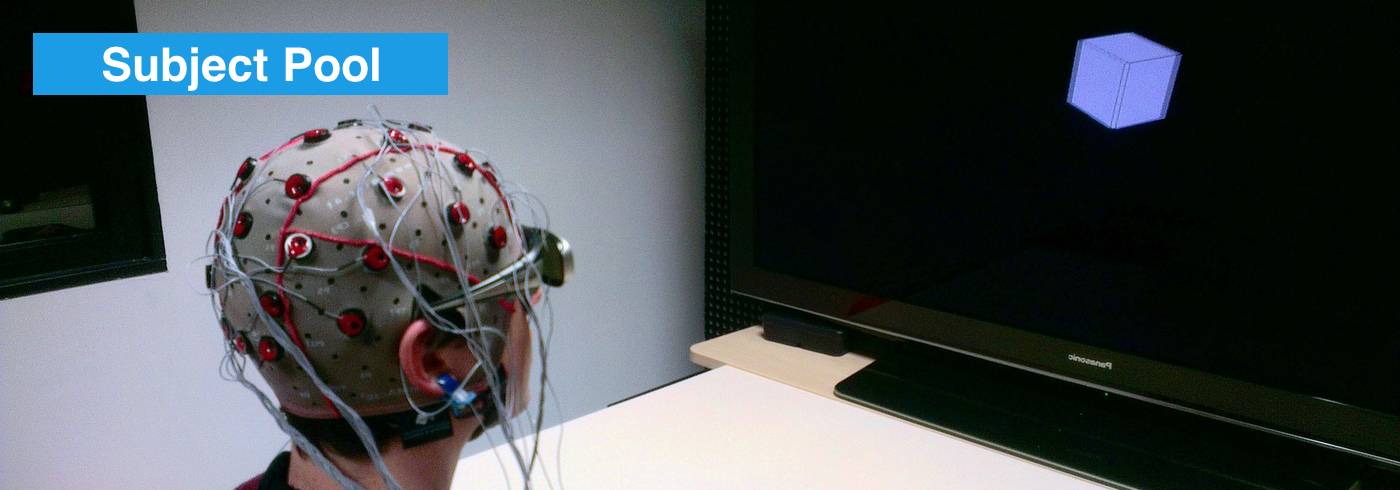
Divisional subject pool
To access and sign up for the Divisional Subject Pool, follow this link. More >>
Lexical Pragmatics
Conference |
As part of the AHRB-funded project on pragmatics and word meaning,
we organised a Workshop on Word Meaning, Concepts and Communication.
This was held at Cumberland Lodge, Windsor Great Park, from September 16th to September 18th
2005. The aim of the Workshop was to broaden the understanding of
lexical pragmatics in the cognitive science community and to encourage
interdisciplinary research on the relations between word meaning,
concepts and communication.
Lexical pragmatics investigates the processes by which linguistically-specified ('literal') word meanings are modified in use. Well-studied examples include lexical narrowing (e.g. drink used to mean 'alcoholic drink'), approximation (e.g. square used to mean 'squarish') and metaphorical extension (e.g. battleaxe used to mean 'frightening person'). There is increasing evidence that such processes apply automatically, and that a word is rarely used to convey exactly its literal meaning.
Typically,
narrowing, approximation and metaphorical extension have been seen as
distinct pragmatic processes and studied in isolation from each other.
Moreover, there has been relatively little interaction between those
attempting to develop linguistic, philosophical and cognitive accounts
of any one of these processes. We believe that a dialogue between
linguists, pragmatists, philosophers and cognitive scientists broadly
interested in word meaning, concepts and communication could lead to
valuable progress in lexical pragmatics. We therefore invited a broad
cross-section of such scholars to consider questions such as the
following:
(a) Is it possible to construct a unified account of lexical pragmatic processes?
(b) Does lexical pragmatics contribute to truth-conditional content or (only) to implicatures?
(c) What mental mechanisms are involved in lexical adjustment?
(d) What is the relation between word meanings and concepts?
(e) How do pragmatic processes affect the acquisition of word meanings or concepts?
(f) How are lexical pragmatic processes affected in autism or right-hemisphere damage?
(g) Are there sui lexical pragmatics processes that do not also apply at sentence level?
Content by Professor Deirdre Wilson
Page last modified on 16 feb 11 19:20 by Carolyne S Megan