A A A

          In Focus

silversm


               Swan Award - More>>


News and Events

For all the latest news and event details within the Division of Psychology and Language Sciences follow this link. More>>


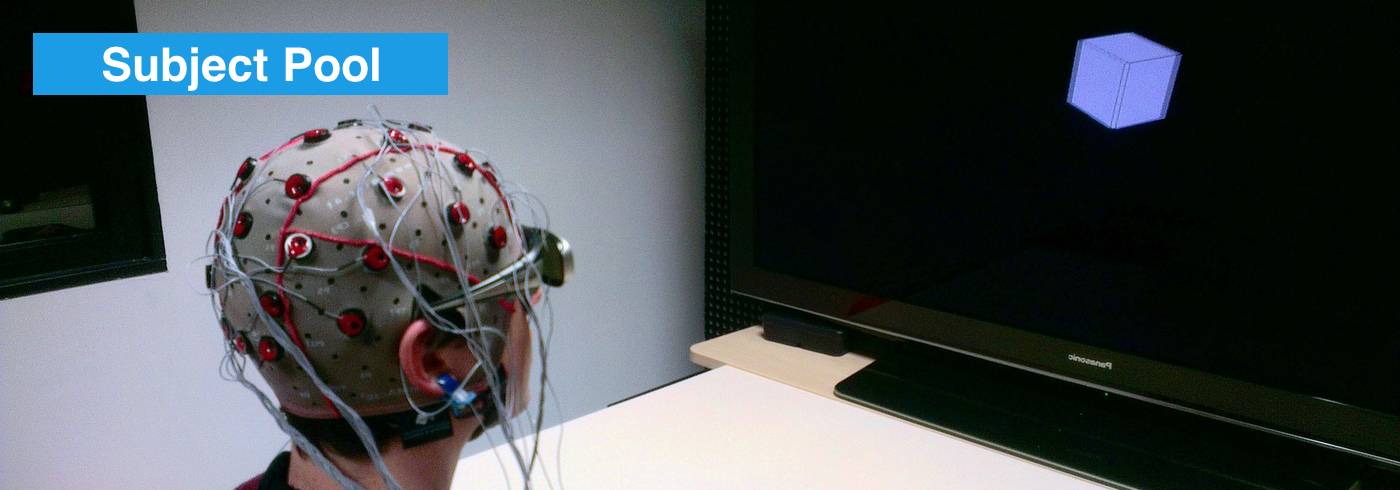
Divisional Subject Pool

To access and sign up for the Divisional Subject Pool, follow this link.  More >>


Workshops 2012

Registrations closed

What_If_logo_new3.jpg


For the EPS Workshop (January, 2012) click here.


Dr Magda Osman

Honorary Research Fellow

Location: Room 317, 26 Bedford Way
Telephone: +44 (0) 207 679 1096
Email: m.osman@ucl.ac.uk


magda_osman.jpg

Research Interests

My main research interests concern understanding the underlying mechanisms involved in learning, decision making, and problem solving in complex dynamic systems.

Broadly, what these situations share in common is that a number of elements will vary from one point in time to another, not always reliably so, and not always as a direct consequence of the actions that we choose to make. In a recent review and forthcoming book (Osman, in press), I discuss the characteristics that make these situations complex, along with the psychological tools we have to respond to the high degree of uncertainty that they generate (Osman, 2010).

By examining a number of recent advances in cognitive psychology, cognitive science, neuropsychology, engineering and human factors research, much of my recent work (Osman, et al, 2008; Osman, 2010; Osman, in press) investigates the general principles these disciplines share in understanding how we control uncertainty.

Other research interests include examining whether there are purported functionally dissociable mechanisms between conscious and unconscious reasoning/learning/decision making processes (Osman, 2004; Osman & Stavy, 2006), the relationship between deception and other cognitive controlled processes (Osman, Fitzpatrick & Channon, 2009), and the role of probability judgments and causal reasoning in our experiences of coincidences.

Publications

  • Osman, M. (forthcoming). Controlling Uncertainty: Learning and Decision Making in complex worlds. Wiley, Blackwell Publishers.    
  • Hagmayer, Y, Meder, B, Osman, M., Mangold, S., & Lagnado, D. (in press). Spontaneous causal learning while controlling a dynamic system. Open Psychology Journal.
  • Osman, M. (2010). Controlling Uncertainty: A Review of Human Behavior in Complex Dynamic Environments. Psychological Bulletin, 136, 65-86.
  • Osman, M., Channon, S., & Fitzpartick, S. (2009). Does the truth interfere with our ability to deceive? Psychonomic Bulletin & Review, 16, 901-906.
  • Osman, M. Wilkinson, L., Beigi, M., Parvez, C., & Jahanshahi, M. (2008). The striatum and learning to control a complex system? Neuropsychologia, 46, 2355–2363.
  • Osman, M., (2008). Seeing is as good as doing. Journal of Problem Solving, 2.1.
  • Osman, M. (2008). Evidence for positive transfer and negative transfer/Anti-learning of problem solving skills. Journal of Experimental Psychology: General, 137, 97-115.
  • Osman, M. (2008). Observation can be as effective as action in problem solving. Cognitive Science, 32, 162-183.
  • Osman, M. (2007). Can tutoring improve performance on a reasoning task under deadline conditions? Memory & Cognition, 35, 342-351.
  • Osman, M., & Stavy, R. (2006). Intuitive rules: from formative to developed reasoning. Psychonomic Bulletin & Review,13, 935-953
  • Flach, R., Osman, M., Dickinson, A., & Heyes, C. (2006). The interaction between response effects during the acquisition of response priming. Acta Psychologica, 122, 11-26.
  • Bird, G., Osman, M., Saggerson, A., & Heyes, C. (2005). Sequence learning by action, observation and action observation. British Journal of Psychology, 96, 371-388.
  • Osman, M. & Shanks, D. (2005). Is there evidence of systematic individual differences in causal learning and decision making? Acta Psychologica, 120, 93-112. 
  • Osman, M., Bird, G., & Heyes, C. (2005). Action observation leads to effector dependent learning. Experimental Brain Research, 165, 19-27.
  • Collins, D.J, & Osman, M. (2004). Judgements of causality are independent of the category prior information but choice behaviour isn't. Australian Journal of Psychology, 56, 110-111.
  • Osman, M. (2004). An Evaluation of Dual Process Theories of Reasoning. Psychonomic Bulletin & Review, 11, 998-1010.
  •  Osman, M. (2002). Hypothesis-Testing Behaviour. Thinking and Reasoning, 231-232. 
  • Osman, M. & Laming, D. (2001). Misinterpretation of conditional statements in Wason’s selection task. Psychological Research, 65, 121-144.

Page last modified on 03 may 11 15:09 by Carolyne S Megan