A A A

          In Focus

silversm


               Swan Award - More>>


News and Events

For all the latest news and event details within the Division of Psychology and Language Sciences follow this link. More>>


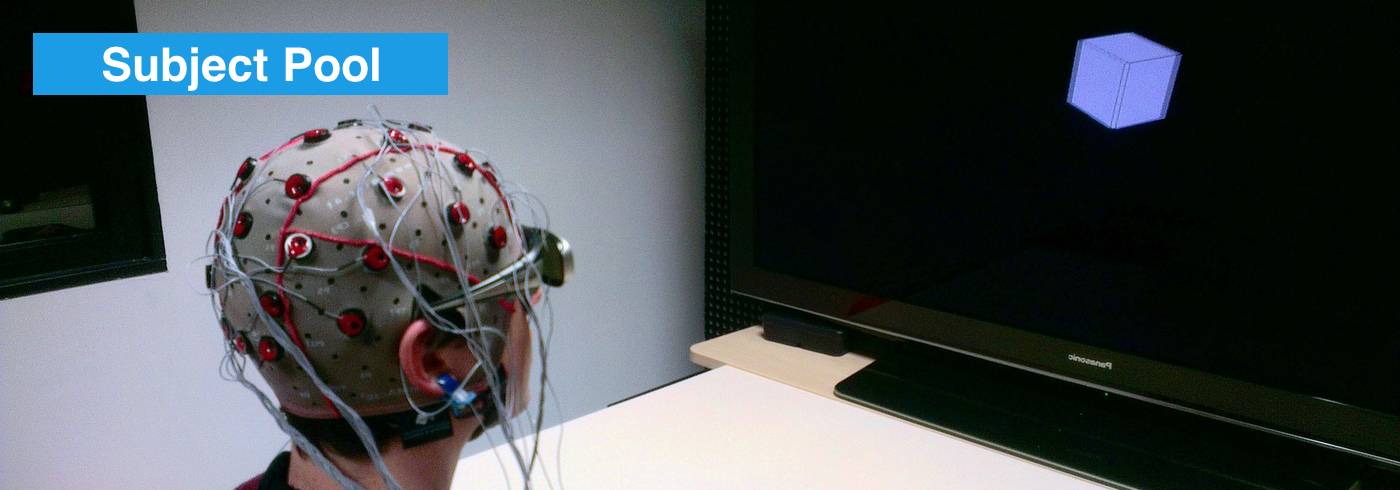
Divisional Subject Pool

To access and sign up for the Divisional Subject Pool, follow this link.  More >>


Workshops 2012

New Workshop - Register Now!

What_If_logo_new3.jpg


For the EPS Workshop (January, 2012) click here.


Dr Ana Guinote

Senior Lecturer

Location: Room 204A,
26 Bedford Way
WC1H 0AP
Telephone: +44 (0) 207 679 5378 (x25378)
Email: a.guinote@ucl.ac.uk

anaguinote.jpg

Research Interests

I am interested in the interplay between social and cognitive processes. I examine how the social hierarchy defined by power, status or membership in a minority or majority group affects attentional control and the individual’s mindset, and how this in turn affects the ways individuals pursue goals (e.g. performance), how they respond to environmental affordances, and how they make judgments. I focus on the ways social hierarchy affects objective behaviour variability, and how this impacts stereotypes. I am also interested in mood, and more generally in the links between motivation, cognition, and behaviour

Publications

    2011

    • Weick, M., Guinote, A., Wilkinson, D. (2011). Lack of Power Enhances Visual Perceptual Discrimination. Canadian Journal of Experimental Psychology , 208-213
    • Willis, G. B., Guinote, A. (2011). The Effects of Social Power on Goal Content and Goal. Social and Personality Psychology Compass , 706-719

    2010

    • Guinote, A. (2010). IN TOUCH WITH YOUR FEELINGS: POWER INCREASES RELIANCE ON BODILY INFORMATION. Social Cognition 28(1), 110-121 doi:10.1521/soco.2010.28.1.110.
    • Guinote, A. (2010). Need for power. In Levine, J., Hogg, M. (Eds.). Encyclopedia of Group Processes and Intergroup Relations ( ). Sage Publishers.
    • Guinote, A., Phillips, A. (2010). Power Can Increase Stereotyping Evidence from Managers and Subordinates in the Hotel Industry. Social Psychology 41(1), 3-9
    • Guinote, A., Vescio, T. (2010). The Social Psychology of Power. Guildford Press.
    • Guinote, A., Vescio, T. K. (2010). Introduction: Power in Social Psychology. In Guinote, A., Vescio, T. K. (Eds.). The Social Psychology of Power ( pp.1-18). Guilford Press: New York.
    • Guinote, A., Willis, G. B., Martellotta, C. (2010). Social power increases implicit prejudice. Journal of Experimental Social Psychology 46(2), 299-307 doi:10.1016/j.jesp.2009.11.012.
    • Slabu, L., Guinote, A. (2010). Getting what you want: Power increases the accessibility of active goals. Journal of Experimental Social Psychology 46, 344-349 doi:10.1016/j.jesp.2009.10.013.
    • Vescio, T. K., Guinote, A. (2010). Power: New Understandings and Future Directions. In Guinote, A., Vescio, T. K. (Eds.). The Social Psychology of Power ( pp.428-454). Guilford Press: New York.
    • Weick, M., Guinote, A. (2010). How long will it take? Power biases time predictions. J EXP SOC PSYCHOL 46(4), 595-604 doi:10.1016/j.jesp.2010.03.005.
    • Wilkinson, D. T., Guinote, A., Weick, M. (2010). Feeling socially powerless makes you more prone to bumping into things on the right and induces leftward line bisection error. Psychonomic Bulletin & Review 17, 910-914
    • Willis, G. B., Guinote, A., Rodriguez-Bailon, R. (2010). Illegitimacy improves goal pursuit in powerless individuals. Journal of Experimental Social Psychology 46, 416-419

    2009

    • Guinote, A., Wilkinson, D., Reese, G. (2009). A Powerful vision: Social power alters visual search behavior. Psicologia XXIII

    2008

    • Guinote, A. (2008). Power and affordances: When the situation has more power over powerful than powerless individuals. Journal of Personality and Social Psychology 95, 237-252
    • Weick, M., Guinote, A. (2008). When subjective experiences matter: Power increases reliance on the ease of retrieval. Journal of Personality and Social Psychology 94, 956-970

    2007

    • Guinote, A. (2007). Behaviour variability and the Situated Focus Theory of Power. In Stroebe, W., Hewstone, M. (Eds.). European Review of Social Psychology ( pp.256-295). New York: Wiley.
    • Guinote, A. (2007). Power affects basic cognition: Increased attentional inhibition and flexibility. Journal of Experimental Social Psychology 43, 685-697
    • Guinote, A. (2007). Power and goal pursuit. Personality and Social Psychology Bulletin 33, 1076-1087
    • Guinote, A. (2007). Power and the suppression of unwanted thoughts: Does control over others decrease control over the self? Journal of Experimental Social Psychology 43, 433-440
    • Guinote, A., Mouro, C., Monteiro, M. B. (2007). Children's perceptions of group variability as a function of status. International Journal of Behavioral Development 31, 97-104

    2006

    • Guinote, A., Brown, M., Fiske, S. T. (2006). Minority status decreases sense of control and increases interpretive processing. Social Cognition 24(2), 169-186 doi:10.1521/soco.2006.24.2.169.

    2004

    • Guinote, A. (2004). Group size, outcome dependency, and power. Effects on perceived and actual group variability. In Yzerbyt, V., Judd, C., Corneille, O. (Eds.). The psychology of group perception: Contributions to the study of homogeneity, entittavity, and essentialism ( pp.221-236). New York: Psychology Press.

    2003

    • Guinote, A., Fiske, S. T. (2003). Being in the outgroup territory increases stereotypic perceptions of outgroups: Situational sources of category activation. Group Processes and Intergroup Relations 6, 323-331 doi:10.1177/13684302030064001.

    2002

    • Bar-Tar, Y., Guinote, A. (2002). Who exhibits more stereotypical thinking? The effect of need and ability to achieve cognitive structure on stereotyping and perceived group variability. European Journal of Personality 16, 313-331 doi:10.1002/per.453.
    • Guinote, A., Judd, C. M., Brauer, M. (2002). Effects of power on perceived and objective group variability: Evidence that more powerful groups are more variable. Journal of Personality and Social Psychology 82, 708-721
    • Mouro, C., Monteiro, M. B., Guinote, A. (2002). Estatuto, identidade etnica e percepcão de variabilidade nas criancas (status, ethnic identity, and perceived group variability in children). Psicologia XVI, 387-408

    2001

    • Guinote, A. (2001). Lack of control leads to less stereotypic perceptions of griups: An individual difference perspective. Analise Psicologica 3, 453-460
    • Guinote, A. (2001). The perception of group variability in a non-minority and a minority context: When adaptation leads to out-group differentiation. British Journal of Social Psychology 40, 117-132

Page last modified on 19 mar 12 11:08 by Carolyne S Megan