In Focus
Swan Award - More>>
News and Events
For all the latest news and event details within the Division of Psychology and Language Sciences follow this link. More>>

Divisional Subject Pool
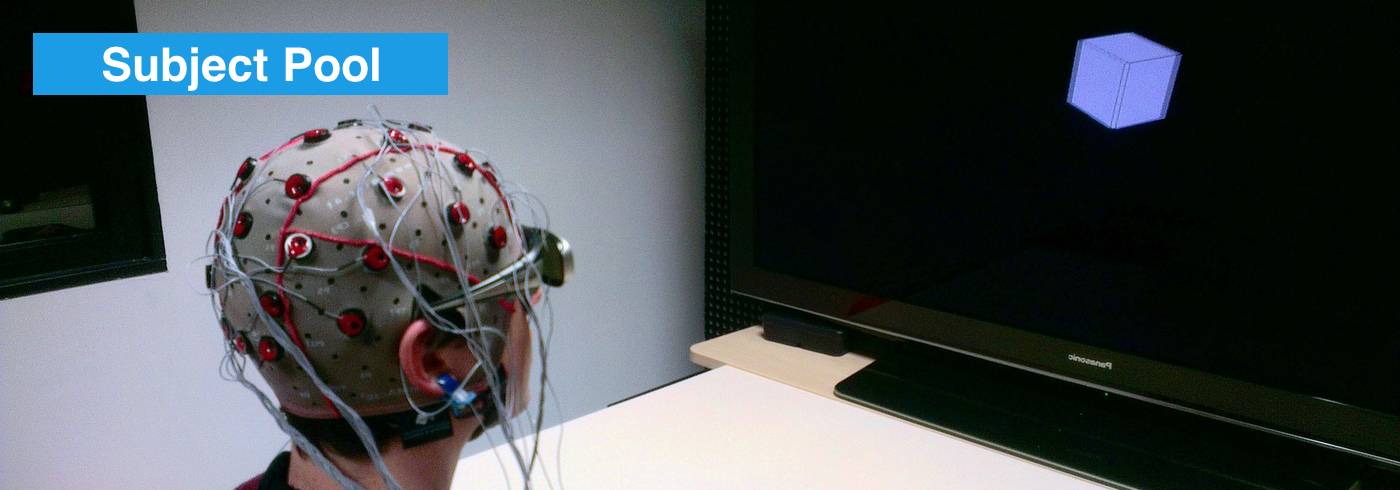
To access and sign up for the Divisional Subject Pool, follow this link. More >>
CPD@PaLS Courses
The Division runs Continuing Professional Development courses. For more details follow this link. More>>
Green Issues
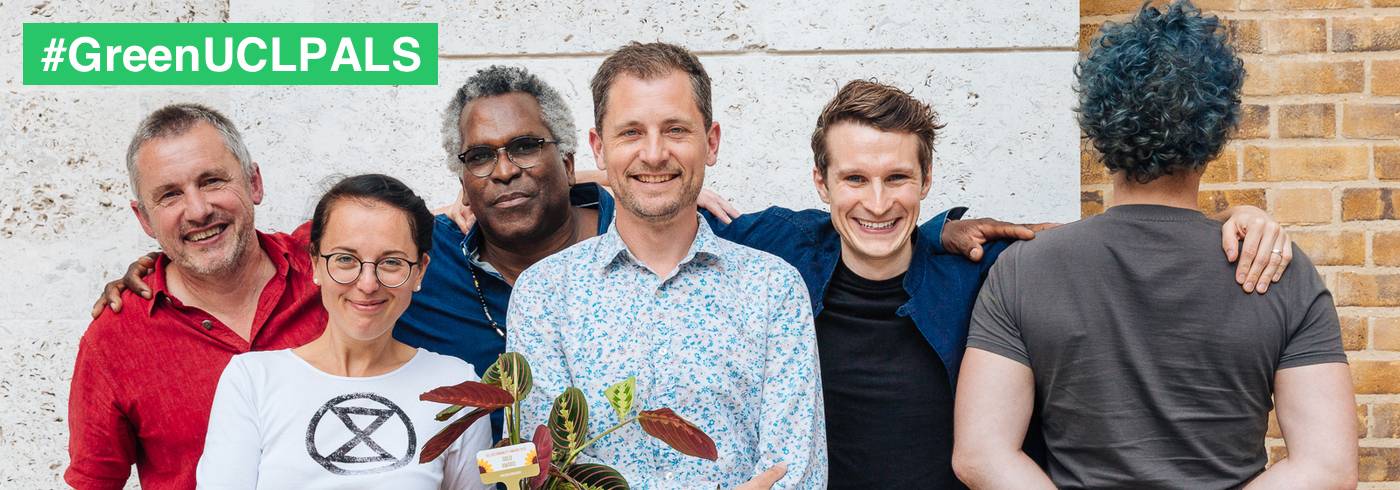
The Division has won the Silver Award for the UCL Green Impact scheme.. More>>
Shop
To buy audio-visual products from the Language Sciences Shop, follow this link. More >>
Functional gazecontrol in young children with cerebral palsy.
|
|
SPARKS |
|
Project Team |
| Michael Clarke | (Developmental Science, UCL, Principal Investigator) |
| John Swettenham | (Developmental Science, UCL, Co-investigator) |
| Jenefer Sargent | (Great Ormond Street Hospital for Children, Co-investigator), |
| Katie Price | (Great Ormond Street Hospital for Children, Co-investigator), |
| Simon Judge | (Barnsley Hospital, Co-investigator) |
| Aim |
| It is extremely difficult to assess the extent to which young children with severe physical disability also experience impairments such as learning disability. One way of doing this is to monitor how they move their eyes during activities. However, in order for observation of children’s eye movements during assessment to be informative, we first need to determine the extent to which children can use their eyes to fulfil basic functional actions such as fixing and shifting gaze. The aim of this project therefore is to establish effective procedures for assessing functional gaze control in this group of children who are often labelled as ‘unassessable’. |
| Method |
| The aim will be addressed through the development of two assessment routines: |
| (i) | Behavioural observation procedure: a set of simple and informative procedures for use in everyday clinical practice which centre on the observation of children’s gaze behaviour in response to a series of standard tasks. |
| (ii) | Objective measurement procedure: use of state-of-the-art eyetracking technology for the assessment of functional gaze control. This technology has the potential to provide objective measures of gaze control, including, for example, gaze movements that may be difficult to detect through behavioural observation alone. |
| Summary |
|
Surprisingly, credible assessments of functional gaze control to support intervention in children with severe and complex physical disorders are not available. Reporting children’s functional gaze control is of value in its own right as part of a profile of a child’s strengths and needs. Importantly also, spontaneous eye gaze movements, and gaze movements in response to standard tasks, are the primary ways in which young children with severe physical disabilities can display their abilities, and by which clinicians can investigate the presence of one or more disorders co-occurring with cerebral palsy. Reliable evidence of functional gaze control is therefore essential for planning and delivering effective individualised intervention in the short and long term. For instance, establishing the range of children’s functional gaze use will allow clinicians to provide the most appropriate support to parents in facilitating their child’s early participation in home life, and hence their development. It is intended that the behavioural observation routine will be accessible to practicing clinicians following only brief familiarisation with procedures. To support this we will provide an online video tutorial guiding clinicians through the simple stages of assessment, scoring, and interpretation.
This research has been kindly funded by SPARKS (Sport Aiding Medical research for Kids) |
| Contact |
| For further information please contact Michael Clarke (m.clarke@ucl.ac.uk) |
Page last modified on 22 feb 12 10:25 by Carolyne S Megan