UCL NEUROSCIENCE, PHYSIOLOGY & PHARMACOLOGY
UCL logo
INFORMATION FOR
 
Prospective Students
Current Students
 

INFORMATION ABOUT
 
Research
Research Training
People
Seminars
Vacancies
 
Division of Biosciences
 
UCL Neuroscience
 
Contact Details
Home Page
 

G23 Instruments
 

All Enquiries - Tel: +44 (0)20 7679 2013


Neuron-glial interactions and brain energy supply


Professor David Attwell, FRS

Jodrell Professor of Physiology

Tel: +44 (0)20 7679 7342
Email: d.attwell@ucl.ac.uk


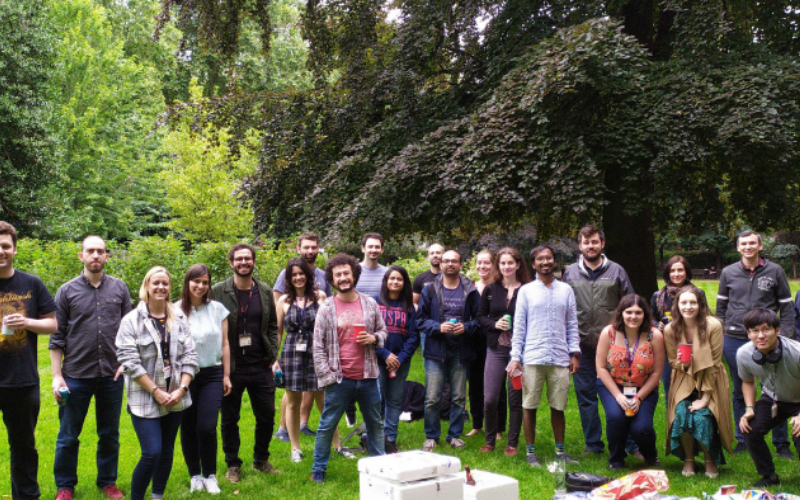
Lab Members:

Yamina Bakiri
Laura Clarke
Guillaume Frugier
Catherine Hall
Karolina Kolodziejczyk

Collaborations with other labs are listed below


Peter Mobbs
Valeria Burzomato
Lee Cossell
Camilla Haglerød
Nicola Hamilton
Johanne Rinholm


David Attwell

David Attwell studied physics as an undergraduate in Oxford, and then did a PhD in neuroscience with Julian Jack. After a post-doc in Berkeley with Frank Werblin, he came to UCL.


Overview

In my lab we are interested in signalling between neurons and glial cells (oligodendrocytes, astrocytes and microglia), and in how the brain’s energy supply is controlled and determines the computational power of the brain. Recent work on neural-glial signalling has focussed on how activation of glutamate and GABA receptors on oligodendrocytes may be responsible for the mental and physical disability occurring in white matter diseases such as cerebral palsy and spinal cord injury. Our studies of brain energy supply have characterized a new locus (in capillaries) for control of cerebral blood flow, have investigated how the amount of energy the brain receives determines the speed of the neural computations performed, and have studied the consequences of failure of the energy supply in conditions like stroke. We are also interested in how synaptic signalling to neurons is modulated. This work is performed using patch-clamp, calcium imaging and oxygen electrode techniques applied to brain slices and isolated cells, and using mathematical modelling.

Oligodendrocytes

Oligodendrocytes myelinate axons, and thus speed action potentials, but in pathological conditions like cerebral palsy, stroke, spinal cord injury and multiple sclerosis oligodendrocytes are killed, leading to mental and physical handicap. As for the neuronal death that occurs in stroke (see below), part of this oligodendrocyte death occurs as a result of glutamate being released by reversal of uptake transporters. We are using patch-clamping (Fig. 1) and immunocytochemistry to study the glutamate-evoked death of oligodendrocytes. Recent findings include the discovery of NMDA receptors on oligodendrocytes (Káradóttir et al., 2005) which play a role in damaging these cells in pathological conditions (Bakiri et al., 2007). Future work will investigate the physiological function of these receptors in controlling the development of oligodendrocytes.

Two oligodendrocytes, after whole-cell patch-clamping with different colour dyes in the pipette
Figure 1
Two oligodendrocytes, after whole-cell patch-clamping with different colour dyes in the pipette
Káradóttir et al., 2005

Oligodendrocyte precursor cells

Oligodendrocyte precursor glia transform into myelinating oligodendrocytes during development, but are also present in the adult CNS where they comprise ~5% of the cells and are the main proliferating cell type. Damage to oligodendrocyte precursors, leading to reduced myelination, contributes to mental and physical impairment in periventricular leukomalacia (pre- or perinatal white matter injury leading to cerebral palsy). Adult OPCs may form new myelinating oligodendrocytes in multiple sclerosis and spinal cord injury, and OPC transplants could serve as a basis for therapeutic remyelination. However, the functions of OPCs are poorly understood: they may simply become oligodendrocytes in normal development and constitute a reservoir of cells which replace damaged myelin in the adult CNS, but they might also differentiate into astrocytes and neurons and thus have some stem cell characteristics. Understanding the diversity of NG2-expressing OPCs is crucial for understanding normal brain function, for appreciating the diversity of the brain’s progenitor cell population, and for developing therapeutic strategies to treat demyelinating diseases. We have recently shown that OPCs fall into two classes with different electrophysiological properties, and a different susceptibility to death in pathological conditions (Káradóttir et al., 2008). Strikingly, for glial cells, one of these classes fires action potentials (Fig. 2).

Myelin ensheathing axons entering the cerebellum, with inset of action potentials recorded from an OPC (Káradóttir et al., 2008)   Figure 2
Myelin ensheathing axons entering the cerebellum, with inset of action potentials recorded from an OPC (Káradóttir et al., 2008).

Coupling of neuronal activity to blood flow

When neurons are active they require more energy to pump out ions that enter to produce synaptic and action potentials. Active neurons signal to the vasculature to increase the blood flow. It used to be thought that all of the regulation of flow occurred at the level of precapillary arterioles. We showed, however, that contractile cells called pericytes on capillaries (Fig. 3) also contribute to regulation of blood flow (Peppiatt et al., 2006). Interestingly, contractile signals can propagate from one pericyte to another, possibly spreading back to upstream arterioles.

(a) Schematic of blood flow control by arterioles and by pericytes. (b) Pericytes (red) on cerebellar blood vessels (green).

Figure 3
(a) Schematic of blood flow control by arterioles and by pericytes.

(b) Pericytes (red) on cerebellar blood vessels (green).
From Peppiatt et al. (2006)


Constraints on information processing imposed by brain energetics

The brain is 2% of the body's mass but uses 20% of its energy. Consequently it is likely that energy use has constrained the brain's evolution, helping to determine the wiring pattern, signal coding and synapse properties of the neurons. Understanding the brain's energy use is important both for understanding how the brain has evolved and for understanding functional imaging signals, which detect the mismatch between oxygen supply and oxygen use in small volumes of brain tissue. Theoretical calculations suggest that much of the brain's energy is employed in reversing the ion movements producing synaptic currents and action potentials (Attwell & Laughlin, 2001). Consequently energy constraints are predicted to lead to minimization of axon length, signalling which shows adaptation (so that not so many action potentials need to be transmitted), minimization of postsynaptic currents, and distributed coding. Current work is investigating how the properties of synapses are optimised to process information in the face of the high energy demand of neural circuits (Attwell and Gibb, 2005), and analysing the allocation of brain energy use to conscious and unconscious information processing (Schölvinck et al., 2008).

Neurotransmitter transporters and stroke

We have used patch-clamp techniques to study transporters for the main excitatory neurotransmitter glutamate (Brew & Attwell, 1987), investigating in particular the ion movements which drive glutamate transport (Barbour, Brew & Attwell, 1988, Bouvier et al., 1992; Levy et al., 1998). We have demonstrated (Fig. 4) that glutamate transporters can run backwards when ion gradients run down in conditions like stroke (Szatkowski, Barbour & Attwell, 1990; Attwell et al., 1993), releasing enough glutamate to activate receptors in nearby neurons (Billups & Attwell, 1996). Indeed, in the first few minutes of a stroke, reversed operation of glutamate transporters is the main mechanism by which the extracellular glutamate concentration of glutamate is raised to levels which trigger the death of neurons, leading to mental and physical handicap (Rossi, Oshima & Attwell, 2000; Szatkowski & Attwell, 1994). A similar reversal of GABA transporters leads to GABA release early in stroke (Allen, Rossi & Attwell, 2004). Current work is focussed on the factors controlling glutamate dynamics early in a stroke, and the downstream consequences of glutamate and GABA release.

Using a detector neuron to sense glutamate release from a glial cell.
Figure 4
Using a detector neuron to sense glutamate release from a glial cell.
Billups & Attwell (1996)

Neuromodulation: excitatory neurotransmission

Modulation of synaptic transmission plays a key role in adapting the behaviour of the nervous system to prevailing conditions. We are interested in how conventional neurotransmitters, unusual intercellular messengers like arachidonic acid, endocannabinoids and intracellular interacting proteins, can alter the behaviour of ion channels and transporters (Barbour, Szatkowski, Ingledew & Attwell, 1989; Miller, Sarantis, Traynelis & Attwell, 1992; Marie et al., 2002; Marcaggi, P. & Attwell, D. 2005. A major focus of our work is on how glutamate uptake controls synaptic transmission (Sarantis et al., 1993; Takahashi, Sarantis & Attwell, 1996; Auger & Attwell, 2000), and on the input-output relationship of excitatory synapses (Attwell et al., 1987; Sarantis, Everett & Attwell, 1988).

Neuromodulation: inhibitory neurotransmission

One focus of our work on inhibitory synaptic transmission is to understand how spillover of neurotransmitter GABA at the Golgi cell to granule cell synapse in the cerebellum affects the information processing carried out by the cerebellum (Fig. 5: Rossi & Hamann, 1998; Hamann, Rossi & Attwell, 2002). Surprisingly, at this synapse most of the synaptic current is produced by GABA acting on cells which are not anatomically postsynaptic to the releasing cell. This depends on the granule cells expressing very high affinity GABAa receptors (containing alpha6 subunits) in non-synaptic locations, and the amount of GABA reaching the receptors is controlled by GABA transporters. This extrasynaptic inhibition mediates more than 97% of the inhibition received by granule cells, and plays an important role in determining how the cerebellum stores motor commands. Other work on inhibitory transmission is aimed at understanding how inhibition of retinal bipolar cells is modulated (Billups et al., 2000).

A cerebellar Purkinje cell filled with dye, during studies of cerebellar information processing.
Figure 5
A cerebellar Purkinje cell filled with dye, during studies of cerebellar information processing.
Hamann, Rossi & Attwell (2002)

Collaborations

We currently have active collaborations with the labs of:
Ragnhildur Káradóttir http://www.neuroscience.cam.ac.uk/directory/profile.php?rk385
Charles ffrench-Constant http://sites.google.com/site/ffrenchconstant/
Josef Kittler http://www.ucl.ac.uk/npp/jk
Bill Richardson http://www.ucl.ac.uk/~ucbzwdr/Richardson.htm
Linda Bergersen http://folk.uio.no/lindabe/


Selected publications:

  • MacAskill, A.F., Rinholm, J.E., Twelvetrees, A.E., Arancibia-Carcamo, I.L., Muir, J., Fransson, A., Aspenstrom, P., Attwell, D. & Kittler, J. (2009) Miro1 is a calcium sensor for glutamate receptor dependent localization of mitochondria at synapses. Neuron 61, 541-555.
    link
    News and views on this paper: http://www.cell.com/neuron/abstract/S0896-6273(09)00125-1

  • Káradóttir, R., Hamilton, N.B., Bakiri, Y. & Attwell, D. (2008) Spiking and nonspiking classes of oligodendrocyte precursor glia in CNS white matter. Nature Neuroscience 11, 450-456
    link
    News and views on this paper: http://www.nature.com/neuro/journal/v11/n4/abs/nn0408-379.html

  • Schölvinck, M., Howarth, C. & Attwell, D. (2008) The cortical energy use underlying conscious perception. Neuroimage 40, 1460-1468
    link

  • Peppiatt, C.M., Howarth, C., Mobbs, P. & Attwell, D. (2006)
    Bidirectional control of CNS capillary diameter by pericytes
    Nature 443, 700-704.
    link
    News and Views on this paper: http://www.nature.com/nature/journal/v443/n7112/full/443642a.html

  • Káradóttir, R. & Attwell, D. (2006)
    Combining patch-clamping of cells in brain slices with immunocytochemical labelling to define cell type and developmental stage.
    Nature Protocols 1, 1977-1986
    link

  • Káradóttir, R., Cavelier, P., Bergersen L.H.& Attwell, D (2005)
    NMDA receptors are expressed in oligodendrocytes and activated in ischaemia.
    Nature 438, 1162-1169.
    link

  • Attwell, D. & Gibb, A (2005)
    Neuroenergetics and the kinetic design of excitatory synapses.
    Nature Reviews Neuroscience 6, 841-849.
    link

  • Marcaggi, P. & Attwell, D. (2005)
    Endocannabinoid signalling depends on the spatial pattern of synapse activation.
    Nature Neuroscience 8, 776-781
    link

  • Allen,N.J., Rossi,D.J. & Attwell,D. (2004)
    Sequential release of GABA by exocytosis and reversed uptake leads to neuronal swelling in simulated ischaemia of hippocampal slices.
    J. Neurosci. 24, 3837-3849.
    link

  • Marcaggi,P., Billups,D., Attwell,D. (2003)
    The role of glial glutamate transporters in maintaining the independent operation of juvenile mouse cerebellar parallel fibre synapses.
    J. Physiol. 552, 89-107.
    link

  • Hamann,M., Rossi,D., Attwell,D. (2002)
    Tonic and spillover inhibition control information flow through cerebellar cortex.
    Neuron.33, 625-633.
    link

  • Attwell,D., Laughlin,S.B. (2001)
    An energy budget for signalling in the grey matter of the brain.
    J. Cereb. Blood Flow & Metab. 21, 1133-1145.
    link

  • Auger,C., Attwell,D. (2000)
    Fast removal of synaptic glutamate by postsynaptic transporters.
    Neuron 28, 547-558.
    link

  • Billups,D., Hanley,J.G., Orme,M., Attwell,D., Moss,S. (2000)
    GABAC receptor sensitivity is modulated by interaction with MAP1B.
    J. Neurosci. 20, 8643-8650.
    link

  • Rossi,D., Oshima,T., Attwell,D. (2000)
    Glutamate release in severe brain ischaemia is mainly by reversed uptake.
    Nature 403, 316-321.
    link

  • Marie,H., Attwell,D. (1999)
    C-terminal interactions modulate the affinity of GLAST glutamate transporters in salamander retinal glial cells.
    J. Physiol. 520, 393-397.
    link

  • Levy,L.M., Warr,O., Attwell,D. (1998)
    Stoichiometry of the glial glutamate transporter GLT-1 expressed inducibly in a Chinese hamster ovary cell line selected for low endogenous Na+-dependent glutamate uptake.
    J. Neurosci. 18, 9620-9628.
    link

  • Takahashi,M., Sarantis,M., Attwell,D. (1996)
    Postsynaptic glutamate uptake in rat cerebellar Purkinje neurons.
    J. Physiol. 497, 523-530.
    link

  • Billups,B., Attwell,D. (1996)
    Modulation of non vesicular glutamate release by pH.
    Nature 379, 171 174.
    link

  • Takahashi,M., Kovalchuk,Y., Attwell,D. (1995)
    Pre and post-synaptic determinants of EPSC waveform at cerebellar climbing fibre and parallel fibre to Purkinje cell synapses.
    J. Neurosci. 15, 5693 5707.
    link

  • Szatkowski,M., Attwell,D. (1994)
    Triggering and execution of neuronal death in brain ischaemia: two phases of glutamate release by different mechanisms.
    Trends in Neurosci. 17, 359 365.
    link

  • Attwell,D., Barbour,B., Szatkowski,M. (1993)
    Nonvesicular release of neurotransmitter.
    Neuron 11, 401 407.
    link

  • Sarantis,M., Ballerini,L., Miller,B., Silver,A., Edwards,M., Attwell,D. (1993)
    Glutamate uptake from the synaptic cleft does not shape the decay of the non NMDA component of the synaptic current.
    Neuron 11, 541 549.
    link

  • Bouvier,M., Szatkowski,M., Amato,A., Attwell, D. (1992)
    The glial cell glutamate uptake carrier counter transports pH changing anions.
    Nature 360, 471 474
    link

  • Miller,B., Sarantis,M., Traynelis,S., Attwell, D. (1992)
    Potentiation of NMDA receptor currents by arachidonic acid.
    Nature 355, 722 725
    link

  • Szatkowski,M., Barbour,B., Attwell,D. (1990)
    Non vesicular release of glutamate from glial cells by reversed electrogenic glutamate uptake.
    Nature 348, 443 446
    link

  • Barbour,B., Szatkowski,M., Ingledew,N., Attwell,D. (1989)
    Arachidonic acid induces a prolonged block of glial cell glutamate uptake.
    Nature 342, 918 920
    link

  • Barbour,B., Brew,H., Attwell,D. (1988)
    Electrogenic glutamate uptake is activated by intracellular potassium
    Nature 335, 433 435
    link

  • Sarantis,M., Everett,K., Attwell,D. (1988)
    A presynaptic action of glutamate at the cone output synapse.
    Nature 332, 451 453
    link

  • Attwell,D., Borges,S., Wu,S., Wilson,M. (1987)
    Signal clipping by the rod output synapse.
    Nature 328, 522 524
    link

  • Brew,H., Attwell,D. (1987)
    Electrogenic glutamate uptake is a major current carrier in the membrane of axolotl retinal glial cells.
    Nature 327, 707 709
    link

  • Brew, H., Gray, P.T., Mobbs, P. & Attwell, D. (1986)
    Endfeet of retinal glial cells have higher densities of ion channels that mediate K+ buffering
    Nature 324, 466-468.
    link


This page last modified October 20, 2009 by Dr Bob Muid
University College London - Gower Street - London - WC1E 6BT - Telephone: +44 (0)20 7679 2000 - Copyright © 1999-2009 UCL
Disclaimer | Accessibility | Privacy | Advanced Search | Help


Search by Google