A A A

Picture of the Week

Teaching in the Turner Lab

Inside the Turner Lab

Edward Turner, the first professor of chemistry at UCL, was an important figure in the history of 19th century science. Appointed to the chair of chemistry soon after the college's foundation, he was also author of an important textbook of the day, his Elements of Chemistry. Turner was a highly skilled experimental chemist, and his meticulous work on atomic weights put him at the centre of a major controversy of the age. More...

View all pictures of the week

Flickr

News

  • Latest news stories from UCL Mathematical and Physical Sciences.
  • UCL staff members and research students with potential stories for inclusion, click here.
  • You can also keep up to date with news from the faculty via Twitter and Facebook.

Archive of News

<< 2012 Jan Feb Mar Apr May Jun Jul Aug Sep Oct Nov Dec 2014 >>

11 June 2013: Sunjammer team to present latest solar sail technology


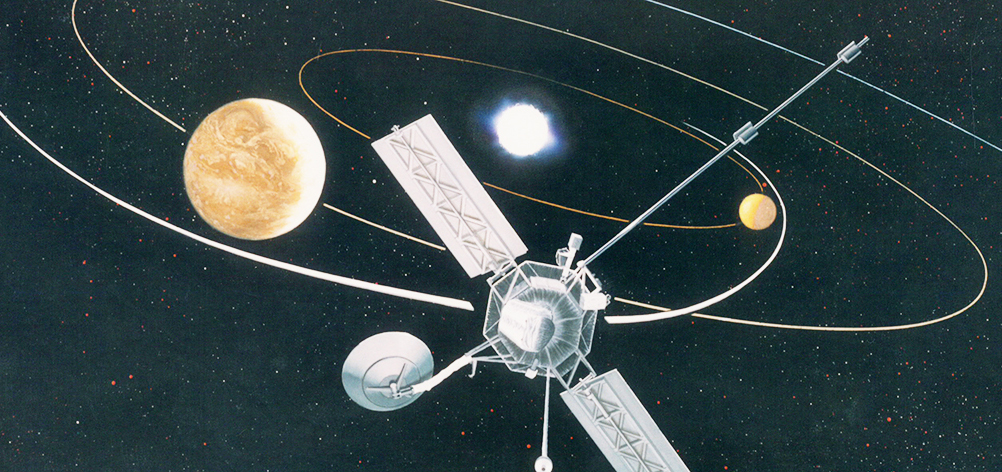
Sunjammer, scheduled for launch in late 2014, is a NASA space probe that will carry the largest solar sail ever flown. The mission is designed to demonstrate the long-term potential of solar sails for spacecraft propulsion. In addition, Sunjammer will demonstrate the utility of sails to provide the earliest available warning of dangerous solar storms threatening Earth, and carry a payload of scientific instruments to study space weather.
More...

11 June 2013: Computer modelling reveals cancer-causing mutations

Scientists at UCL have used computer simulations to uncover why tiny mutations can trigger certain types of brain and lung cancer. A protein called epidermal growth factor receptor (EGFR), which regulates the cellular functions in response to extracellular messages, can cause cancer when it mutates into a deregulated hyper-active form, as it affects cell survival, migration and division. But studies of the molecule have not, until now, been able to pinpoint exactly why and how these mutations turn the normally inactive EGFR kinase into the hyperactive version. More...

5 June 2013: How to survive a catastrophe: UCL hosts third risk and disaster reduction conference

From the East Japan earthquake of 2011 to Hurricane Sandy last year, disasters are hugely destructive events, even though they happen only rarely. The UCL Institute for Risk and Disaster Reduction is a world-leading centre for multidisciplinary research into disasters, how they happen, how they can be avoided, and how they can be mitigated.
More...

3 June 2013: Huge solar flare caught by Hinode satellite

This year, solar activity should reach its peak. Solar flares are the most energetic explosions in the Solar System, with energies reaching the equivalent of tens of millions of atomic bombs in minutes. More...

<< 2012 Jan Feb Mar Apr May Jun Jul Aug Sep Oct Nov Dec 2014 >>

Page last modified on 04 jun 13 13:45