 Close
Close


TMS investigations of connectivity and plasticity of motor, premotor and parietal cortex.
Lab Head: Professor John Rothwell
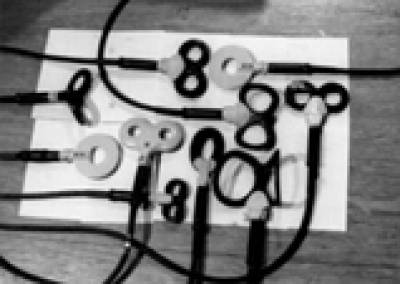
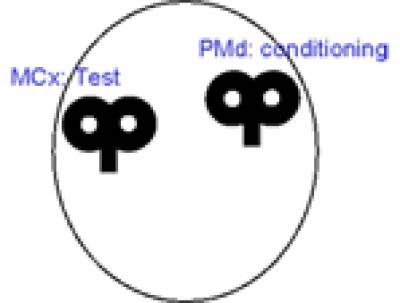
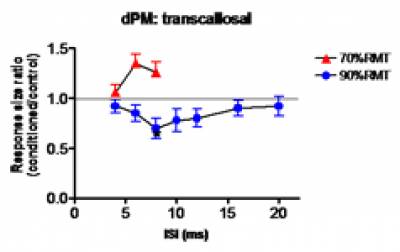
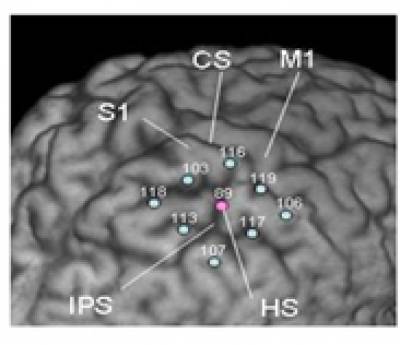
These investigations complement those of Professor Lemon's group in primates. It is easily possible to investigate inputs to the motor cortex from other areas of brain with two TMS stimulators. One stimulator is used to measure the excitability of the motor cortex, while the other is applied a few milliseconds beforehand on another area of scalp. If stimulation of the latter changes the response to the former we can infer there is a functional connection between the sites. We have pioneered this approach to investigate inputs from dorsal premotor cortex to primary motor cortex, and are currently expanding this to test connections from posterior parietal cortex. The method is not simply anatomical because the excitability of the connection changes when the pathways are being used. We can therefore examine the time course of functional connectivity during the course of a task in healthy brain and in neurological disease.
 |  |  |
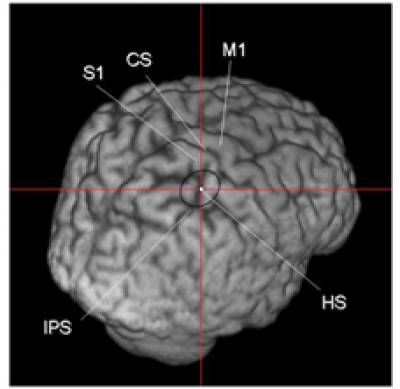
It is also possible to apply repetitive TMS of premotor or parietal areas in order to produce long lasting changes in the physiology of the cortex. This has behavioural effects on movement, perception and also changes connectivity in non-stimulated areas of brain at a distance that may be compensatory for loss of function at the stimulated site. These methods give insight into how the brain reacts to injury (e.g. after stroke) or to chronic disease.
 |  |