A A A

Contact


email: Matt Piper

@mattpiperlab

QR Signature
Bookmark and Share

Matt's bio & selected papers


Education and Professional Experience


2010 – present Royal Society University Research Fellow, UCL
2002 - 2010 Wellcome Trust Postdoctoral Research Fellow, UCL
2001 – 2002 Tenure-track researcher, Technical University of Delft, The Netherlands
1997 - 2001 PhD in Biochemistry and Molecular Genetics, UNSW, Australia
1996 Honours [First Class] Molecular Genetics, UNSW, Australia
1993 - 1995 Bachelor of Science, University of Adelaide, Australia


Funding


2012 Wellcome Trust Wellcome Trust People Awards
2012 UCL Crucible Centre Art/science collaboration
2012 AGE UK Art/science collaboration
2012 - 2015 Royal Society URF research grant
2011 - 2016 Royal Society University Research Fellowship
2011 - 2014 BBSRC New Investigator Award
2011 - 2015 UCL Crucible Centre (Medical Research Council) 4y PhD studentship


Selected publications


Cell Metabolism, 2011_250

Piper et al, 2011

Cell Metabolism, 14:154-160

Moderate dietary restriction has been shown to extend lifespan in numerous organisms. Occasionally, contradictory reports arise. Why is this?

This article demonstrates how lifespan responds to nutrient balance and that terms like 'dietary restriction' or 'calorie restriction' are inadequate to explain the phenomenon. 

What's more, we show how small changes in the environment or the genetic make up of the organism being studied, can dramatically affect the outcome and interpretation of dietary restriction experiments.

Nature, 2009

Grandison et al, 2009

Nature, 462:1061-1065

A great deal of research has been performed to uncover the nutrients critical for how dietary restriction might extend lifespan. 

Using the fruit fly as a model organism, we show that small changes in the balance of dietary amino acids can fully account for the effects of dietary restriction to extend lifespan and reduce fecundity.

Cell Metab, 2008

Piper & Bartke, 2008

Cell Metabolism, 8:99-104


We provide an overview of the methods used to study dietary restriction in different laboratory model organisms and what could be the mechanisms underlying its lifespan extending effects.

PLoS Genet, 2007

Piper & Partridge, 2007

PLoS Genetics, 3:e57


This article provides a detailed view of how dietary restriction is performed in the fruit fly Drosophila melanogaster. We discuss the key experimental considerations in such studies and how these affect interpretation of the resulting data.

J Gerontol, 2005

Bass et al, 2007

J Gerontology, 62A:1071-1081


There is an enormous heterogeneity in how different laboratories working with fruit flies investigate dietary restriction. Here, we establish a basic working protocol optimised for maximal lifespan and fecundity outputs. This is critical when trying to ensure the flies are as healthy as possible and therefore any discoveries we make are to improve healthy ageing in already healthy animals.

PNAS, 2005

Broughton et al, 2005

PNAS, 102:3105-3110


Reduced insulin signalling results in lifespan extension in numerous organisms, including worms, flies and mice. This pathway thus represents an evolutionarily conserved modulator of healthy ageing.
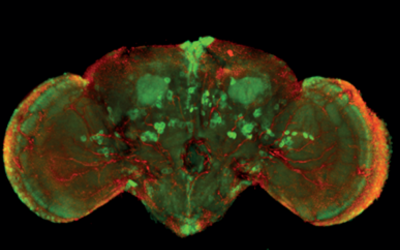
Here, we demonstrate that ablating a few cells in the fly brain that produce insulin proteins is sufficient to extend lifespan in flies. 

JBC, 2003

Boer et al, 2003

J Biol Chem, 278:3265-3274


Studies that examine the effects of nutritional change on the transcriptome of yeast often use culture methods that result in measuring the confounding effects of multiple factors simultaneously.
In this article, we use chemostat cultures of yeast to define the transcriptome responses to growth-limiting amounts of carbon, nitrogen, phosphorous and sulphur. This technique enabled us to control tightly the experimental conditions and assess the effects of specific nutrients on the yeast transcriptome without altered growth rate, pH etc that would normally accompany these interventions.

JBC, 2002

Piper et al, 2002

J Biol Chem, 277, 37001-37008


Measuring the expression of all genes in the genome simultaneously is subject to many sources of variation. In this study, we utilise highly controlled chemostat cultures of yeast in two different laboratories to assess the variation between laboratories.
We outline changes in gene expression that arose despite taking all practical steps to control measurable variables.